December 16, 2025

Barnegat Bay Partnership Announces New Funding Opportunities to Help Fill Knowledge Gaps Throughout the Watershed

by Nina Sassano

Flooded road

The Barnegat Bay Partnership has opened new funding opportunities intended to support projects that enhance collaborative, innovative, and impactful projects throughout the watershed.

Transect In Marsh 2 1024x1820

All of the funding opportunities will help the BBP achieve it’s eight Ecosystem Based Targets outlined in the Comprehensive Conservation Management Plan. These include public beach openings/closures, approved shellfish areas, submerged aquatic vegetation, wetland protection, clam restoration, ecological flows, and water conservation and reuse. For many targets, the BBP or its partners collect the data necessary to assess the current condition and trends. However, there are instances where 1) the analysis required to determine the target has not been completed for the watershed, 2) the baseline condition upon which the target is based has not been determined, 3) recent data to determine the status and trends are not available, or 4) research to help inform restoration activities to meet the target have not been conducted.

In it’s Funding Opportunity for Research Projects, the BBP is seeking to support research projects that address gaps identified in the BBP’s Environmental Monitoring Plan. A total of $70,925 will be awarded to research or monitoring projects that propose solutions to issues including increasing understanding of what specific sources of pathogen pollution are affecting swimming beaches in the watershed, understanding what acreage of shellfish areas could be reopened if bacterial sources were removed, new and more consistent estimates of watershed-wide submerged aquatic vegetation extent, determining current riparian buffer widths and acreage to establish a baseline goal and facilitate future tracking, understanding wetland areas in need of restoration, maintain ecological water flows for waterways within the watershed, and monitoring water reuse in the region. This funding opportunity is open to proposals from organizations, government agencies, and individuals, including academic institutions (colleges and universities), governmental or public agencies, private businesses, professional organizations, non-governmental organizations (501[c]3), and other individuals. To apply, please read through the Funding Opportunity and submit a letter of interest no later than January 4, 2026.

PXL 20250919 145859526 PORTRAIT 1024x1820

The BBP is also offering a total of $923,638 to support projects directly related to stormwater management implementation projects within the watershed that will reduce nutrients or pathogens entering the bay. These funds will support the restoration/improvement of stormwater infrastructure within the Barnegat Bay Watershed, subsequently addressing a major CCMP goal to reduce sources of nutrients, contaminants, debris, and other pollutant loadings from point and nonpoint source pollution. To help with the implementation of the upcoming NJDEP TMDL for Nitrogen within Barnegat Bay and align with BBP’s CCMP goal of cleaner bay waters, stormwater restoration/improvement projects funded by this award must reduce nutrients or pathogens. Projects already required by mitigation or stormwater laws (e.g. green infrastructure required as part of new development) are not eligible. To apply for this funding, please read through the Funding Opportunity and submit an application no later than February 27, 2026.  

The final opportunity available through the BBP directly supports a student to help lead the drafting of the Habitat Plan for the Barnegat Bay Watershed. A total of $17,000 is available to support a student contractor who will ensure the Habitat Plan aligns with the intended vision for each critical habitat in the watershed including tidal wetlands, submerged aquatic vegetation, hard clams, and a reduced section focused on uplands and freshwater riparian areas. The student will base the draft on notes and outputs developed during four workgroup meetings with BBP staff and partners. Proposals are welcome from students at public academic institutions (colleges and universities) with strong writing backgrounds and knowledge of marine/estuarine science. To apply, please read through the Funding Opportunity and submit a proposal no later than January 21, 2026.

It is the BBP’s goal to advance knowledge, sustainability, education, research and monitoring that will enhance the Barnegat Bay watershed for generations to come. We look forward to reviewing project proposals! If you have any questions, please email Andrew McGowan.
Explore More Insights from Barnegat Bay

Dive deeper into the ongoing efforts to protect and restore our environment with more updates and initiatives that you can take part in. Check out our latest blog posts for valuable tips and insights.

UNKNOWN

There is limited data available to quantify Wetland and Riparian Buffer Preservation, or updated data to quantify Wetland Acreage. The BBP has obtained funding and will begin assessment efforts for both targets, in the next few years.


 Hard Clam abundance has not been updated since 2012. Recovery of the stock will be guided by the Fishery Management Plan for Hard Clams, which is under development with the NJDEP, BBP, and other organizations. Reclam the Bay and other partners have continued to plant clams for restoration purposes. Continued plantings in strategic locations which maximize survival and reproduction is one strategy to pursue in the coming years. This work can use a model developed by Rutgers with BBP funding which identified areas where planted clams could have the greatest dispersal of their larvae and thus potentially maximally contribute to the recovery of the stock.

 Water Withdrawals were over the target in the 2021 report; USGS has not yet completed its latest update, so a definitive determination of status is not available. However, additional NJDEP data show that it is likely that we continue to not meet the target. Per capita water use has gone down, demonstrating the effectiveness of water-saving appliances and practices, but that decrease has been offset by population gains. 


IN PROGRESS

New maps quantifying Submerged Aquatic Vegetation extent were developed, but poor image clarity resulted in a high degree of uncertainty in the total acreage. NJDEP and Rutgers are working to resolve the uncertainty of these maps, and improve the total acreage estimate. Funding has also been obtained for further research and restoration activities. Several groups are developing potential restoration actions.

The USGS has completed the first phase of its study to identify minimum ecological flows in select Barnegat Bay tributaries. USGS scientists compared streamflow statistics between historical and current time periods to better understand trends in watershed flow conditions. This work provides a foundation for developing ecological flow targets in the Barnegat Bay watershed.  Similar to SAV extent, funding (approximately $450K) has been obtained by the BBP to complete the remaining phases necessary for threshold determination.


TARGETS ACHIEVED

No targets can be considered “Achieved” at this time.


NOT ACHIEVING

Several Public Swimming Beaches exceeded their safe swimming standards more frequently than during their baseline time period (2016-2018).

While most beaches are routinely safe for swimming, several problematic areas such as Beachwood, Hancock, Windward, and several lake beaches need track-down studies and restoration to pinpoint and address sources of bacteria.

Acres of Approved Shellfish Waters decreased from the last report. While this decrease was small, it represents a loss of previously approved waters. Similar to public beaches, track-down studies and restoration work are needed to pinpoint and address sources of bacteria.


Barnegat Bay Partnership Announces New Funding Opportunities to Help Fill Knowledge Gaps Throughout the Watershed

The Barnegat Bay Partnership has opened new funding opportunities intended to support projects that enhance collaborative, innovative, and impactful projects throughout the watershed.

Transect In Marsh 2 1024x1820

All of the funding opportunities will help the BBP achieve it’s eight Ecosystem Based Targets outlined in the Comprehensive Conservation Management Plan. These include public beach openings/closures, approved shellfish areas, submerged aquatic vegetation, wetland protection, clam restoration, ecological flows, and water conservation and reuse. For many targets, the BBP or its partners collect the data necessary to assess the current condition and trends. However, there are instances where 1) the analysis required to determine the target has not been completed for the watershed, 2) the baseline condition upon which the target is based has not been determined, 3) recent data to determine the status and trends are not available, or 4) research to help inform restoration activities to meet the target have not been conducted.

In it’s Funding Opportunity for Research Projects, the BBP is seeking to support research projects that address gaps identified in the BBP’s Environmental Monitoring Plan. A total of $70,925 will be awarded to research or monitoring projects that propose solutions to issues including increasing understanding of what specific sources of pathogen pollution are affecting swimming beaches in the watershed, understanding what acreage of shellfish areas could be reopened if bacterial sources were removed, new and more consistent estimates of watershed-wide submerged aquatic vegetation extent, determining current riparian buffer widths and acreage to establish a baseline goal and facilitate future tracking, understanding wetland areas in need of restoration, maintain ecological water flows for waterways within the watershed, and monitoring water reuse in the region. This funding opportunity is open to proposals from organizations, government agencies, and individuals, including academic institutions (colleges and universities), governmental or public agencies, private businesses, professional organizations, non-governmental organizations (501[c]3), and other individuals. To apply, please read through the Funding Opportunity and submit a letter of interest no later than January 4, 2026.

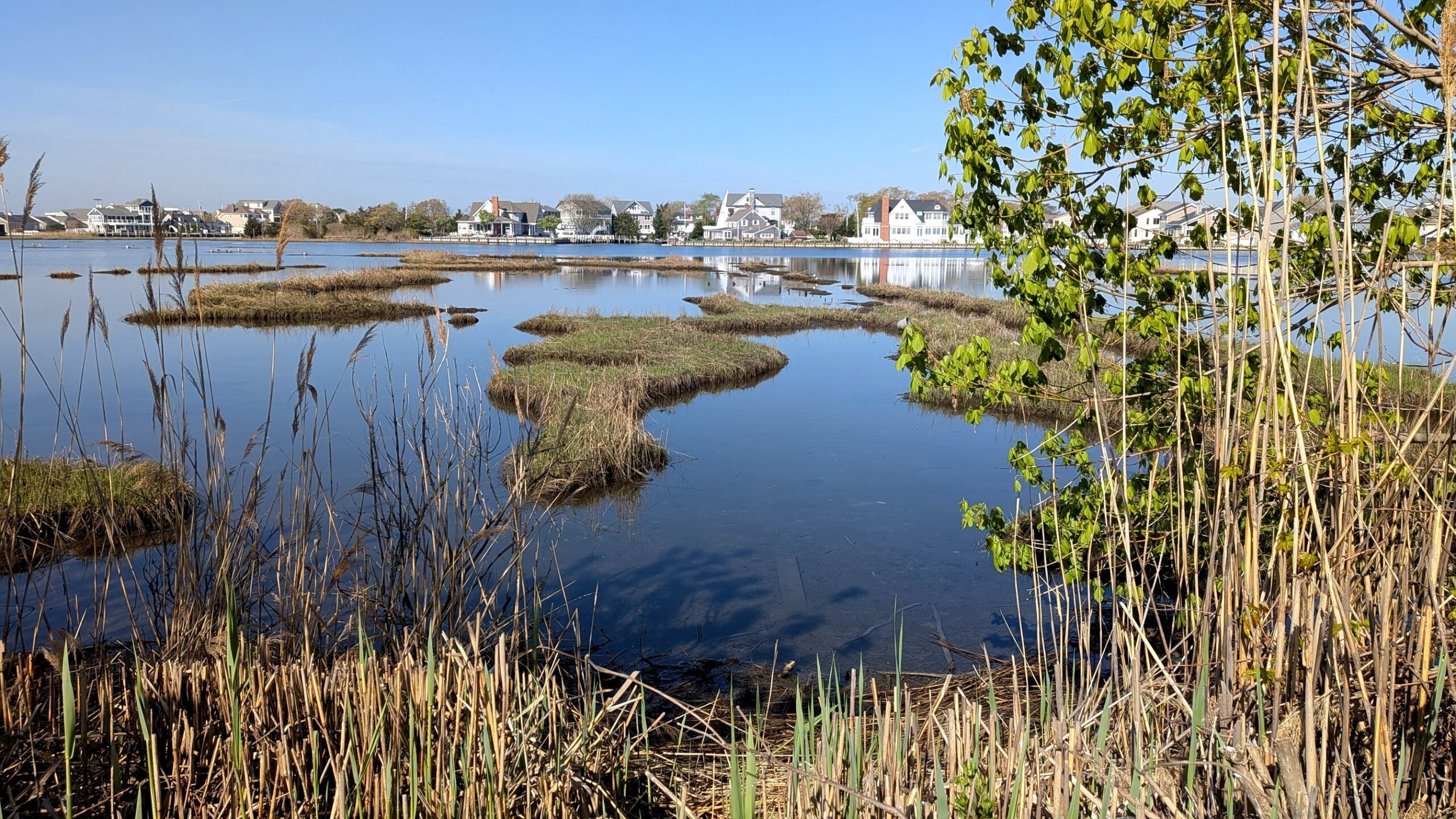
PXL 20250919 145859526 PORTRAIT 1024x1820

The BBP is also offering a total of $923,638 to support projects directly related to stormwater management implementation projects within the watershed that will reduce nutrients or pathogens entering the bay. These funds will support the restoration/improvement of stormwater infrastructure within the Barnegat Bay Watershed, subsequently addressing a major CCMP goal to reduce sources of nutrients, contaminants, debris, and other pollutant loadings from point and nonpoint source pollution. To help with the implementation of the upcoming NJDEP TMDL for Nitrogen within Barnegat Bay and align with BBP’s CCMP goal of cleaner bay waters, stormwater restoration/improvement projects funded by this award must reduce nutrients or pathogens. Projects already required by mitigation or stormwater laws (e.g. green infrastructure required as part of new development) are not eligible. To apply for this funding, please read through the Funding Opportunity and submit an application no later than February 27, 2026.  

The final opportunity available through the BBP directly supports a student to help lead the drafting of the Habitat Plan for the Barnegat Bay Watershed. A total of $17,000 is available to support a student contractor who will ensure the Habitat Plan aligns with the intended vision for each critical habitat in the watershed including tidal wetlands, submerged aquatic vegetation, hard clams, and a reduced section focused on uplands and freshwater riparian areas. The student will base the draft on notes and outputs developed during four workgroup meetings with BBP staff and partners. Proposals are welcome from students at public academic institutions (colleges and universities) with strong writing backgrounds and knowledge of marine/estuarine science. To apply, please read through the Funding Opportunity and submit a proposal no later than January 21, 2026.

It is the BBP’s goal to advance knowledge, sustainability, education, research and monitoring that will enhance the Barnegat Bay watershed for generations to come. We look forward to reviewing project proposals! If you have any questions, please email Andrew McGowan.
Contact Barnegat Bay Partnership Announces New Funding Opportunities to Help Fill Knowledge Gaps Throughout the WatershedContact Barnegat Bay Partnership Announces New Funding Opportunities to Help Fill Knowledge Gaps Throughout the Watershed
Flooded road