September 14, 2026

Guest Article: Learning with the Nature Pros – Recommended Books from Ocean County Naturalists, by Master Naturalist Richard Biolsi

by Nina Sassano

When once a keen-eyed naturalist was stirred 
No man had ever heard a nightingale 
To study and define—what is a bird, 
To classify by rote and book, nor fail 
To mark its structure and to note the scale 
Whereon its song might possibly be heard.
– from “Critic and Poet” by Emma Lazarus

This article was written by Richard Biolsi, an Ocean County Master Naturalist.

Many of us are aware of what a wonderful resource the Ocean County Parks are.  Set in the pines and at the shore, they afford residents and visitors alike experiences in hiking, fishing, nature study, photography and swimming, as well glimpses of wildlife of all kinds.  Most of the parks have interesting and educational visitor centers.  Organized programs at the parks include lectures and talks, crafts, travel to sites outside the parks, boat cruises, wildlife viewing and youth programs, just as several examples. 

Perhaps at times less visible than the parks themselves are the naturalists overseeing the programs in the parks.  These leaders, through their knowledge and experience, are what keep the experiences of visitors so meaningful. They are creative, well versed in the surrounding environments of their parks, and are constantly striving to assure value of the parks to the community. 

We thought that many people getting into the study of nature, volunteering, educating or just adding to their general knowledge might have interest in books the naturalists recommend as good resources.  We have asked 5 naturalists to make such recommendations, and they appear below.  


Benjamin Ackerman, Chief Park Naturalist, Jakes Branch County Park
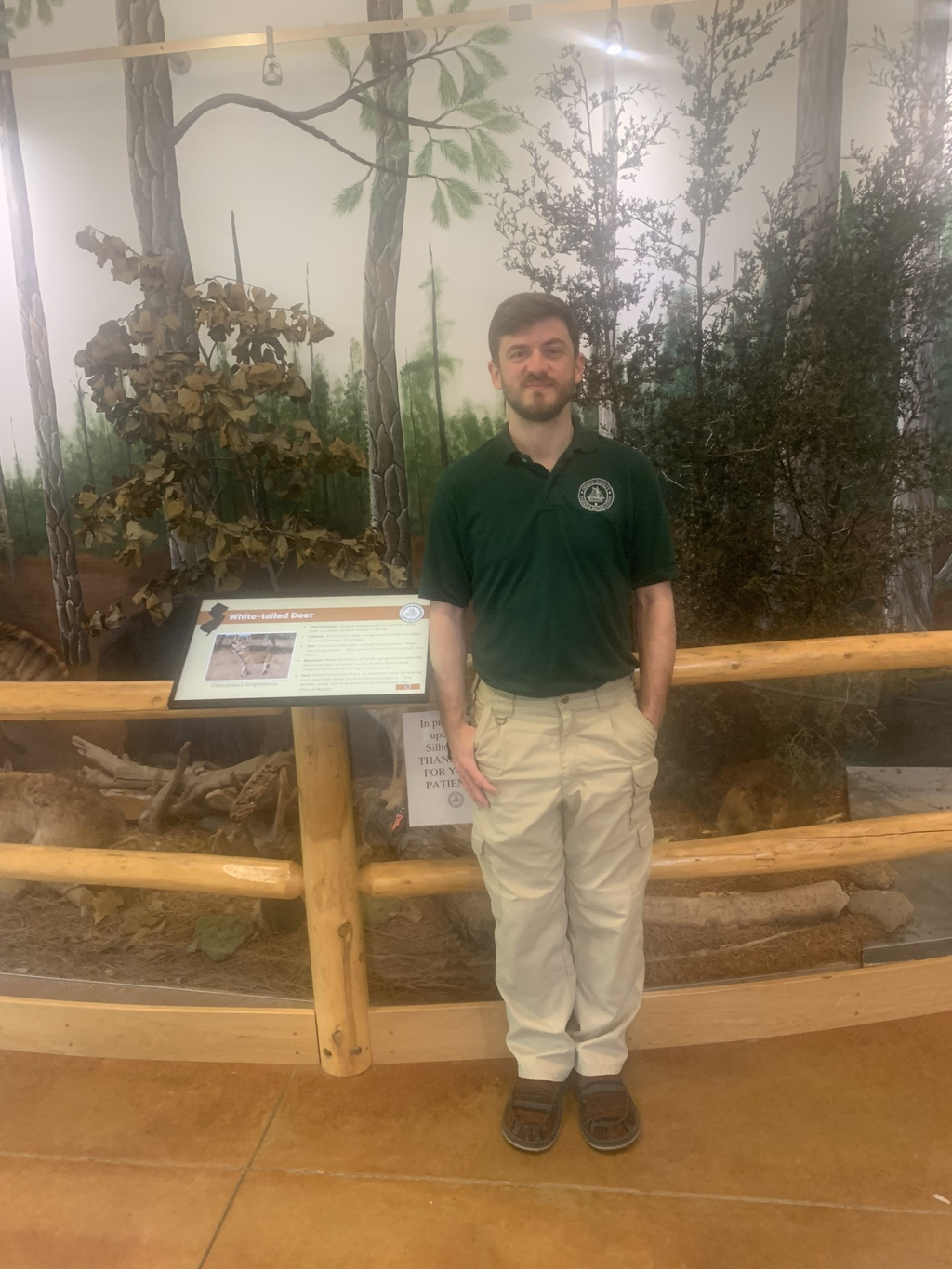
Ben Ackerman, Jakes Branch County Park
Ben Ackerman of Jake’s Branch County Park

Ben has a degree in Environmental Science from Stockton University. He joined the park system as part of the inaugural staff at Jakes Branch in 2008.  He offers a diverse range of programs, including kayaking, hiking, herbalism and crafting. He approaches his job with the goal of helping visitors discover the perfect program to connect with nature and enjoy enriching experiences. 

Ben’s list of books include: 

THE PINE BARRENS by John McPhee. 

Originally appearing in The New Yorker magazine, The Pine Barrens was published as a book in 1968.  It is a classic narrative of the unique characteristics of the pinelands, including its natural environment, its history and especially the people who inhabit it.  As you will see, it is popular with the naturalists. 

A FIELD GUIDE TO THE PINE BARRENS OF NEW JERSEY:  ITS FLORA, FAUNA, ECOLOGY AND HISTORIC SITES by Howard P. Boyd. 

While probably too big to be a pocket guide, Boyd’s descriptions of all things natural in the pinelands is worth carrying in your car, to be pulled out when you are trying to identify anything having to do with the flora and fauna of this unique environment. 

THE ECOLOGICAL PINE BARRENS OF NEW JERSEY:  AN ECOSYTEM THREATENED BY FRAGMENTATION, by Howard P. Boyd. 

Another book by Boyd, this one focuses on the interrelationships between the natural processes and characteristics of the environment (geology, climate, water, etc.) and the animals and plants that exist in that environment.  He also writes about the impact of human activity on that environment, offering a warning concerning current human activity.   

WHISPERS IN THE PINES:  A NATURALIST IN THE NORTHEAST, by Joanna Burger 

Burger transports us to pinelands from Albany, NY through Long Island, the New Jersey pine barrens and points south, describing the  geologic characteristics of each and the many species of animals that inhabit those areas. Again, human impact on pinelands is described, as well as the tension between preservation and development.  

DISCOVERING NEW JERSEY’S PINE BARRENS, by Cathy Antena 

This is a recently published comprehensive guide to the million acre preservation area.  It explores the geography, culture, historic landmarks and conservation efforts in the region.  It also includes events, festivals , local restaurants and wineries. 

Visit Double Trouble State Park at 1100 Double Trouble Road, Beachwood NJ 08722


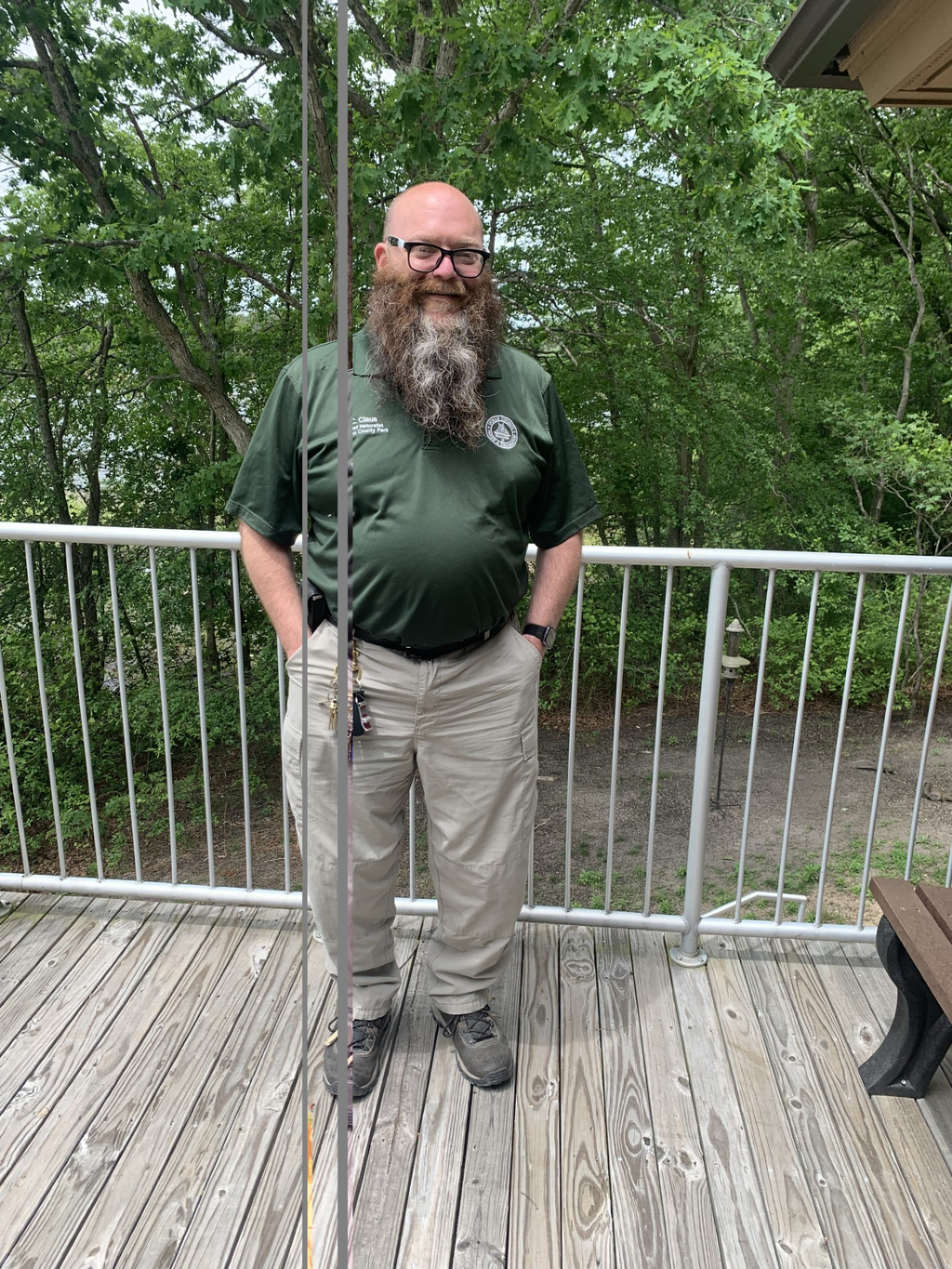
Christopher Claus, Chief Park Naturalist
Ocean County Parks
image

Chris has a long career with the Ocean County park system and is well known for his knowledge of all things natural.  He graduated from Cook College of Rutgers University with a BS in biology.  He has a great deal of ad hoc contact with the public at the three different sites where he is the Chief Naturalist.  Chris’s philosophy on environmental education centers around broadening people’s minds about the expansiveness and beauty of nature. The large picture of Charles Darwin hanging in Chris’s office gives a hint of his recommended books. 

Chris’s list of recommended readings includes:

ON THE ORIGIN OF SPECIES BY MEANS OF NATURAL SELECTION, OR, THE PRESERVATION OF FAVOURED RACES IN THE STRUGGLE FOR LIFE, by Charles Darwin 

Darwin’s timeless text arguing that life evolves from common ancestors through a struggle for existence in which organisms best suited to their environment survive and reproduce, passing those winning traits on while poorly suited traits die out. 

THE SELFISH GENE, by Richard Dawkins 

Dawkins shifts the focus of evolution from the organism or species to the gene itself.  Dawkins argues that natural selection operates primarily on genes, which compete to replicate instructions across generations.  He suggests that altruism toward family members makes evolutionary sense because relatives share many of the same genes. 

LAST CHILD IN THE WOODS:  SAVING OUR CHILDREN FROM NATURE-DEFICIT DISORDER, by Richard Louv 

Louv expresses the belief that behavioral (attention issues) and physical (obesity) problems result from a lack of time outside.  He suggests that parents encouraging time outdoors and schools using outdoor education will provide solutions to this disorder. 

FUZZ:  WHEN NATURE BREAKS THE LAW, by Mary Roach 

As in all of Roach’s books, Fuzz combines humor and science to explore what happens when animals cross paths with human civilization and examines modern technical solutions to clashes that occur. 

ENTANGLED LIFE: HOW FUNGI MAKE OUR WORLDS, CHANGE OUR MINDS AND SHAPE OUR FUTURES, by Merlin Sheldrake 

Sheldrake focuses on the many different aspects of fungal life, from truffles to worm eating fungi to lichens and many more.  He outlines methods by which fungi control the minds and actions of humans, animals and insects. He concludes by explaining how fungi may be used to save the environment. 

You can find Chris at many of Ocean County’s parks – but mainly Ocean County Park 659 Ocean Avenue, Lakewood NJ 08701, Lake Shenandoah County Park 660 Ocean Avenue Lakewood NJ, and Mantoloking Bridge Fishing Pier 30 Mantoloking Road, Brick NJ 08723.


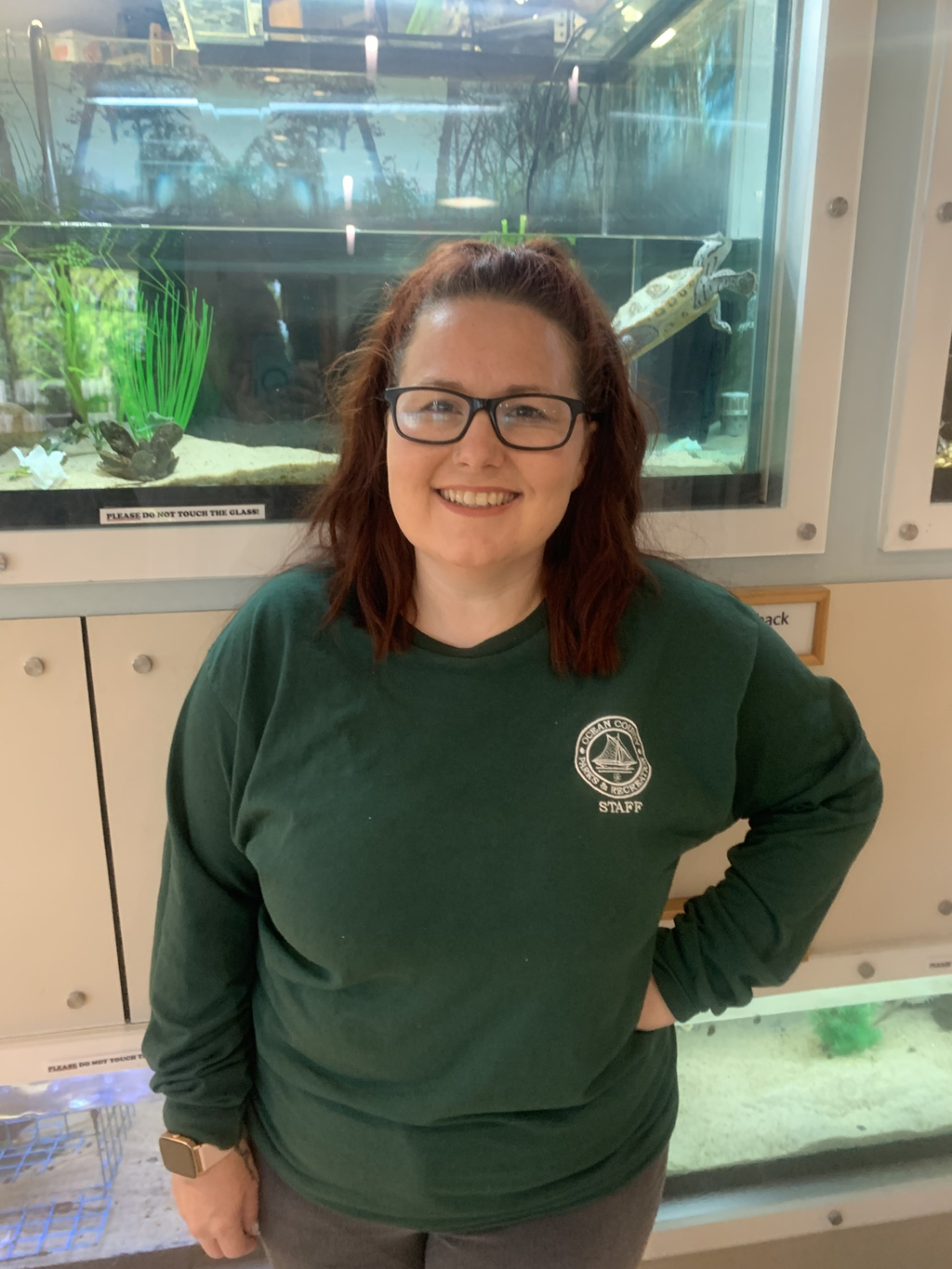
Krystal Smida, Recreation Program Manager, Cattus Island County Park
image

Krystal attended the highly esteemed Marine Academy of Technology and Environmental Science (MATES) in high school, switching gears to become a criminal justice major in college and returning to her field of nature study to work at Cattus Island Park, where she was the animal care supervisor.  She maintained the care of the reptiles, fish and amphibians following the standards of the Zoological Association of America.  While certified as an animal control officer, she has come to embrace teaching about conservation rather than enforcement. 

Krystal’s list of recommended readings include: 

PETERSON FIELD GUIDE OF REPTILES AND AMPHIBIANS EASTERN AND CENTRAL NORTH AMERICA, by Robert Powell, Roger Conant and Joseph T. Collins. 

The Peterson Guide is the definitive handbook for identifying frogs, salamanders, turtles, lizards, snakes and crocodilians.  It includes clear color illustrations and anatomical drawings, as well as distribution maps of the various species. 

BUTTERFLIES THROUGH BINOCULARS:  THE EAST, by Jeffrey Glassberg 

This is a comprehensive guide covering more than 300 butterfly species found across the eastern half of the United States and southeastern Canada. The author advocates for observing, identifying and enjoying butterflies in their natural habitats, using binoculars rather than capturing and killing them.  The guide has hundreds of color photographs of living butterflies in the wild. 

TREES OF NEW JERSEY AND THE MID-ATLANTIC STATES, by Chritopher T. Martine 

This is a field guide which covers 146 native and non-native tree species in this region. It includes black and white drawings of the different species, and each profile contains a narrative detailing the tree’s ecology and natural history. 

ENVIRONMENTAL INTERPRETATION:  A PRACTICAL GUIDE FOR PEOPLE WITH BIG IDEAS AND SMALL BUDGETS, by Sam H. Ham 

Written for both beginners and experts in the environment, this book guides the reader in communication techniques that work at low cost. It is geared toward designing and implementing effective educational programs in many different settings, including parks and forests. To this end, Ham provides many illustrations, photos and technical inserts to design these programs. 

THE TRUE AND LUCKY LIFE OF A TURTLE, by Sy Montgomery and Matt Patterson 

To be shared with children, this nonfiction book follows the 60 year life of a snapping turtle named Fire Chief.  After some traumatic incidents, Fire Chief is rescued by the Turtle Rescue League.  This book is consistent with Montgomery’s 38 other books, which are down to earth, humorous and insightful, enjoyed by both adults and children. 

Visit Cattus Island County Park 1170 Cattus Island Blvd Toms River NJ 08753


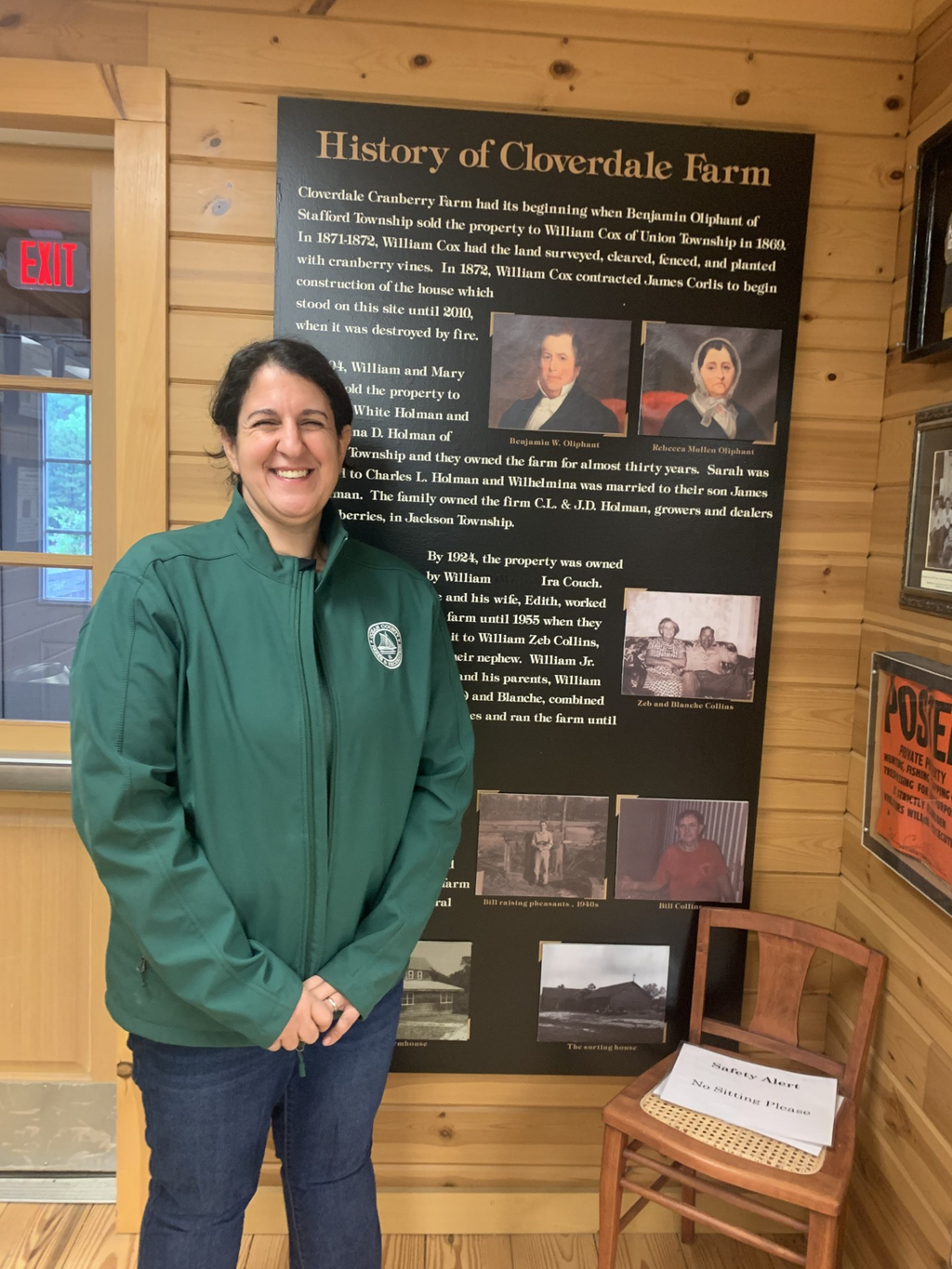
Patricia Trasferini, Program Coordinator, Cloverdale Farm County Park
Patricia Trasferini Cloverdale Farm
Patricia Trasferini, Program Coordinator Cloverdale Farm

Patti has over 20 years of experience with the Ocean County Parks and Recreation Department, working at Wells Mills County Park, Cattus Island County Park and currently at Cloverdale Farm County Park.  She believes her dual major of history and education from Rowan University serves her well in that she develops programs for the general public, school groups and other civic organizations.  

Patti’s list of recommended readings includes:

KOBBE’S JERSEY COAST AND PINES, by Gustave Kobbe 

Known mostly for his writings on opera, Kobbe wrote his book on the Jersey coast and the pinelands in 1891.  Using illustrations from the time, he describes old towns, hotels, businesses, geology and means of transportation (train fare from New York to Lakewood was $1.45).  The book serves as a wonderful way of contrasting the present with that era.  In describing our area he writes that “Beaches south of Bayhead retain their original wild and desolate character.”  

WHEN CRANBERRIES WERE KING IN OCEAN COUNTYNJ, by The Thursday Group 

Published by the Ocean County Historical Society, this book details the rise of the commercial cranberry industry in the Pine Barrens. It highlights company towns like Double Trouble Village, where the pioneers of the industry developed expansive cranberry bogs where wetlands had existed.  The Thursday Group was a circle of local historians, volunteers and residents who met regularly to research and write about local history. 

FORGOTTEN TOWNS OF SOUTHERN NEW JERSEY, by Henry Charlton Beck 

Beck gives us a series of stories about towns that generally don’t appear on the maps of today, giving a complete picture of the history of New Jersey.  Many of the stories are of little known wartime history, including during the Revolution, the War of 1812 and the Civil War.  Of course, he introduces us the people living in these towns. 

THE JERSEY DEVIL, by James F. McCloy and Ray Miller 

Whether the result of mass hysteria, an actual creature or nothing but foolishness, many people maintain that they have seen the devil prowling the sand trails and misty marshes of the Pine Barrens, enough to keep the possibility of its existence alive.  At any rate, it remains a part of the folklore of the pines. 

PHANTOM OF THE PINES:  MORE TALES OF THE JERSEY DEVIL by James F. McCloy and Ray Miller 

If THE JERSEY DEVIL piques your interest in this folklore, you may want to follow up with this book which uses historical accounts and interviews with people who claimed to have seen the creature.  As one interviewee puts it, “Behind every tradition…there’s something real.” 

Visit Cloverdale Farm, 34 Cloverdale Rd Barnegat NJ 08005


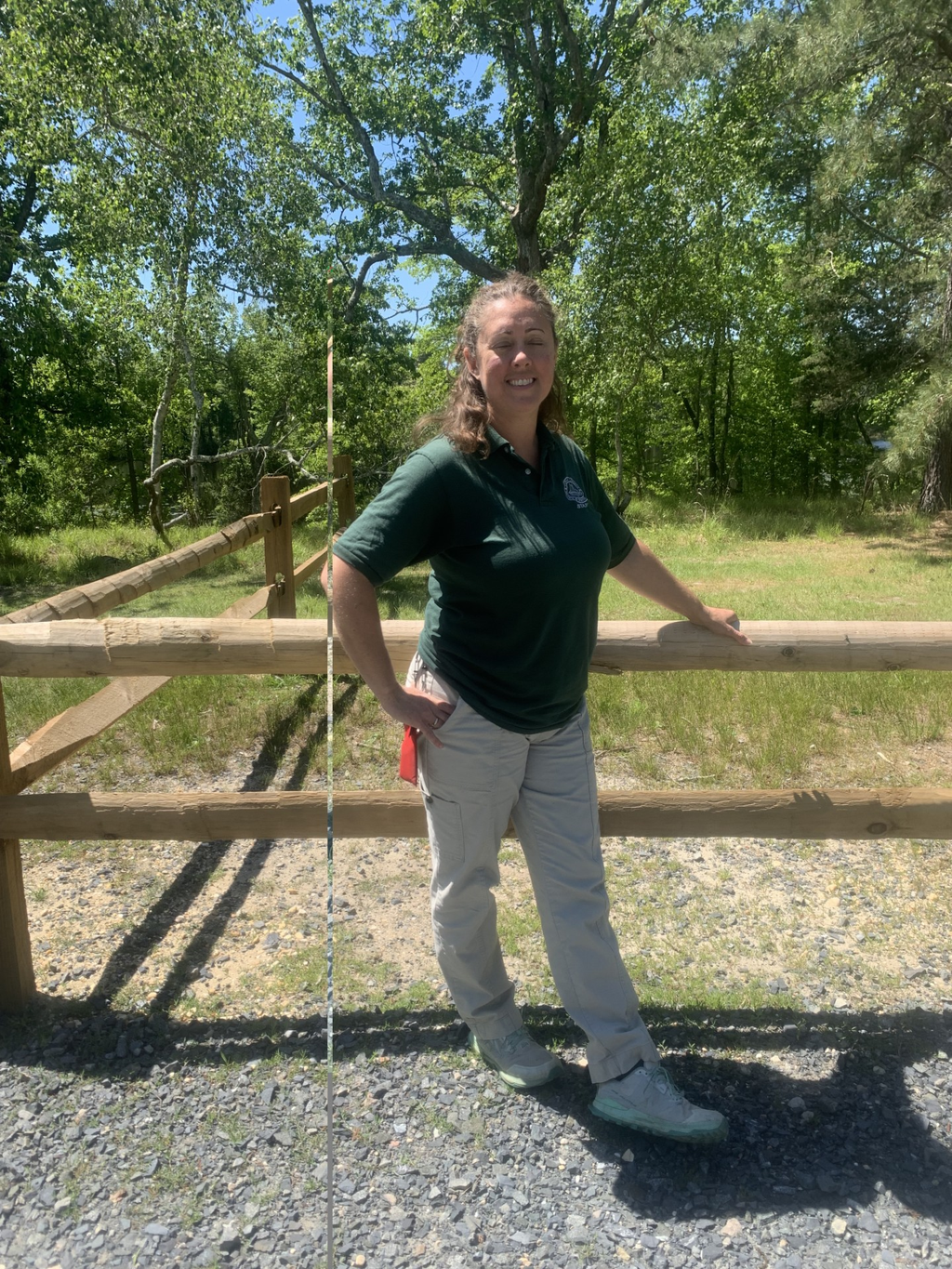
Amanda Truhan, Chief Park Naturalist, Wells Mills County Park
image

Amanda has a degree in Natural Resource Management from Cook College of Rutgers University.  She has had experience at Island Beach State Park, where she worked with osprey, and at a bird sanctuary in Florida.  She has many years developing outreach programs at Wells Mills and continues to run exploration trips to other environments within and outside of Ocean County.   Amanda tries to get visitors to view the big picture of humans fitting into the environment and how our activities impact natural areas. She believes that if we are to appreciate nature, we must learn about it by immersing ourselves in it. 

Amamda’s list of recommended readings includes: 

HEART OF THE PINES:  GHOSTLY VOICES OF THE PINE BARRENS, by John E. Pearce 

This is a huge book of 904 pages, telling tales, history and stories about the forgotten towns of the Pine Barrens.  It includes many fascinating black and white photos that take you back to these towns during their hay day as you browse through them. 

GHOST TOWNS:  AND OTHER QUIRKY PLACES IN THE NEW JERSEY PINE BARRENS, by Barbara Solem-Stull 

Solem-Stull tells the story of towns that rose up around the iron furnaces, glass factories, paper mills, cranberry farms and brick making industries of the 18th and early 19th centuries.  The book provides driving directions and self-guided walking tours and has many maps, photographs and illustrations for anyone who is interested in the history of the Pinelands and long-ago communities.  

THE PINE BARRENS, by John McPhee 

Originally appearing in THE NEW YORKER magazine, THE PINE BARRENS was published as a book in 1968.  It is a classic narrative of the unique characteristics of the pinelands, including the natural environment, its history and especially the people who inhabit it. 

A PINE BARRENS ODYSSEY:  A NATURALIST’S YEAR IN THE PINE BARRENS OF NEW JEERSEY, by Howard P. Boyd 

Possibly a companion piece to Boyd’s field guide, each chapter welcomes you to the wonders of the months of the year.  It continues the comprehensive look at this natural area and gives the reader a calendar of what to expect and look for in this beautiful natural area. 

IRON IN THE PINES, by Arthur D. Pierce 

Pierce tells the story of the years when iron was king with its attending industries of glass factories, paper mills, cotton mills and brickmaking.  In the sprawling acres of the Wharton Tract were revolutionary heroes and privateers mixed in with people who lived in the communities and worked in the industries.

Visit Wells Mills County Park, 905 Wells Mills Rd, Waretown, NJ 08758


The reader will note that many of the selections are similar (or the same), while others reflect the unique characteristics of each naturalist’s setting and their expertise.  My thanks to those who were willing to provide alternative titles in order to avoid redundancy. People new to nature study may consider selecting one book from each list as a beginning in their pursuit.   

Rachel Carson (I recommend any of her books), a marine biologist and conservationist, viewed naturalists as allies in bringing public awareness and fostering a deep protective sense of wonder of the natural world.  How lucky we are to have the people listed above provide us with such learning experiences. 
Explore More Insights from Barnegat Bay

Dive deeper into the ongoing efforts to protect and restore our environment with more updates and initiatives that you can take part in. Check out our latest blog posts for valuable tips and insights.

UNKNOWN

There is limited data available to quantify Wetland and Riparian Buffer Preservation, or updated data to quantify Wetland Acreage. The BBP has obtained funding and will begin assessment efforts for both targets, in the next few years.


 Hard Clam abundance has not been updated since 2012. Recovery of the stock will be guided by the Fishery Management Plan for Hard Clams, which is under development with the NJDEP, BBP, and other organizations. Reclam the Bay and other partners have continued to plant clams for restoration purposes. Continued plantings in strategic locations which maximize survival and reproduction is one strategy to pursue in the coming years. This work can use a model developed by Rutgers with BBP funding which identified areas where planted clams could have the greatest dispersal of their larvae and thus potentially maximally contribute to the recovery of the stock.

 Water Withdrawals were over the target in the 2021 report; USGS has not yet completed its latest update, so a definitive determination of status is not available. However, additional NJDEP data show that it is likely that we continue to not meet the target. Per capita water use has gone down, demonstrating the effectiveness of water-saving appliances and practices, but that decrease has been offset by population gains. 


IN PROGRESS

New maps quantifying Submerged Aquatic Vegetation extent were developed, but poor image clarity resulted in a high degree of uncertainty in the total acreage. NJDEP and Rutgers are working to resolve the uncertainty of these maps, and improve the total acreage estimate. Funding has also been obtained for further research and restoration activities. Several groups are developing potential restoration actions.

The USGS has completed the first phase of its study to identify minimum ecological flows in select Barnegat Bay tributaries. USGS scientists compared streamflow statistics between historical and current time periods to better understand trends in watershed flow conditions. This work provides a foundation for developing ecological flow targets in the Barnegat Bay watershed.  Similar to SAV extent, funding (approximately $450K) has been obtained by the BBP to complete the remaining phases necessary for threshold determination.


TARGETS ACHIEVED

No targets can be considered “Achieved” at this time.


NOT ACHIEVING

Several Public Swimming Beaches exceeded their safe swimming standards more frequently than during their baseline time period (2016-2018).

While most beaches are routinely safe for swimming, several problematic areas such as Beachwood, Hancock, Windward, and several lake beaches need track-down studies and restoration to pinpoint and address sources of bacteria.

Acres of Approved Shellfish Waters decreased from the last report. While this decrease was small, it represents a loss of previously approved waters. Similar to public beaches, track-down studies and restoration work are needed to pinpoint and address sources of bacteria.


Guest Article: Learning with the Nature Pros – Recommended Books from Ocean County Naturalists, by Master Naturalist Richard Biolsi

When once a keen-eyed naturalist was stirred 
No man had ever heard a nightingale 
To study and define—what is a bird, 
To classify by rote and book, nor fail 
To mark its structure and to note the scale 
Whereon its song might possibly be heard.
– from “Critic and Poet” by Emma Lazarus

This article was written by Richard Biolsi, an Ocean County Master Naturalist.

Many of us are aware of what a wonderful resource the Ocean County Parks are.  Set in the pines and at the shore, they afford residents and visitors alike experiences in hiking, fishing, nature study, photography and swimming, as well glimpses of wildlife of all kinds.  Most of the parks have interesting and educational visitor centers.  Organized programs at the parks include lectures and talks, crafts, travel to sites outside the parks, boat cruises, wildlife viewing and youth programs, just as several examples. 

Perhaps at times less visible than the parks themselves are the naturalists overseeing the programs in the parks.  These leaders, through their knowledge and experience, are what keep the experiences of visitors so meaningful. They are creative, well versed in the surrounding environments of their parks, and are constantly striving to assure value of the parks to the community. 

We thought that many people getting into the study of nature, volunteering, educating or just adding to their general knowledge might have interest in books the naturalists recommend as good resources.  We have asked 5 naturalists to make such recommendations, and they appear below.  


Benjamin Ackerman, Chief Park Naturalist, Jakes Branch County Park

Ben Ackerman, Jakes Branch County Park
Ben Ackerman of Jake’s Branch County Park

Ben has a degree in Environmental Science from Stockton University. He joined the park system as part of the inaugural staff at Jakes Branch in 2008.  He offers a diverse range of programs, including kayaking, hiking, herbalism and crafting. He approaches his job with the goal of helping visitors discover the perfect program to connect with nature and enjoy enriching experiences. 

Ben’s list of books include: 

THE PINE BARRENS by John McPhee. 

Originally appearing in The New Yorker magazine, The Pine Barrens was published as a book in 1968.  It is a classic narrative of the unique characteristics of the pinelands, including its natural environment, its history and especially the people who inhabit it.  As you will see, it is popular with the naturalists. 

A FIELD GUIDE TO THE PINE BARRENS OF NEW JERSEY:  ITS FLORA, FAUNA, ECOLOGY AND HISTORIC SITES by Howard P. Boyd. 

While probably too big to be a pocket guide, Boyd’s descriptions of all things natural in the pinelands is worth carrying in your car, to be pulled out when you are trying to identify anything having to do with the flora and fauna of this unique environment. 

THE ECOLOGICAL PINE BARRENS OF NEW JERSEY:  AN ECOSYTEM THREATENED BY FRAGMENTATION, by Howard P. Boyd. 

Another book by Boyd, this one focuses on the interrelationships between the natural processes and characteristics of the environment (geology, climate, water, etc.) and the animals and plants that exist in that environment.  He also writes about the impact of human activity on that environment, offering a warning concerning current human activity.   

WHISPERS IN THE PINES:  A NATURALIST IN THE NORTHEAST, by Joanna Burger 

Burger transports us to pinelands from Albany, NY through Long Island, the New Jersey pine barrens and points south, describing the  geologic characteristics of each and the many species of animals that inhabit those areas. Again, human impact on pinelands is described, as well as the tension between preservation and development.  

DISCOVERING NEW JERSEY’S PINE BARRENS, by Cathy Antena 

This is a recently published comprehensive guide to the million acre preservation area.  It explores the geography, culture, historic landmarks and conservation efforts in the region.  It also includes events, festivals , local restaurants and wineries. 

Visit Double Trouble State Park at 1100 Double Trouble Road, Beachwood NJ 08722


Christopher Claus, Chief Park Naturalist
Ocean County Parks

image

Chris has a long career with the Ocean County park system and is well known for his knowledge of all things natural.  He graduated from Cook College of Rutgers University with a BS in biology.  He has a great deal of ad hoc contact with the public at the three different sites where he is the Chief Naturalist.  Chris’s philosophy on environmental education centers around broadening people’s minds about the expansiveness and beauty of nature. The large picture of Charles Darwin hanging in Chris’s office gives a hint of his recommended books. 

Chris’s list of recommended readings includes:

ON THE ORIGIN OF SPECIES BY MEANS OF NATURAL SELECTION, OR, THE PRESERVATION OF FAVOURED RACES IN THE STRUGGLE FOR LIFE, by Charles Darwin 

Darwin’s timeless text arguing that life evolves from common ancestors through a struggle for existence in which organisms best suited to their environment survive and reproduce, passing those winning traits on while poorly suited traits die out. 

THE SELFISH GENE, by Richard Dawkins 

Dawkins shifts the focus of evolution from the organism or species to the gene itself.  Dawkins argues that natural selection operates primarily on genes, which compete to replicate instructions across generations.  He suggests that altruism toward family members makes evolutionary sense because relatives share many of the same genes. 

LAST CHILD IN THE WOODS:  SAVING OUR CHILDREN FROM NATURE-DEFICIT DISORDER, by Richard Louv 

Louv expresses the belief that behavioral (attention issues) and physical (obesity) problems result from a lack of time outside.  He suggests that parents encouraging time outdoors and schools using outdoor education will provide solutions to this disorder. 

FUZZ:  WHEN NATURE BREAKS THE LAW, by Mary Roach 

As in all of Roach’s books, Fuzz combines humor and science to explore what happens when animals cross paths with human civilization and examines modern technical solutions to clashes that occur. 

ENTANGLED LIFE: HOW FUNGI MAKE OUR WORLDS, CHANGE OUR MINDS AND SHAPE OUR FUTURES, by Merlin Sheldrake 

Sheldrake focuses on the many different aspects of fungal life, from truffles to worm eating fungi to lichens and many more.  He outlines methods by which fungi control the minds and actions of humans, animals and insects. He concludes by explaining how fungi may be used to save the environment. 

You can find Chris at many of Ocean County’s parks – but mainly Ocean County Park 659 Ocean Avenue, Lakewood NJ 08701, Lake Shenandoah County Park 660 Ocean Avenue Lakewood NJ, and Mantoloking Bridge Fishing Pier 30 Mantoloking Road, Brick NJ 08723.


Krystal Smida, Recreation Program Manager, Cattus Island County Park

image

Krystal attended the highly esteemed Marine Academy of Technology and Environmental Science (MATES) in high school, switching gears to become a criminal justice major in college and returning to her field of nature study to work at Cattus Island Park, where she was the animal care supervisor.  She maintained the care of the reptiles, fish and amphibians following the standards of the Zoological Association of America.  While certified as an animal control officer, she has come to embrace teaching about conservation rather than enforcement. 

Krystal’s list of recommended readings include: 

PETERSON FIELD GUIDE OF REPTILES AND AMPHIBIANS EASTERN AND CENTRAL NORTH AMERICA, by Robert Powell, Roger Conant and Joseph T. Collins. 

The Peterson Guide is the definitive handbook for identifying frogs, salamanders, turtles, lizards, snakes and crocodilians.  It includes clear color illustrations and anatomical drawings, as well as distribution maps of the various species. 

BUTTERFLIES THROUGH BINOCULARS:  THE EAST, by Jeffrey Glassberg 

This is a comprehensive guide covering more than 300 butterfly species found across the eastern half of the United States and southeastern Canada. The author advocates for observing, identifying and enjoying butterflies in their natural habitats, using binoculars rather than capturing and killing them.  The guide has hundreds of color photographs of living butterflies in the wild. 

TREES OF NEW JERSEY AND THE MID-ATLANTIC STATES, by Chritopher T. Martine 

This is a field guide which covers 146 native and non-native tree species in this region. It includes black and white drawings of the different species, and each profile contains a narrative detailing the tree’s ecology and natural history. 

ENVIRONMENTAL INTERPRETATION:  A PRACTICAL GUIDE FOR PEOPLE WITH BIG IDEAS AND SMALL BUDGETS, by Sam H. Ham 

Written for both beginners and experts in the environment, this book guides the reader in communication techniques that work at low cost. It is geared toward designing and implementing effective educational programs in many different settings, including parks and forests. To this end, Ham provides many illustrations, photos and technical inserts to design these programs. 

THE TRUE AND LUCKY LIFE OF A TURTLE, by Sy Montgomery and Matt Patterson 

To be shared with children, this nonfiction book follows the 60 year life of a snapping turtle named Fire Chief.  After some traumatic incidents, Fire Chief is rescued by the Turtle Rescue League.  This book is consistent with Montgomery’s 38 other books, which are down to earth, humorous and insightful, enjoyed by both adults and children. 

Visit Cattus Island County Park 1170 Cattus Island Blvd Toms River NJ 08753


Patricia Trasferini, Program Coordinator, Cloverdale Farm County Park

Patricia Trasferini Cloverdale Farm
Patricia Trasferini, Program Coordinator Cloverdale Farm

Patti has over 20 years of experience with the Ocean County Parks and Recreation Department, working at Wells Mills County Park, Cattus Island County Park and currently at Cloverdale Farm County Park.  She believes her dual major of history and education from Rowan University serves her well in that she develops programs for the general public, school groups and other civic organizations.  

Patti’s list of recommended readings includes:

KOBBE’S JERSEY COAST AND PINES, by Gustave Kobbe 

Known mostly for his writings on opera, Kobbe wrote his book on the Jersey coast and the pinelands in 1891.  Using illustrations from the time, he describes old towns, hotels, businesses, geology and means of transportation (train fare from New York to Lakewood was $1.45).  The book serves as a wonderful way of contrasting the present with that era.  In describing our area he writes that “Beaches south of Bayhead retain their original wild and desolate character.”  

WHEN CRANBERRIES WERE KING IN OCEAN COUNTYNJ, by The Thursday Group 

Published by the Ocean County Historical Society, this book details the rise of the commercial cranberry industry in the Pine Barrens. It highlights company towns like Double Trouble Village, where the pioneers of the industry developed expansive cranberry bogs where wetlands had existed.  The Thursday Group was a circle of local historians, volunteers and residents who met regularly to research and write about local history. 

FORGOTTEN TOWNS OF SOUTHERN NEW JERSEY, by Henry Charlton Beck 

Beck gives us a series of stories about towns that generally don’t appear on the maps of today, giving a complete picture of the history of New Jersey.  Many of the stories are of little known wartime history, including during the Revolution, the War of 1812 and the Civil War.  Of course, he introduces us the people living in these towns. 

THE JERSEY DEVIL, by James F. McCloy and Ray Miller 

Whether the result of mass hysteria, an actual creature or nothing but foolishness, many people maintain that they have seen the devil prowling the sand trails and misty marshes of the Pine Barrens, enough to keep the possibility of its existence alive.  At any rate, it remains a part of the folklore of the pines. 

PHANTOM OF THE PINES:  MORE TALES OF THE JERSEY DEVIL by James F. McCloy and Ray Miller 

If THE JERSEY DEVIL piques your interest in this folklore, you may want to follow up with this book which uses historical accounts and interviews with people who claimed to have seen the creature.  As one interviewee puts it, “Behind every tradition…there’s something real.” 

Visit Cloverdale Farm, 34 Cloverdale Rd Barnegat NJ 08005


Amanda Truhan, Chief Park Naturalist, Wells Mills County Park

image

Amanda has a degree in Natural Resource Management from Cook College of Rutgers University.  She has had experience at Island Beach State Park, where she worked with osprey, and at a bird sanctuary in Florida.  She has many years developing outreach programs at Wells Mills and continues to run exploration trips to other environments within and outside of Ocean County.   Amanda tries to get visitors to view the big picture of humans fitting into the environment and how our activities impact natural areas. She believes that if we are to appreciate nature, we must learn about it by immersing ourselves in it. 

Amamda’s list of recommended readings includes: 

HEART OF THE PINES:  GHOSTLY VOICES OF THE PINE BARRENS, by John E. Pearce 

This is a huge book of 904 pages, telling tales, history and stories about the forgotten towns of the Pine Barrens.  It includes many fascinating black and white photos that take you back to these towns during their hay day as you browse through them. 

GHOST TOWNS:  AND OTHER QUIRKY PLACES IN THE NEW JERSEY PINE BARRENS, by Barbara Solem-Stull 

Solem-Stull tells the story of towns that rose up around the iron furnaces, glass factories, paper mills, cranberry farms and brick making industries of the 18th and early 19th centuries.  The book provides driving directions and self-guided walking tours and has many maps, photographs and illustrations for anyone who is interested in the history of the Pinelands and long-ago communities.  

THE PINE BARRENS, by John McPhee 

Originally appearing in THE NEW YORKER magazine, THE PINE BARRENS was published as a book in 1968.  It is a classic narrative of the unique characteristics of the pinelands, including the natural environment, its history and especially the people who inhabit it. 

A PINE BARRENS ODYSSEY:  A NATURALIST’S YEAR IN THE PINE BARRENS OF NEW JEERSEY, by Howard P. Boyd 

Possibly a companion piece to Boyd’s field guide, each chapter welcomes you to the wonders of the months of the year.  It continues the comprehensive look at this natural area and gives the reader a calendar of what to expect and look for in this beautiful natural area. 

IRON IN THE PINES, by Arthur D. Pierce 

Pierce tells the story of the years when iron was king with its attending industries of glass factories, paper mills, cotton mills and brickmaking.  In the sprawling acres of the Wharton Tract were revolutionary heroes and privateers mixed in with people who lived in the communities and worked in the industries.

Visit Wells Mills County Park, 905 Wells Mills Rd, Waretown, NJ 08758


The reader will note that many of the selections are similar (or the same), while others reflect the unique characteristics of each naturalist’s setting and their expertise.  My thanks to those who were willing to provide alternative titles in order to avoid redundancy. People new to nature study may consider selecting one book from each list as a beginning in their pursuit.   

Rachel Carson (I recommend any of her books), a marine biologist and conservationist, viewed naturalists as allies in bringing public awareness and fostering a deep protective sense of wonder of the natural world.  How lucky we are to have the people listed above provide us with such learning experiences. 

Contact Guest Article: Learning with the Nature Pros – Recommended Books from Ocean County Naturalists, by Master Naturalist Richard BiolsiContact Guest Article: Learning with the Nature Pros – Recommended Books from Ocean County Naturalists, by Master Naturalist Richard Biolsi