This blog was written by BBP’s technician, and former NJ Watershed Ambassador, Brianna Casario.
The Fungi Kingdom can be easily overlooked when one is out exploring the natural world. Although mushrooms might not be thought to be as charismatic as plants or animals, fungi play a crucial role in the ecosystem and without them our intricately connected systems could collapse. The Barnegat Bay Watershed is home to many species of fascinating fungi.
Here is an overview of some of the most interesting fungi (in my opinion) spotted in or near Ocean County. I found most of these recorded observations through a deep dive into the research grade observations on iNaturalist.
Entoloma indigoferum
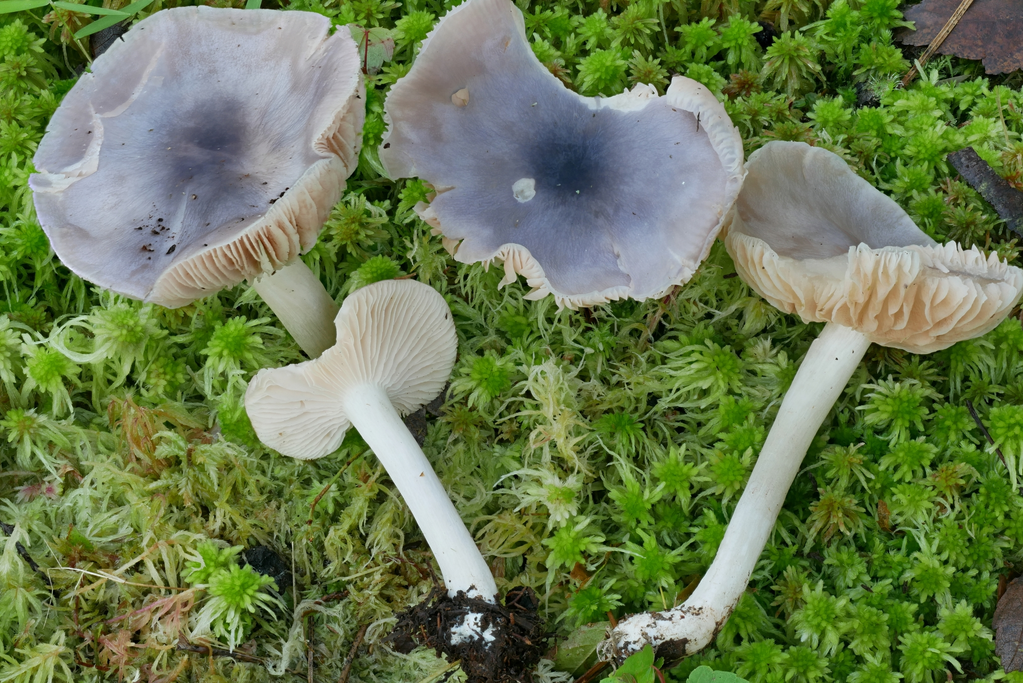
The Entoloma indigoferum in particular is a mushroom to get excited about. This beautiful gilled mushroom has pink spores and grows in Atlantic White-Cedar swamps, a rather unique ecosystem found in many regions of the Barnegat Bay watershed. The New Jersey Mycological Association lists it as a Rarely Recorded Fungi with only 197 iNaturalist sightings in New Jersey recorded. Of which, 120 of these sightings were located within Ocean County!
Cladonia cristatella
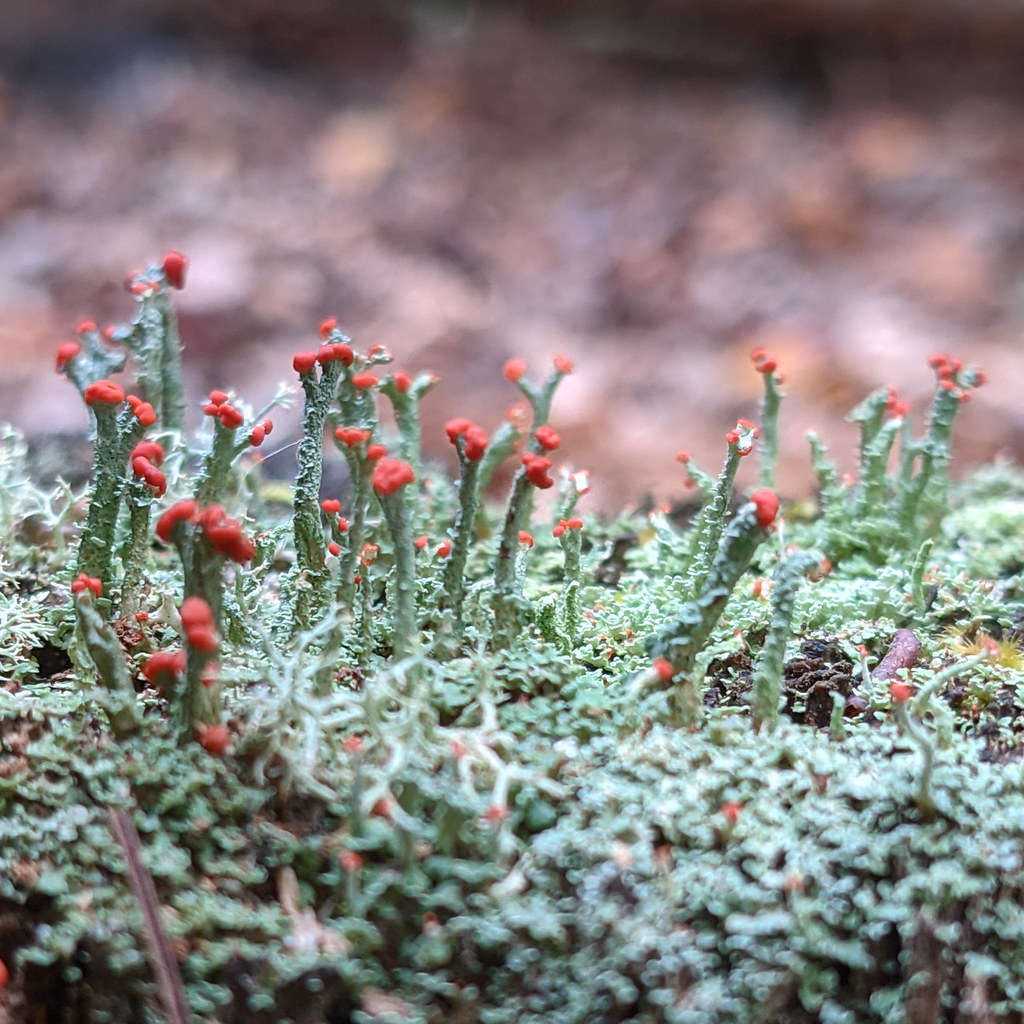
A type of lichen that is fairly common in our watershed is Cladonia cristatella, often referred to as British soldier lichen. A lichen is a type of organism that is composed of a symbiotic relationship between a fungus species and an algae species. The presence of certain lichen can be indicators of good air quality as lichens are sensitive to pollutants and changes in their environment. Rather small in size, British soldier lichen grows only to be up to an inch tall and is often found on dead trees or along the base of trees. It is easy to see where British soldier lichen gets its name; the spore-bearing structures called apothecia are bright red, resembling the coats of British soldiers during the American Revolution.
Trametes versicolor
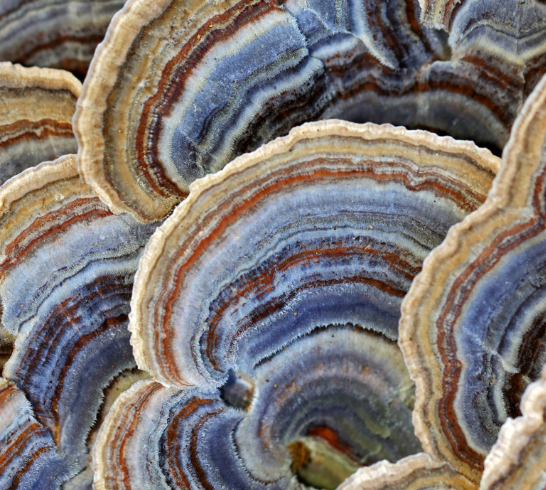
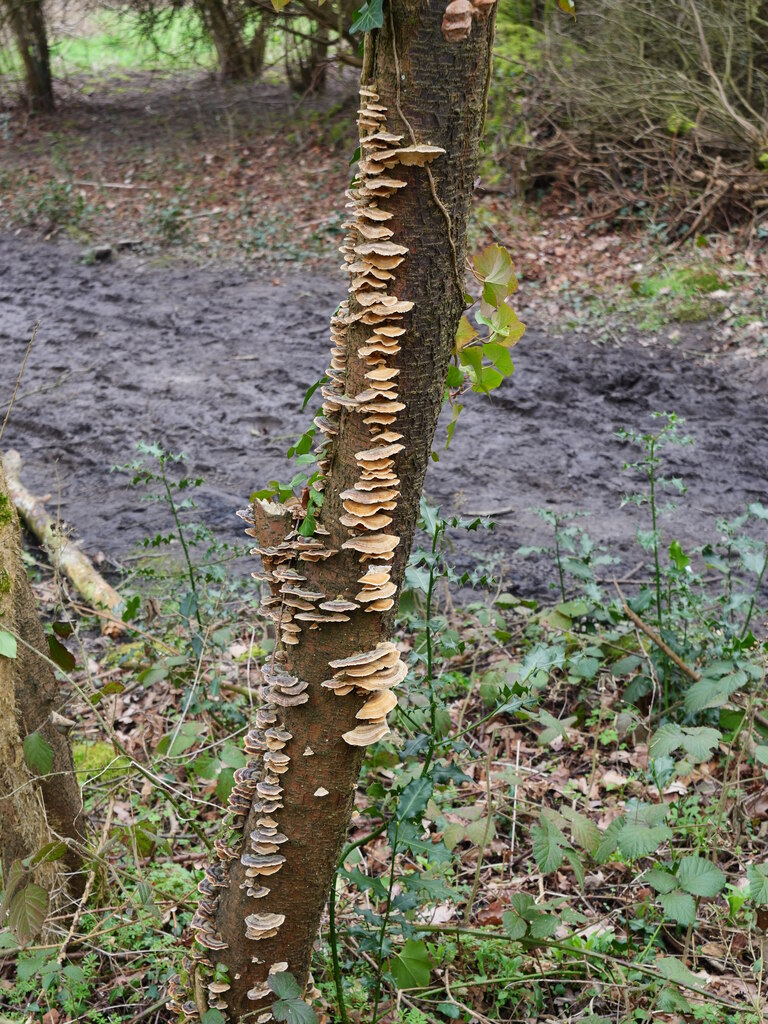
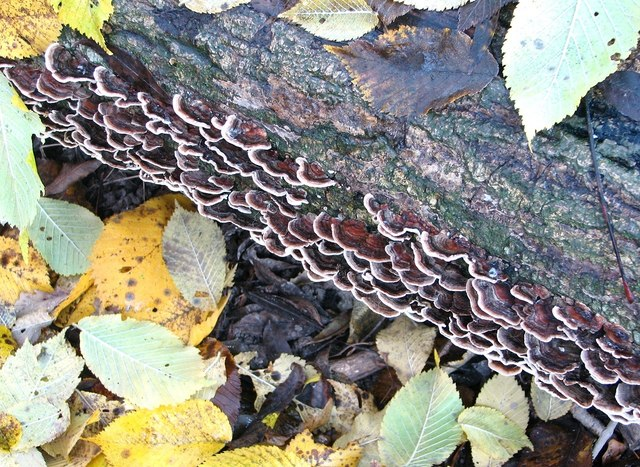
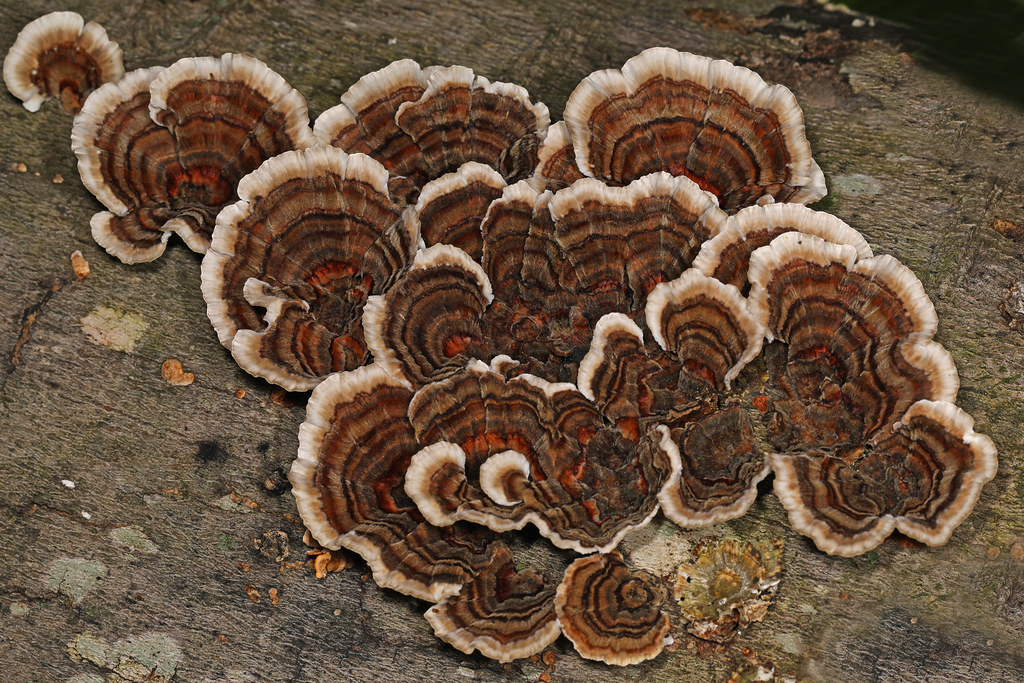
Turkey-Tail (Trametes versicolor) is a type of Bracket Fungi (Family Polyporaceae) and is one of the most common mushrooms found in North America. It can be found on all types of dead deciduous wood, wounded trees, and sometimes conifers, making it an important decomposer of the forest.There are many other similar looking species that are commonly be referred to as “Turkey-Tail”, however true Turkey-Tails have some unique characteristics, which when combined can help to correctly identify them. Similar to British soldier lichen, Turkey-Tail gets its name from its appearance: the colorful cap resembles the feathers of a turkey’s tail. There is record of Trametes versicolor being used as a form of traditional medicine for over 2000 years, and it has more recently been involved in scientific studies for its possible medicinal properties, however, much more research is needed before these properties can be definitively confirmed.
While I was pursuing my Ecology, Evolution, and Natural Resources degree at Rutgers University, Dr. Richard G. Lathrop explained to my class that you can gather insight on how long a tree has been down by quickly examining the Turkey-Tail growing on it. If a tree has been decomposing on the forest floor for a longer period of time, then when it is encountered by a bracket fungi (like Turkey-Tail and its look-alikes), the fungi will grow with its colorful cap laying horizontally, facing the sun (Picture A). On the other hand, if Turkey-Tail begins growing on a dying tree that is still standing during the time of the fungi’s establishment (Picture B), then once the tree falls, the Turkey-Tail will be flipped over to its side, affixed to the tree with the colorful cap no longer facing the sun. Be on the lookout for this next time you’re on a hike – it’s an easy type of ecological investigation that is really neat to notice!
Gymnosporangium juniperi-virginianae
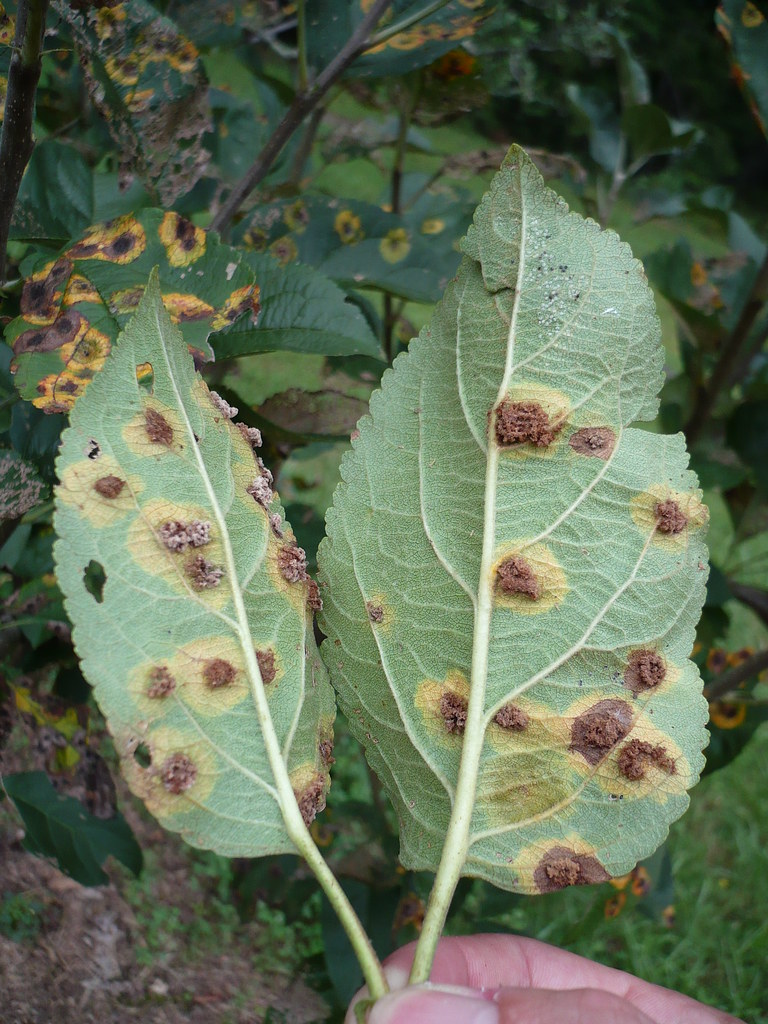
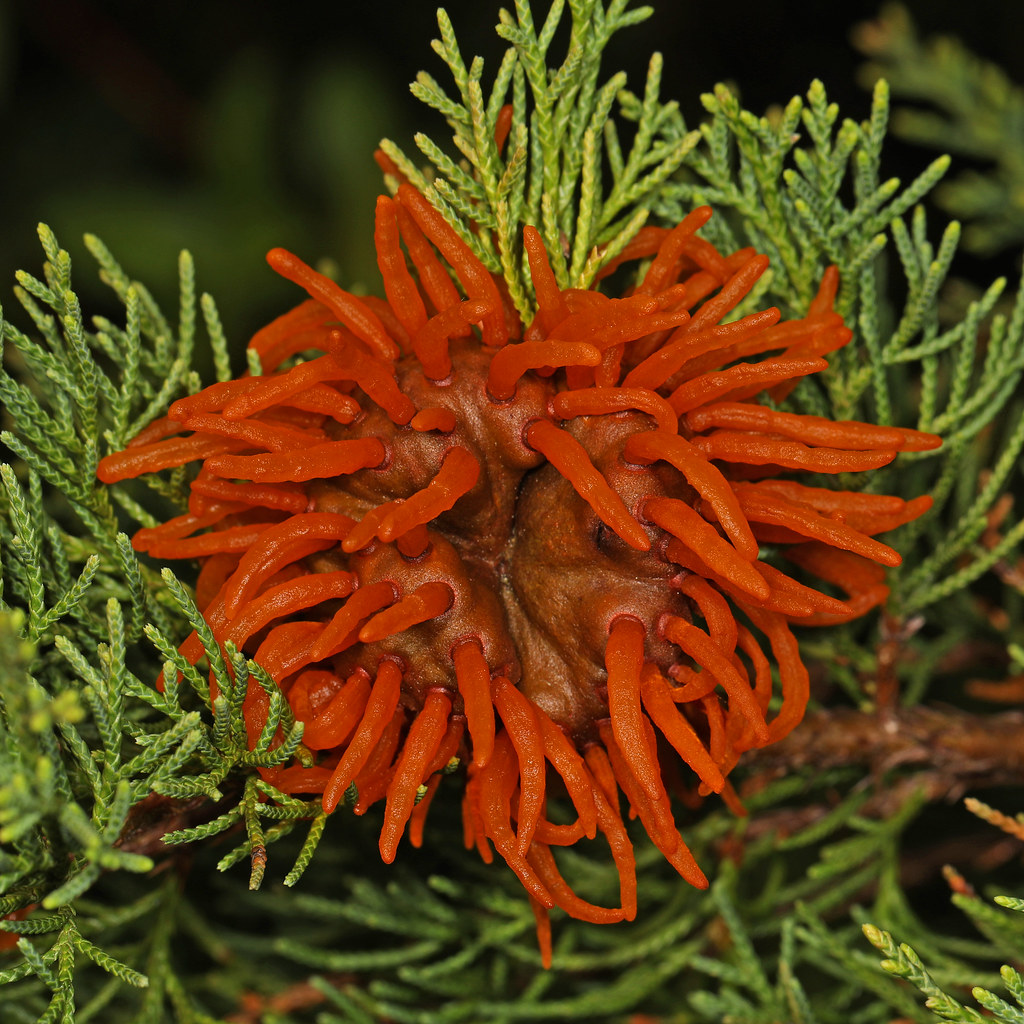
This alien-looking fungi called Cedar Apple Rust (Gymnosporangium juniperi-virginianae) is often found in places where farmland and forest are close to one another. Something intriguing about this fungi (besides its totally bizarre appearance) is that in order to reproduce, it needs two host species: mostly eastern redcedar (Juniperus virginiana) in our region, and crabapple, (Malus or Pyrus spp.), hawthorn (Crataegus spp.) or quince (Cydonia oblonga). Rust fungi are named so because of the rust color they portray during at least one part of their lifecycle. Although sometimes it can lead to negative impacts on apple production and death of redcedar trees when it proliferates, often time it will not do much damage.
The left picture shows a Cedar Apple Rust infection on a redcedar (juniper) tree. First, a gall will appear on the tree, next the gall will form spores out of gelatinous masses, then telial horns will form the following spring. After rainfall, these telial horns quickly grow longer and brighter in color. Spores from here can not infect new redcedars, rather at this point in the lifecycle, they will move onto the next new host species. After the spores leave the redcedar, they will travel to nearby apples or crabapples and infect the leaves (as seen in the second picture). Circular yellow markings eventually turn into black spots, and then finally take form in rust-colored spores that are ready to find another redcedar tree and start the lifecycle again.
There is so much more to learn in the incredibly diverse world of Fungi. There might be as many as 5 million species of fungi worldwide, with most still waiting to be discovered. To appreciate just how astronomical this number is, in comparison, there are about 33,000 species of described fish – and they are the most biodiverse group of vertebrates! Even less than that, there are between only 6,000 – 7,000 species of mammals found worldwide. Their abundance just goes to show how crucial fungi are in our environment, within and outside of the Barnegat Bay watershed.