Opens in a new tab

September 22, 2026

What Really Happens to Your Recycling in Ocean County?

by Nina Sassano

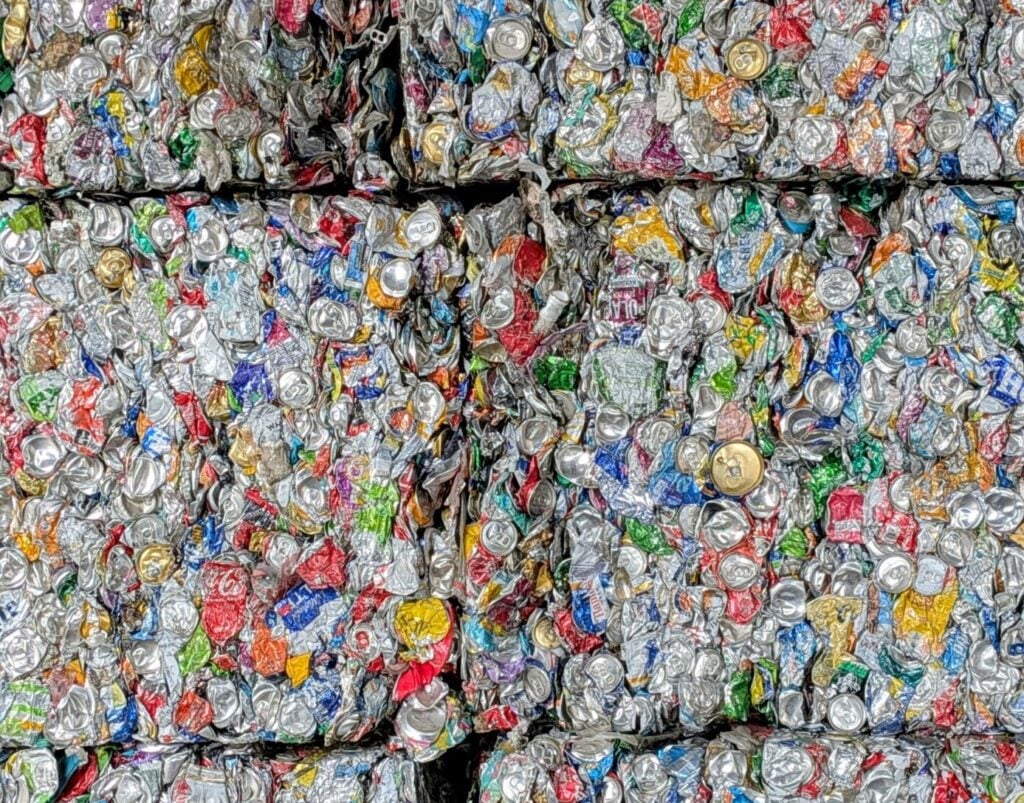
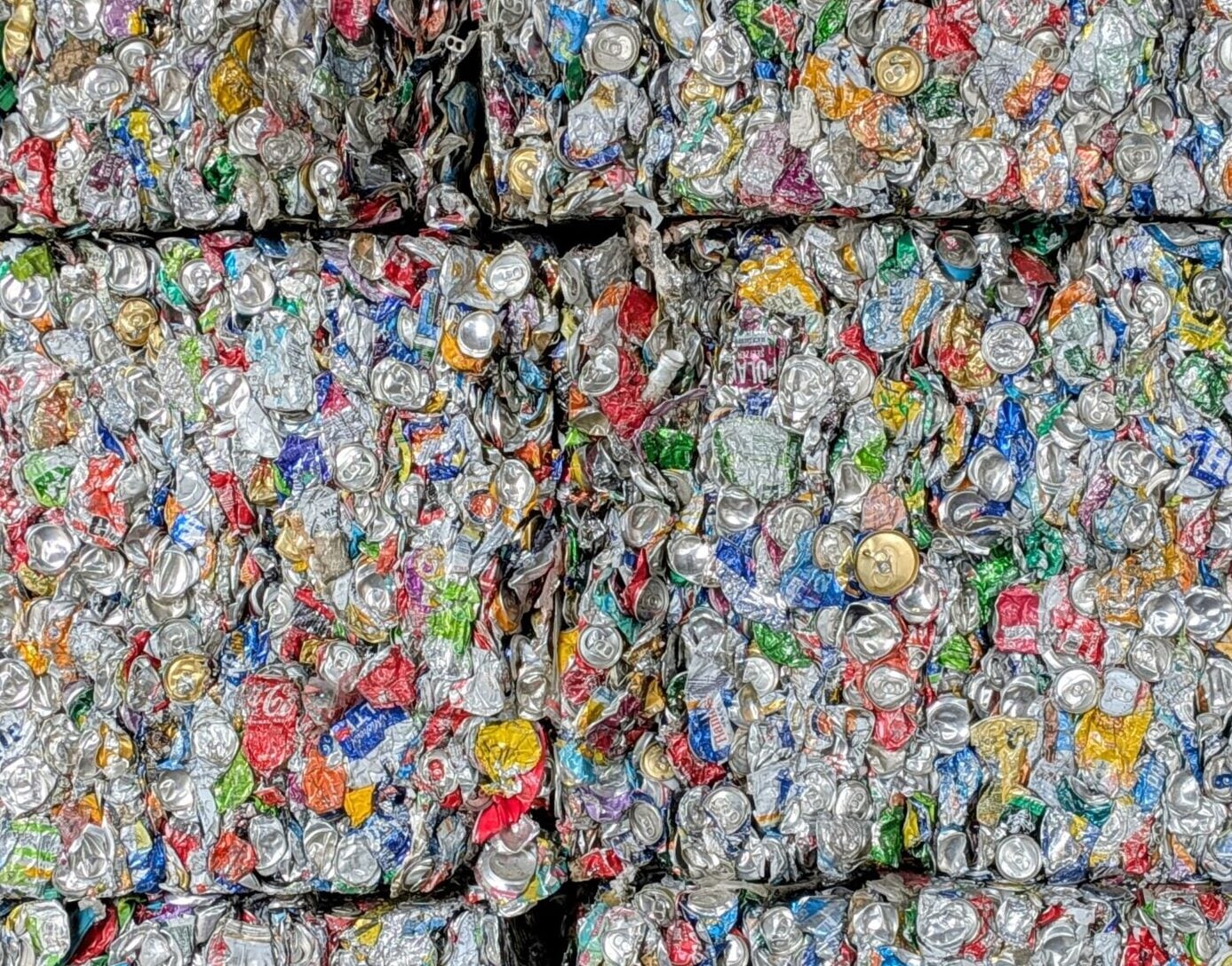
sorted aluminum at recycling center

One of the first things we learned on a recent visit to the Ocean County Northern Recycling Center might surprise you: Ocean County residents can pick up mulch and compost for free.

The County turns leaves and other yard debris into compost and mulch that can be used again in gardens and landscapes. Instead of treating that material as waste, it becomes a resource that can go right back into our communities.

That alone is a pretty great example of what recycling can accomplish. But during our visit, Barnegat Bay Partnership Director Andrew McGowan and I got a much closer look at what happens to another very familiar waste stream: everything we put in our recycling bins.

For most of us, the recycling process ends when the bin reaches the curb. We know a truck picks it up, but what happens next can feel like a bit of a mystery.
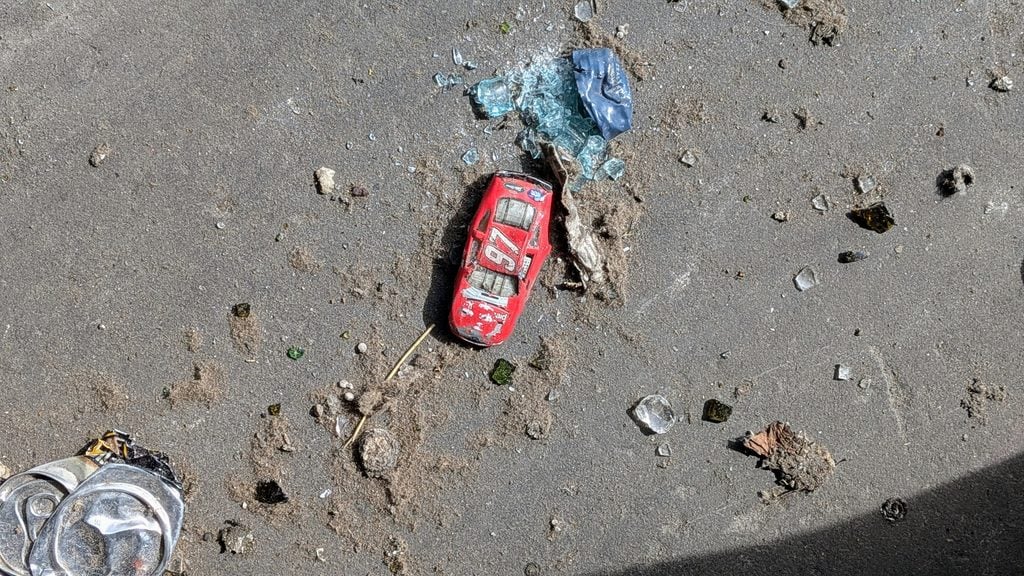
car at recycling center

Ocean County has operated a single stream recycling program since 2010. That means residents can place accepted paper, cardboard, bottles and cans together rather than sorting each material into a separate container. Those materials eventually make their way to the County’s Materials Recovery Facility in Lakewood, where equipment and workers separate the mixed recycling into different types of material. Once separated, those materials can be sent to end markets for further processing and recycling.

Seeing that process in person also makes it very clear why recycling correctly matters.

Not everything that seems recyclable belongs in your curbside bin. Ocean County currently accepts plastic containers numbered 1, 2 and 5, aluminum, steel and tin cans and foil, glass bottles, jars and containers, corrugated cardboard and mixed paper.

One of the biggest items to keep out of your recycling is plastic bags and plastic film. These materials can become tangled in recycling equipment, interfering with the sorting process. Recyclables should also not be bundled inside plastic bags before being placed in your bin.

But something not belonging in your curbside recycling bin does not necessarily mean it belongs in the trash.

Ocean County offers a number of special recycling and disposal programs for materials that need to be handled separately. At the County’s recycling centers, residents can drop off items including electronics, paint, waste oil, fluorescent bulbs and other materials. The County also has options for rechargeable and automotive batteries, cooking grease, rigid plastics, tires, shredded paper and more.
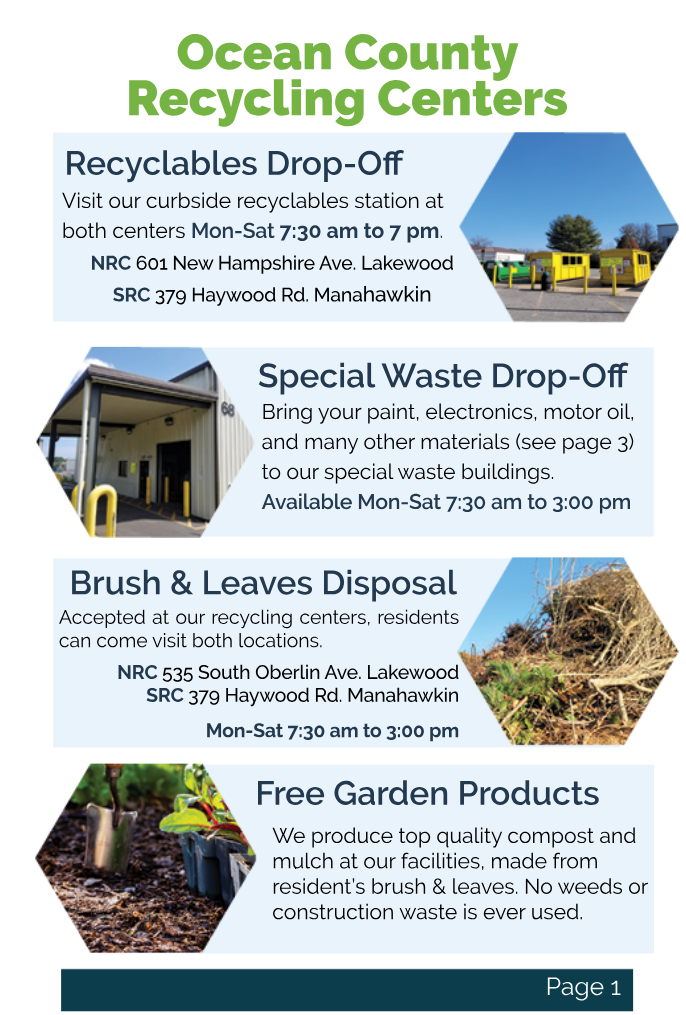
OC Recycling Center info

Household hazardous waste requires a different process. Ocean County holds a free Household Hazardous Waste Program for residents that accepts materials such as gasoline, pesticides and herbicides, pool chemicals, propane tanks, stains, varnishes and other household chemicals. Registration is required for these events.

The County operates two recycling centers. The Northern Recycling Center is in Lakewood and includes the recyclable materials processing facility, recycling education center, special waste disposal, residential brush and leaf drop off, and free compost and mulch. The Southern Recycling Center is in Stafford Township and also offers resident recycling drop off, special waste disposal, brush and leaf disposal, and free compost and mulch.

Residents who want compost or mulch can pick it up at the Northern Recycling Center at 535 Oberlin Avenue South in Lakewood or the Southern Recycling Center at 379 Haywood Road in Manahawkin. The materials are produced from leaves and yard debris collected in Ocean County and are available free of charge to Ocean County homeowners and municipalities.

Our tour was a good reminder that recycling is much more than putting something into a blue bin. There is an entire system of collection, sorting, processing and finding another use for materials that might otherwise become waste. That system works much better when what we put into it is actually recyclable.

So the next time you are standing over your recycling bin wondering whether something belongs there, take a second to check. And if it does not belong at the curb, that does not necessarily mean you are out of options. Ocean County has resources for everything from electronics and paint to yard debris, hazardous household materials and those plastic items that require a different recycling route.

And if your garden could use a little help, you might even come home with some free compost or mulch.
Explore More Insights from Barnegat Bay

Dive deeper into the ongoing efforts to protect and restore our environment with more updates and initiatives that you can take part in. Check out our latest blog posts for valuable tips and insights.

UNKNOWN

There is limited data available to quantify Wetland and Riparian Buffer Preservation, or updated data to quantify Wetland Acreage. The BBP has obtained funding and will begin assessment efforts for both targets, in the next few years.


 Hard Clam abundance has not been updated since 2012. Recovery of the stock will be guided by the Fishery Management Plan for Hard Clams, which is under development with the NJDEP, BBP, and other organizations. Reclam the Bay and other partners have continued to plant clams for restoration purposes. Continued plantings in strategic locations which maximize survival and reproduction is one strategy to pursue in the coming years. This work can use a model developed by Rutgers with BBP funding which identified areas where planted clams could have the greatest dispersal of their larvae and thus potentially maximally contribute to the recovery of the stock.

 Water Withdrawals were over the target in the 2021 report; USGS has not yet completed its latest update, so a definitive determination of status is not available. However, additional NJDEP data show that it is likely that we continue to not meet the target. Per capita water use has gone down, demonstrating the effectiveness of water-saving appliances and practices, but that decrease has been offset by population gains. 


IN PROGRESS

New maps quantifying Submerged Aquatic Vegetation extent were developed, but poor image clarity resulted in a high degree of uncertainty in the total acreage. NJDEP and Rutgers are working to resolve the uncertainty of these maps, and improve the total acreage estimate. Funding has also been obtained for further research and restoration activities. Several groups are developing potential restoration actions.

The USGS has completed the first phase of its study to identify minimum ecological flows in select Barnegat Bay tributaries. USGS scientists compared streamflow statistics between historical and current time periods to better understand trends in watershed flow conditions. This work provides a foundation for developing ecological flow targets in the Barnegat Bay watershed.  Similar to SAV extent, funding (approximately $450K) has been obtained by the BBP to complete the remaining phases necessary for threshold determination.


TARGETS ACHIEVED

No targets can be considered “Achieved” at this time.


NOT ACHIEVING

Several Public Swimming Beaches exceeded their safe swimming standards more frequently than during their baseline time period (2016-2018).

While most beaches are routinely safe for swimming, several problematic areas such as Beachwood, Hancock, Windward, and several lake beaches need track-down studies and restoration to pinpoint and address sources of bacteria.

Acres of Approved Shellfish Waters decreased from the last report. While this decrease was small, it represents a loss of previously approved waters. Similar to public beaches, track-down studies and restoration work are needed to pinpoint and address sources of bacteria.


What Really Happens to Your Recycling in Ocean County?

One of the first things we learned on a recent visit to the Ocean County Northern Recycling Center might surprise you: Ocean County residents can pick up mulch and compost for free.

The County turns leaves and other yard debris into compost and mulch that can be used again in gardens and landscapes. Instead of treating that material as waste, it becomes a resource that can go right back into our communities.

That alone is a pretty great example of what recycling can accomplish. But during our visit, Barnegat Bay Partnership Director Andrew McGowan and I got a much closer look at what happens to another very familiar waste stream: everything we put in our recycling bins.

For most of us, the recycling process ends when the bin reaches the curb. We know a truck picks it up, but what happens next can feel like a bit of a mystery.

car at recycling center

Ocean County has operated a single stream recycling program since 2010. That means residents can place accepted paper, cardboard, bottles and cans together rather than sorting each material into a separate container. Those materials eventually make their way to the County’s Materials Recovery Facility in Lakewood, where equipment and workers separate the mixed recycling into different types of material. Once separated, those materials can be sent to end markets for further processing and recycling.

Seeing that process in person also makes it very clear why recycling correctly matters.

Not everything that seems recyclable belongs in your curbside bin. Ocean County currently accepts plastic containers numbered 1, 2 and 5, aluminum, steel and tin cans and foil, glass bottles, jars and containers, corrugated cardboard and mixed paper.

One of the biggest items to keep out of your recycling is plastic bags and plastic film. These materials can become tangled in recycling equipment, interfering with the sorting process. Recyclables should also not be bundled inside plastic bags before being placed in your bin.

But something not belonging in your curbside recycling bin does not necessarily mean it belongs in the trash.

Ocean County offers a number of special recycling and disposal programs for materials that need to be handled separately. At the County’s recycling centers, residents can drop off items including electronics, paint, waste oil, fluorescent bulbs and other materials. The County also has options for rechargeable and automotive batteries, cooking grease, rigid plastics, tires, shredded paper and more.

OC Recycling Center info

Household hazardous waste requires a different process. Ocean County holds a free Household Hazardous Waste Program for residents that accepts materials such as gasoline, pesticides and herbicides, pool chemicals, propane tanks, stains, varnishes and other household chemicals. Registration is required for these events.

The County operates two recycling centers. The Northern Recycling Center is in Lakewood and includes the recyclable materials processing facility, recycling education center, special waste disposal, residential brush and leaf drop off, and free compost and mulch. The Southern Recycling Center is in Stafford Township and also offers resident recycling drop off, special waste disposal, brush and leaf disposal, and free compost and mulch.

Residents who want compost or mulch can pick it up at the Northern Recycling Center at 535 Oberlin Avenue South in Lakewood or the Southern Recycling Center at 379 Haywood Road in Manahawkin. The materials are produced from leaves and yard debris collected in Ocean County and are available free of charge to Ocean County homeowners and municipalities.

Our tour was a good reminder that recycling is much more than putting something into a blue bin. There is an entire system of collection, sorting, processing and finding another use for materials that might otherwise become waste. That system works much better when what we put into it is actually recyclable.

So the next time you are standing over your recycling bin wondering whether something belongs there, take a second to check. And if it does not belong at the curb, that does not necessarily mean you are out of options. Ocean County has resources for everything from electronics and paint to yard debris, hazardous household materials and those plastic items that require a different recycling route.

And if your garden could use a little help, you might even come home with some free compost or mulch.
Contact What Really Happens to Your Recycling in Ocean County?Contact What Really Happens to Your Recycling in Ocean County?
sorted aluminum at recycling center