August 31, 2023

Tidal patterns found under low-lying forests—what comes next as sea levels rise?

by S-FX.com

marsh wetland

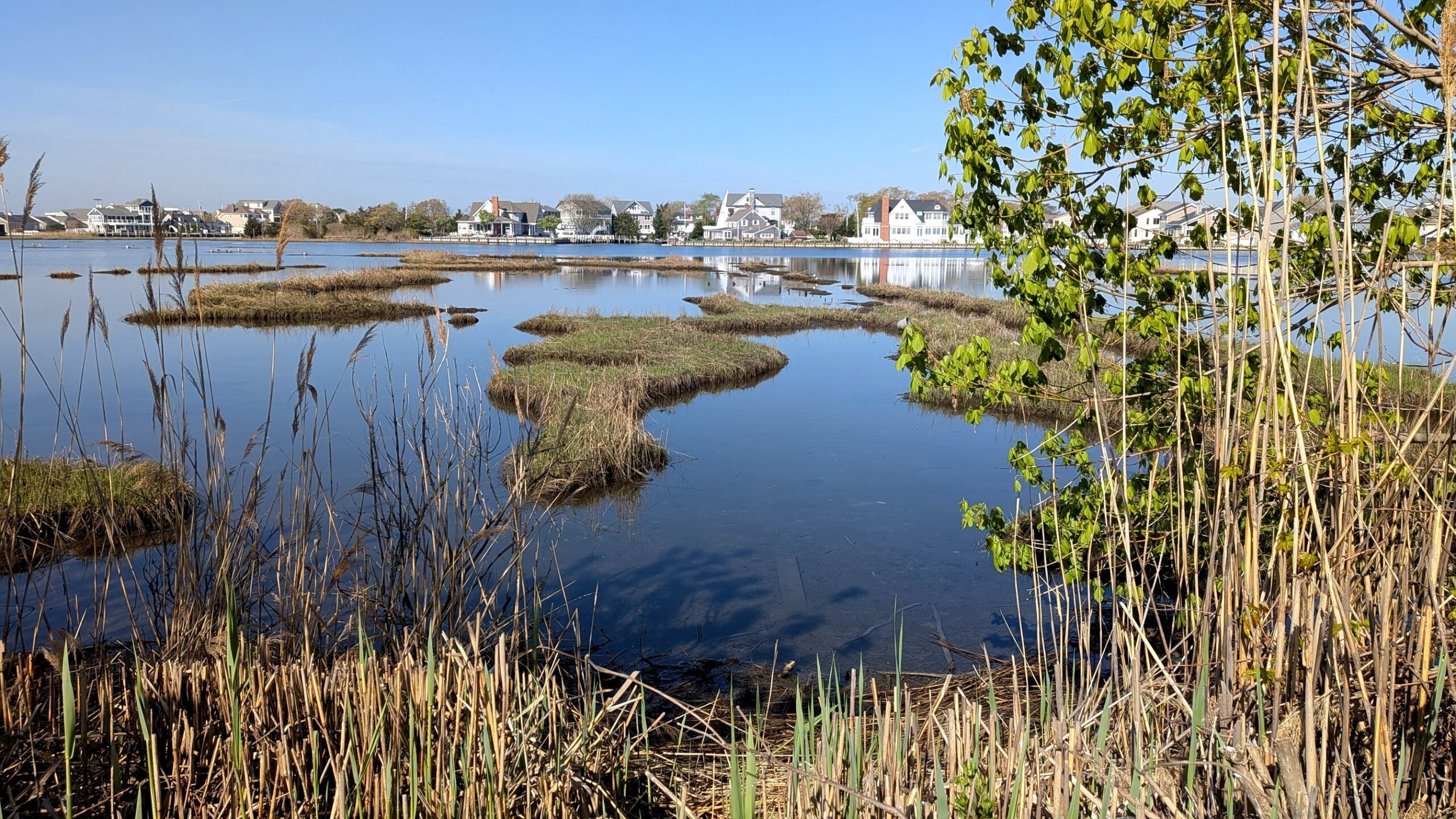
As sea level rise, flooding occurs at higher and higher elevations. As flood patterns change, tidal marshes can slowly migrate upslope into low-lying forests. The conversion of forest to marsh is an important one—it is one of signals that sea level rise is affecting higher elevations in the estuary, where many people have positioned their homes. The first symptoms of this transition, however, are subtle. And so, we begin our study of this process by monitoring what’s happening below ground.

The depth of groundwater can have large effects on tree distribution and growth, even if it is less obvious than surface water. Plants need water, but their roots also need oxygen and should not be too wet. If the groundwater is shallow, there is a chance that roots will get too wet more often. Further, the depth to groundwater under forests that border tidal marshes might decrease as sea level rise pushes water to higher elevation. These are possible clues into how (and when) rising sea level might catalyze the conversion of forest to marsh.

371859523 263854983267550 9042537037260524364 N
Part of our incredible field team, installing monitoring equipment. Pictured from top to bottom: Ceili Pestalozzi, Wetlands & Watershed Coordinator; Connor Johnston, Field Technician; Samantha Adamcyzk, Wetland & Watershed Specialist.

Starting in 2020, the Barnegat Bay Partnership and the Partnership for the Delaware Estuary installed groundwater wells at two coastal forest study sites in the Delaware Bay and two in Barnegat Bay. We installed three wells at each site: one in the marsh, one in the forest, and one in between. We sought to study groundwater patterns and the cause groundwater levels to rise higher than usual. So far, we have found that tides significantly affect the groundwater in these areas—even under the forest! Rain also has influence over groundwater levels. Where groundwater is less deep, a coastal storm with ample rain and surge could cause additional flooding. We hope to continue monitoring these groundwater wells so that we can get more information on these patterns. Ultimately, this information will help us understand the subtle signs of rising sea levels in these transitional spaces.
Explore More Insights from Barnegat Bay

Dive deeper into the ongoing efforts to protect and restore our environment with more updates and initiatives that you can take part in. Check out our latest blog posts for valuable tips and insights.

UNKNOWN

There is limited data available to quantify Wetland and Riparian Buffer Preservation, or updated data to quantify Wetland Acreage. The BBP has obtained funding and will begin assessment efforts for both targets, in the next few years.


 Hard Clam abundance has not been updated since 2012. Recovery of the stock will be guided by the Fishery Management Plan for Hard Clams, which is under development with the NJDEP, BBP, and other organizations. Reclam the Bay and other partners have continued to plant clams for restoration purposes. Continued plantings in strategic locations which maximize survival and reproduction is one strategy to pursue in the coming years. This work can use a model developed by Rutgers with BBP funding which identified areas where planted clams could have the greatest dispersal of their larvae and thus potentially maximally contribute to the recovery of the stock.

 Water Withdrawals were over the target in the 2021 report; USGS has not yet completed its latest update, so a definitive determination of status is not available. However, additional NJDEP data show that it is likely that we continue to not meet the target. Per capita water use has gone down, demonstrating the effectiveness of water-saving appliances and practices, but that decrease has been offset by population gains. 


IN PROGRESS

New maps quantifying Submerged Aquatic Vegetation extent were developed, but poor image clarity resulted in a high degree of uncertainty in the total acreage. NJDEP and Rutgers are working to resolve the uncertainty of these maps, and improve the total acreage estimate. Funding has also been obtained for further research and restoration activities. Several groups are developing potential restoration actions.

The USGS has completed the first phase of its study to identify minimum ecological flows in select Barnegat Bay tributaries. USGS scientists compared streamflow statistics between historical and current time periods to better understand trends in watershed flow conditions. This work provides a foundation for developing ecological flow targets in the Barnegat Bay watershed.  Similar to SAV extent, funding (approximately $450K) has been obtained by the BBP to complete the remaining phases necessary for threshold determination.


TARGETS ACHIEVED

No targets can be considered “Achieved” at this time.


NOT ACHIEVING

Several Public Swimming Beaches exceeded their safe swimming standards more frequently than during their baseline time period (2016-2018).

While most beaches are routinely safe for swimming, several problematic areas such as Beachwood, Hancock, Windward, and several lake beaches need track-down studies and restoration to pinpoint and address sources of bacteria.

Acres of Approved Shellfish Waters decreased from the last report. While this decrease was small, it represents a loss of previously approved waters. Similar to public beaches, track-down studies and restoration work are needed to pinpoint and address sources of bacteria.


Tidal patterns found under low-lying forests—what comes next as sea levels rise?

As sea level rise, flooding occurs at higher and higher elevations. As flood patterns change, tidal marshes can slowly migrate upslope into low-lying forests. The conversion of forest to marsh is an important one—it is one of signals that sea level rise is affecting higher elevations in the estuary, where many people have positioned their homes. The first symptoms of this transition, however, are subtle. And so, we begin our study of this process by monitoring what’s happening below ground.

The depth of groundwater can have large effects on tree distribution and growth, even if it is less obvious than surface water. Plants need water, but their roots also need oxygen and should not be too wet. If the groundwater is shallow, there is a chance that roots will get too wet more often. Further, the depth to groundwater under forests that border tidal marshes might decrease as sea level rise pushes water to higher elevation. These are possible clues into how (and when) rising sea level might catalyze the conversion of forest to marsh.

371859523 263854983267550 9042537037260524364 N
Part of our incredible field team, installing monitoring equipment. Pictured from top to bottom: Ceili Pestalozzi, Wetlands & Watershed Coordinator; Connor Johnston, Field Technician; Samantha Adamcyzk, Wetland & Watershed Specialist.

Starting in 2020, the Barnegat Bay Partnership and the Partnership for the Delaware Estuary installed groundwater wells at two coastal forest study sites in the Delaware Bay and two in Barnegat Bay. We installed three wells at each site: one in the marsh, one in the forest, and one in between. We sought to study groundwater patterns and the cause groundwater levels to rise higher than usual. So far, we have found that tides significantly affect the groundwater in these areas—even under the forest! Rain also has influence over groundwater levels. Where groundwater is less deep, a coastal storm with ample rain and surge could cause additional flooding. We hope to continue monitoring these groundwater wells so that we can get more information on these patterns. Ultimately, this information will help us understand the subtle signs of rising sea levels in these transitional spaces.
Contact Tidal patterns found under low-lying forests—what comes next as sea levels rise?Contact Tidal patterns found under low-lying forests—what comes next as sea levels rise?
marsh wetland