June 1, 2026

Trim Up and Slow Down: Protecting Barnegat Bay’s Seagrass Beds

by Nina Sassano

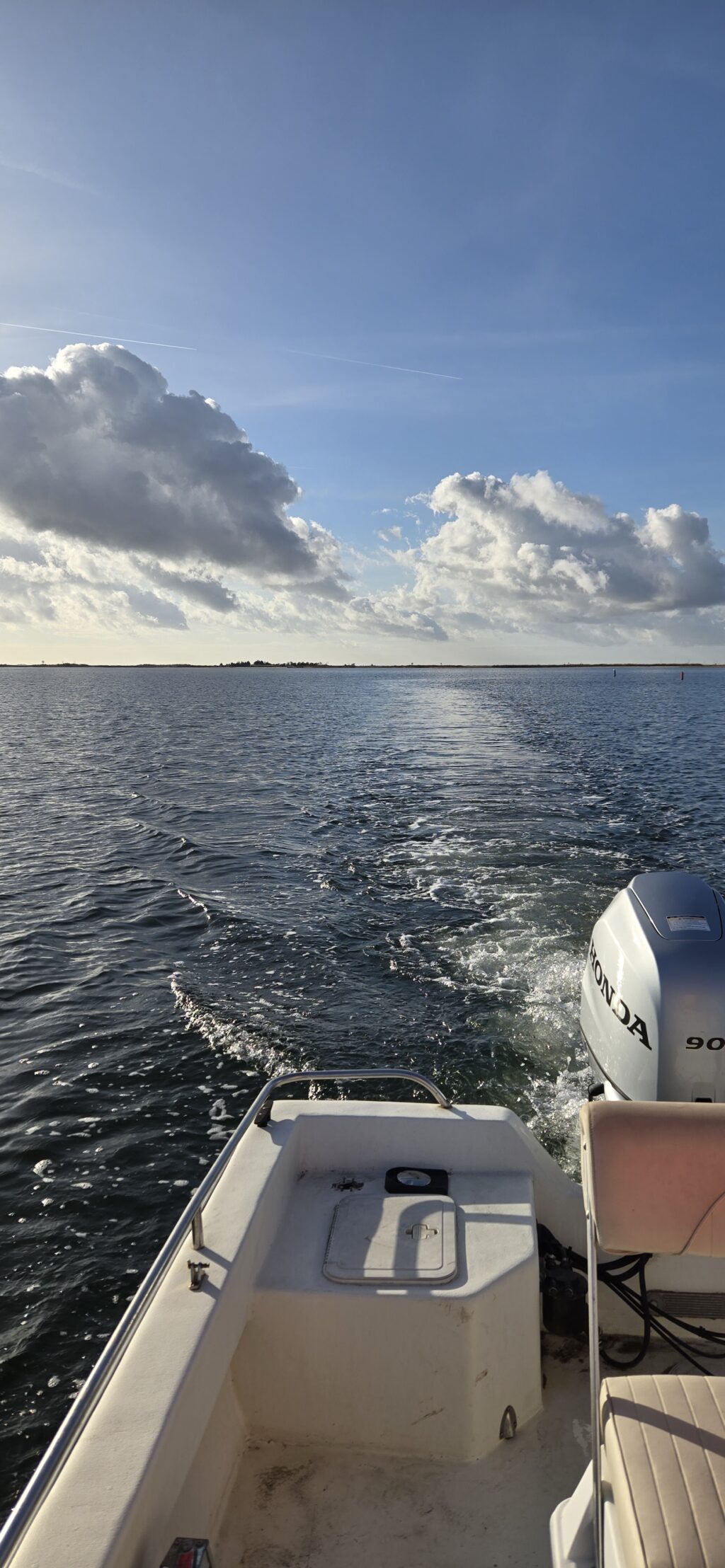
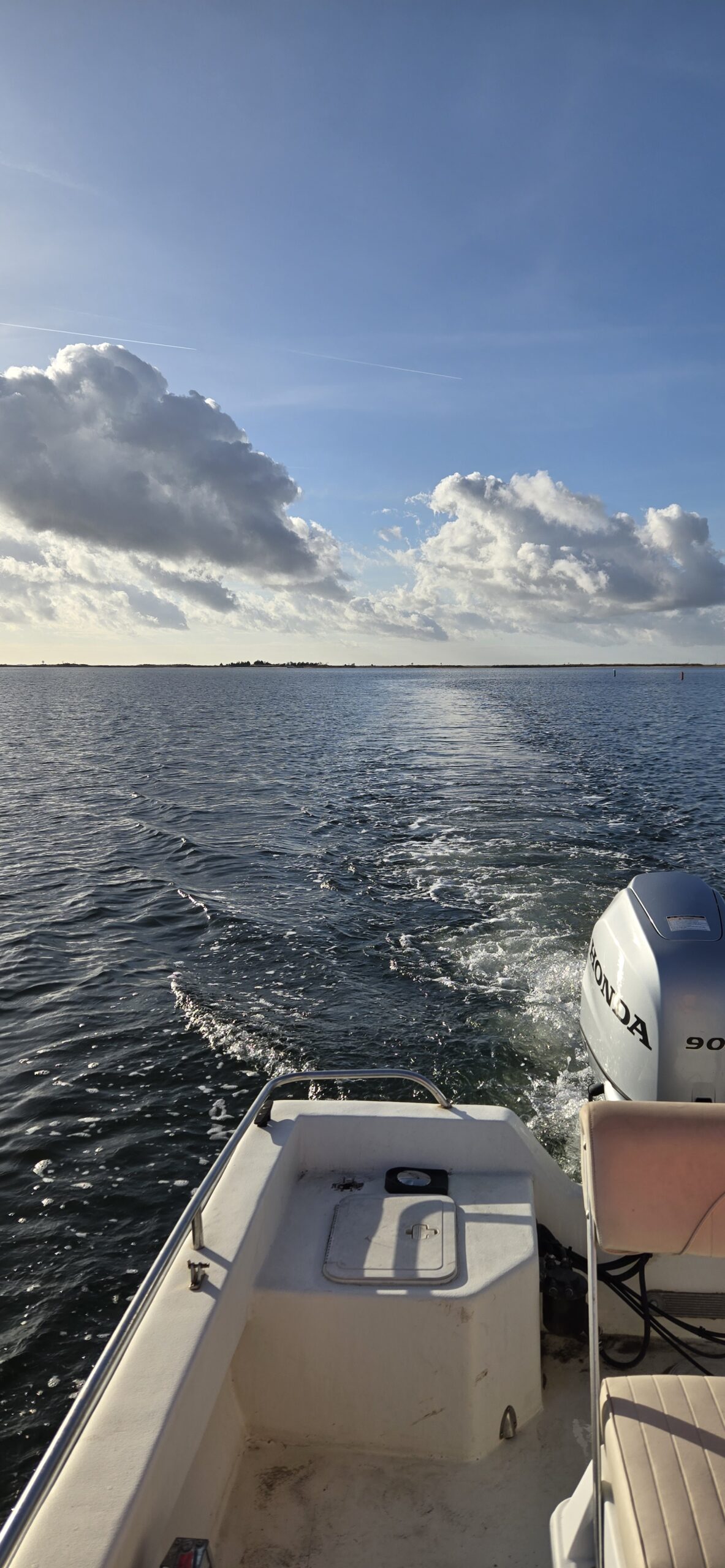
boat on the bay

When we think of critical marine environments, coral reefs and mangrove forests usually dominate the conversation. In our region, however, seagrass beds (primarily comprised of eelgrass and widgeongrass) provide critical ecosystem services, but remain at risk from human interactions.

Seagrass beds cover less than one percent of the Earth’s surface, yet they represent one of the most ecologically valuable habitats on the planet.

Roughly 75% of all of NJ’s seagrass beds are located in the Barnegat Bay-Little Egg Harbor System.

To understand their importance, it helps to look at the numbers. The vast majority of our planet is covered by water, with oceans accounting for roughly 360,000,000 square kilometers, while land takes up about 147,042,000 square kilometers. Within the narrow margins where these two worlds meet, seagrass occupies a fraction of the global surface area, hovering at mere thousandths of a percent. Despite this restricted footprint, these underwater meadows outsize other high profile marine environments.

Globally, seagrass habitats span approximately 325,178 square kilometers. In comparison, coral reefs cover about 255,000 square kilometers, and mangrove forests occupy roughly 199,817 square kilometers.

Because seagrass meadows maintain a larger physical presence than these other ecosystems, their impact on coastal stability is immense. They act as natural wave attenuation barriers, reducing shoreline erosion and trapping suspended sediments to improve water clarity. Furthermore, their extensive root structures anchor the seabed, preventing the shifting of marine sediments during major storm events.

You may have noticed on a trip on the bay that the water throughout the Barnegat is roughly 4-6ft deep. The shallow waters of the bay allow for sunlight to reach the entire water column, creating ideal conditions for the photosynthesizing seagrass beds.

You may be familiar with these beds of seagrass. If you are, maybe you’ve even noticed long, barren trenches cutting through the green meadows. These are propeller scars, and they are leaving a lasting mark on New Jersey’s coastal environment.

What is a Propeller Scar?
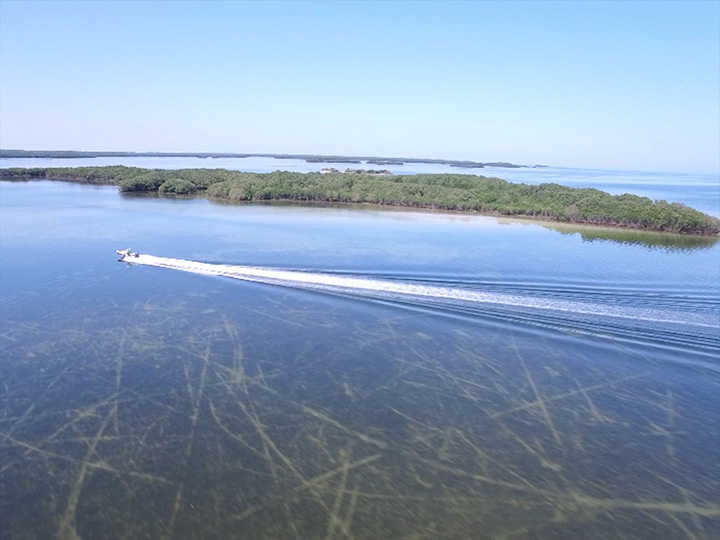
Boat On Plane Scars Jeff Hall Rs2
Photo Credit: Jeff Hall, FLTV via NOAA Fisheries

A propeller scar occurs when a vessel enters water that is too shallow for its draft. The spinning boat propeller cuts directly through the seagrass blades and digs into the bay floor, churning up sediment and physically ripping out the plants’ roots (rhizomes).

What is left behind is a literal “scar”, or a barren strip of exposed sand where the grass used to be anchored.

Because seagrass relies on a delicate network of underground roots to spread, recovering from a physical slice is not like waiting for a lawn to grow back.

Research has shown that even minor scarring from boat propellers can take several years to recover. Serious scarring can take up to 18 years to fully grow back. Once a scar is cut, the structural integrity of the sediment is lost. Boat wakes can widen these narrow cuts into large, eroded blowouts, damaging large regions of the habitat.

Long-term historical data mapped by Rutgers University’s Center for Remote Sensing and Spatial Analysis (CRSSA) highlighted a loss of approximately 2,000 to 3,000 hectares of seagrass beds in the bay between historical mid-century levels and the turn of the century. Combined with modern stressors like nutrient runoff and algae blooms, propeller scarring severely limits the grass’s ability to bounce back.

Because of this fragility, the state has actively expanded its research, partnering with Rutgers and Stockton University to conduct enhanced aerial mapping to closely track and protect these sensitive zones.

Preventing propeller scars doesn’t mean staying off the water. It just requires mindful navigation. Boaters can use the following precautions to help prevent damage to seagrass beds:

Know Your Depth: Always check local charts and tide tables. Remember, Barnegat Bay is exceptionally shallow outside of the dredged channels.

Navigate the Channels: Use marked navigation channels for travel and maintain a distance of at least 100 feet from natural shorelines and sensitive ecological areas.

Watch Your Wake: Minimize your wake in shallow areas to prevent the erosion of nearby grass edges.

Trim Up and Slow Down: If you accidentally enter a shallow seagrass flat, tilt your engine up, shift into neutral, and slowly troll or push your way out. Running the engine harder to “power through” mud or grass is what creates the deepest, most destructive scars.

Barnegat Bay’s shallow water is what makes it unique, beautiful, and highly productive, but it also makes it vulnerable. By understanding what lies just a few feet below our hulls, we can ensure that the bay remains a healthy, thriving ecosystem for both marine life and boaters for generations to come.

Take a look at the infographic below to learn more about the value of seagrass in the Barnegat Bay.

20190520 bbbayseagrass comic web

The next time you are out on the water, lift your motor, protect the seagrass, and leave no trace behind.
Explore More Insights from Barnegat Bay

Dive deeper into the ongoing efforts to protect and restore our environment with more updates and initiatives that you can take part in. Check out our latest blog posts for valuable tips and insights.

UNKNOWN

There is limited data available to quantify Wetland and Riparian Buffer Preservation, or updated data to quantify Wetland Acreage. The BBP has obtained funding and will begin assessment efforts for both targets, in the next few years.


 Hard Clam abundance has not been updated since 2012. Recovery of the stock will be guided by the Fishery Management Plan for Hard Clams, which is under development with the NJDEP, BBP, and other organizations. Reclam the Bay and other partners have continued to plant clams for restoration purposes. Continued plantings in strategic locations which maximize survival and reproduction is one strategy to pursue in the coming years. This work can use a model developed by Rutgers with BBP funding which identified areas where planted clams could have the greatest dispersal of their larvae and thus potentially maximally contribute to the recovery of the stock.

 Water Withdrawals were over the target in the 2021 report; USGS has not yet completed its latest update, so a definitive determination of status is not available. However, additional NJDEP data show that it is likely that we continue to not meet the target. Per capita water use has gone down, demonstrating the effectiveness of water-saving appliances and practices, but that decrease has been offset by population gains. 


IN PROGRESS

New maps quantifying Submerged Aquatic Vegetation extent were developed, but poor image clarity resulted in a high degree of uncertainty in the total acreage. NJDEP and Rutgers are working to resolve the uncertainty of these maps, and improve the total acreage estimate. Funding has also been obtained for further research and restoration activities. Several groups are developing potential restoration actions.

The USGS has completed the first phase of its study to identify minimum ecological flows in select Barnegat Bay tributaries. USGS scientists compared streamflow statistics between historical and current time periods to better understand trends in watershed flow conditions. This work provides a foundation for developing ecological flow targets in the Barnegat Bay watershed.  Similar to SAV extent, funding (approximately $450K) has been obtained by the BBP to complete the remaining phases necessary for threshold determination.

TARGETS ACHIEVED

No targets can be considered “Achieved” at this time.


NOT ACHIEVING

Several Public Swimming Beaches exceeded their safe swimming standards more frequently than during their baseline time period (2016-2018).

While most beaches are routinely safe for swimming, several problematic areas such as Beachwood, Hancock, Windward, and several lake beaches need track-down studies and restoration to pinpoint and address sources of bacteria.

Acres of Approved Shellfish Waters decreased from the last report. While this decrease was small, it represents a loss of previously approved waters. Similar to public beaches, track-down studies and restoration work are needed to pinpoint and address sources of bacteria.


Trim Up and Slow Down: Protecting Barnegat Bay’s Seagrass Beds

When we think of critical marine environments, coral reefs and mangrove forests usually dominate the conversation. In our region, however, seagrass beds (primarily comprised of eelgrass and widgeongrass) provide critical ecosystem services, but remain at risk from human interactions.

Seagrass beds cover less than one percent of the Earth’s surface, yet they represent one of the most ecologically valuable habitats on the planet.

Roughly 75% of all of NJ’s seagrass beds are located in the Barnegat Bay-Little Egg Harbor System.

To understand their importance, it helps to look at the numbers. The vast majority of our planet is covered by water, with oceans accounting for roughly 360,000,000 square kilometers, while land takes up about 147,042,000 square kilometers. Within the narrow margins where these two worlds meet, seagrass occupies a fraction of the global surface area, hovering at mere thousandths of a percent. Despite this restricted footprint, these underwater meadows outsize other high profile marine environments.

Globally, seagrass habitats span approximately 325,178 square kilometers. In comparison, coral reefs cover about 255,000 square kilometers, and mangrove forests occupy roughly 199,817 square kilometers.

Because seagrass meadows maintain a larger physical presence than these other ecosystems, their impact on coastal stability is immense. They act as natural wave attenuation barriers, reducing shoreline erosion and trapping suspended sediments to improve water clarity. Furthermore, their extensive root structures anchor the seabed, preventing the shifting of marine sediments during major storm events.

You may have noticed on a trip on the bay that the water throughout the Barnegat is roughly 4-6ft deep. The shallow waters of the bay allow for sunlight to reach the entire water column, creating ideal conditions for the photosynthesizing seagrass beds.

You may be familiar with these beds of seagrass. If you are, maybe you’ve even noticed long, barren trenches cutting through the green meadows. These are propeller scars, and they are leaving a lasting mark on New Jersey’s coastal environment.

What is a Propeller Scar?

Boat On Plane Scars Jeff Hall Rs2
Photo Credit: Jeff Hall, FLTV via NOAA Fisheries

A propeller scar occurs when a vessel enters water that is too shallow for its draft. The spinning boat propeller cuts directly through the seagrass blades and digs into the bay floor, churning up sediment and physically ripping out the plants’ roots (rhizomes).

What is left behind is a literal “scar”, or a barren strip of exposed sand where the grass used to be anchored.

Because seagrass relies on a delicate network of underground roots to spread, recovering from a physical slice is not like waiting for a lawn to grow back.

Research has shown that even minor scarring from boat propellers can take several years to recover. Serious scarring can take up to 18 years to fully grow back. Once a scar is cut, the structural integrity of the sediment is lost. Boat wakes can widen these narrow cuts into large, eroded blowouts, damaging large regions of the habitat.

Long-term historical data mapped by Rutgers University’s Center for Remote Sensing and Spatial Analysis (CRSSA) highlighted a loss of approximately 2,000 to 3,000 hectares of seagrass beds in the bay between historical mid-century levels and the turn of the century. Combined with modern stressors like nutrient runoff and algae blooms, propeller scarring severely limits the grass’s ability to bounce back.

Because of this fragility, the state has actively expanded its research, partnering with Rutgers and Stockton University to conduct enhanced aerial mapping to closely track and protect these sensitive zones.

Preventing propeller scars doesn’t mean staying off the water. It just requires mindful navigation. Boaters can use the following precautions to help prevent damage to seagrass beds:

Know Your Depth: Always check local charts and tide tables. Remember, Barnegat Bay is exceptionally shallow outside of the dredged channels.

Navigate the Channels: Use marked navigation channels for travel and maintain a distance of at least 100 feet from natural shorelines and sensitive ecological areas.

Watch Your Wake: Minimize your wake in shallow areas to prevent the erosion of nearby grass edges.

Trim Up and Slow Down: If you accidentally enter a shallow seagrass flat, tilt your engine up, shift into neutral, and slowly troll or push your way out. Running the engine harder to “power through” mud or grass is what creates the deepest, most destructive scars.

Barnegat Bay’s shallow water is what makes it unique, beautiful, and highly productive, but it also makes it vulnerable. By understanding what lies just a few feet below our hulls, we can ensure that the bay remains a healthy, thriving ecosystem for both marine life and boaters for generations to come.

Take a look at the infographic below to learn more about the value of seagrass in the Barnegat Bay.

20190520 bbbayseagrass comic web

The next time you are out on the water, lift your motor, protect the seagrass, and leave no trace behind.
Contact Trim Up and Slow Down: Protecting Barnegat Bay’s Seagrass BedsContact Trim Up and Slow Down: Protecting Barnegat Bay’s Seagrass Beds
boat on the bay