December 21, 2017

Blue Carbon in Barnegat Bay

by S-FX.com

blue carbon

By Elizabeth Watson and Rose Martin, Academy of Natural Sciences of Drexel University

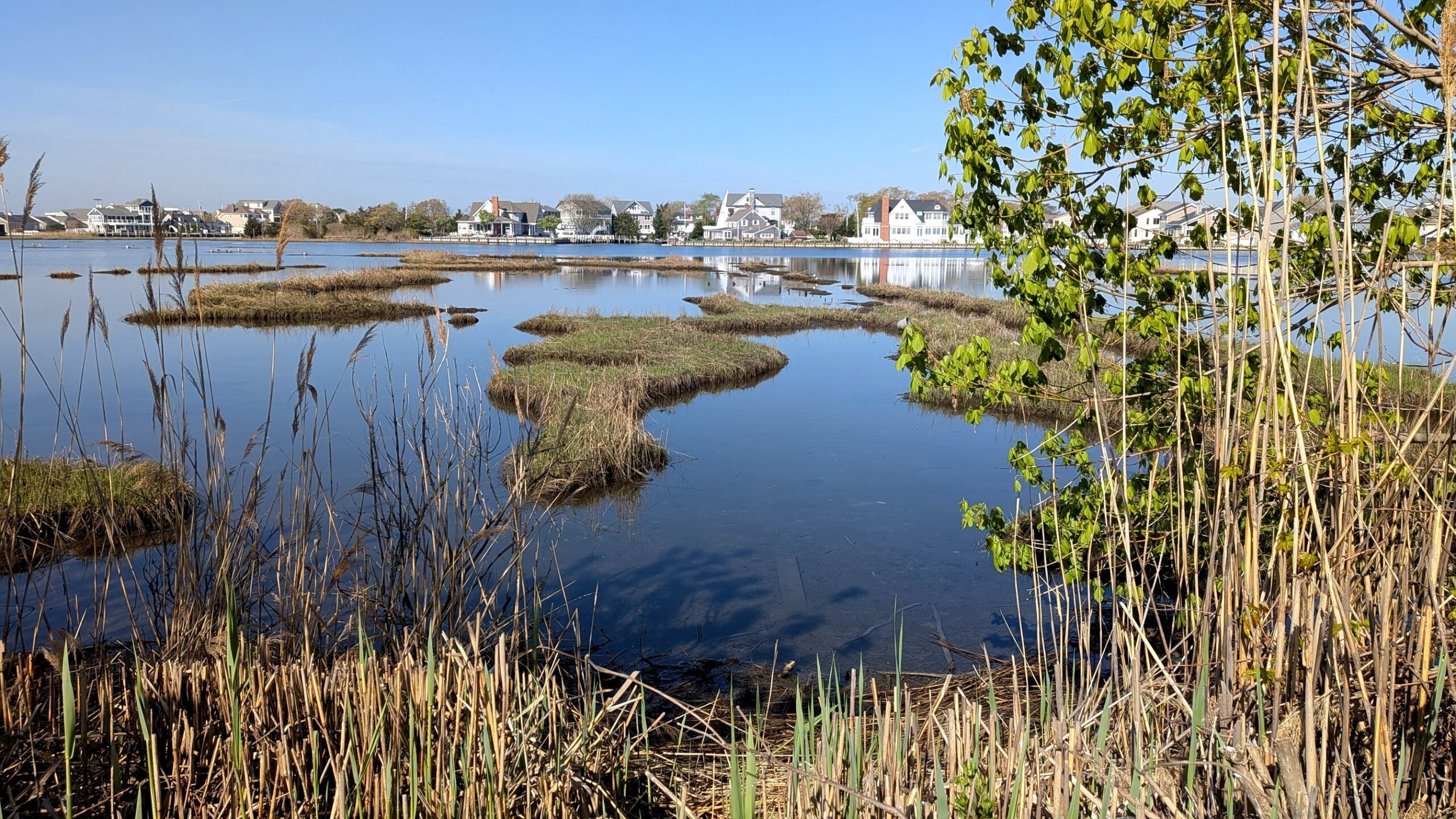
“Blue carbon” is shorthand for the carbon found in three major coastal and marine ecosystems: mangroves, seagrasses, and salt marshes. Highly productive environments, these coastal ecosystems take up large amounts of carbon dioxide during the summer growing season and store it in the form of organic matter.  On an acre-by-acre basis, they can store more carbon per year than a tropical rain forest!

By sucking carbon out of the atmosphere and storing it underground as organic matter, seagrasses and marshes help diminish the levels of carbon dioxide in the atmosphere. The conditions in these coastal ecosystems – both low oxygen levels and burial of material by mud and sand – prevent the carbon found in the organic matter from breaking down and being released to the atmosphere in the form of greenhouse gases, which trap heat and cause the climate to warm.

Preserving wetlands in their natural state is important, since disturbing them can release large amounts of heat-trapping carbon dioxide back into the atmosphere. Researchers with the Academy of Natural Sciences of Drexel University in Philadelphia are using the Barnegat Bay as a natural laboratory to study how salt marsh disturbances can alter carbon storage.  Since the 1960s, nearly 8,000 ponds have been dug in coastal wetlands in the Barnegat Bay to help control mosquito populations.  To study the impact of this activity on carbon storage, Academy scientists are collecting data on the carbon trapped in the marsh sediments and measuring gas exchange in both disturbed and undisturbed areas.

Post-doctoral researcher Rose Martin fits a greenhouse gas flux chamber to the marsh.
Post-doctoral researcher Rose Martin fits a greenhouse gas flux chamber to the marsh. Emissions are measured as the change in concentration of the gas over time.

Although carbon dioxide is the greenhouse gas you likely hear the most about, there are actually three other common greenhouse gases: water, methane, and nitrous oxide.

Different human impacts can affect emissions of nitrous oxide and methane from marshes as well.  For example, another factor that can reduce the value of carbon storage in coastal areas is a high level of nitrogen pollution. When nitrate levels are high in low oxygen environments, nitrous oxide can be emitted.

Nitrous oxide – the same gas you may receive at the dentist – has a global warming potential that is nearly 300 times that of carbon dioxide!  This means that even seemingly small emissions can have a large impact on climate. Therefore, understanding ways to mitigate nitrogen pollution in salt marshes helps maximize marsh carbon storage benefits.

Because these ecosystems store so much carbon, the restoration of seagrass beds and coastal wetlands is one tactic for mitigating climate change. The information gathered by researchers will be used to design coastal restoration projects that yield maximum benefits for reducing future climate change. The availability of carbon financing for voluntary or mandatory emissions offsets means that money is available for projects that both fund coastal restoration and reduce future climate change – a win-win!


Explore More Insights from Barnegat Bay

Dive deeper into the ongoing efforts to protect and restore our environment with more updates and initiatives that you can take part in. Check out our latest blog posts for valuable tips and insights.

UNKNOWN

There is limited data available to quantify Wetland and Riparian Buffer Preservation, or updated data to quantify Wetland Acreage. The BBP has obtained funding and will begin assessment efforts for both targets, in the next few years.


 Hard Clam abundance has not been updated since 2012. Recovery of the stock will be guided by the Fishery Management Plan for Hard Clams, which is under development with the NJDEP, BBP, and other organizations. Reclam the Bay and other partners have continued to plant clams for restoration purposes. Continued plantings in strategic locations which maximize survival and reproduction is one strategy to pursue in the coming years. This work can use a model developed by Rutgers with BBP funding which identified areas where planted clams could have the greatest dispersal of their larvae and thus potentially maximally contribute to the recovery of the stock.

 Water Withdrawals were over the target in the 2021 report; USGS has not yet completed its latest update, so a definitive determination of status is not available. However, additional NJDEP data show that it is likely that we continue to not meet the target. Per capita water use has gone down, demonstrating the effectiveness of water-saving appliances and practices, but that decrease has been offset by population gains. 


IN PROGRESS

New maps quantifying Submerged Aquatic Vegetation extent were developed, but poor image clarity resulted in a high degree of uncertainty in the total acreage. NJDEP and Rutgers are working to resolve the uncertainty of these maps, and improve the total acreage estimate. Funding has also been obtained for further research and restoration activities. Several groups are developing potential restoration actions.

The USGS has completed the first phase of its study to identify minimum ecological flows in select Barnegat Bay tributaries. USGS scientists compared streamflow statistics between historical and current time periods to better understand trends in watershed flow conditions. This work provides a foundation for developing ecological flow targets in the Barnegat Bay watershed.  Similar to SAV extent, funding (approximately $450K) has been obtained by the BBP to complete the remaining phases necessary for threshold determination.


TARGETS ACHIEVED

No targets can be considered “Achieved” at this time.


NOT ACHIEVING

Several Public Swimming Beaches exceeded their safe swimming standards more frequently than during their baseline time period (2016-2018).

While most beaches are routinely safe for swimming, several problematic areas such as Beachwood, Hancock, Windward, and several lake beaches need track-down studies and restoration to pinpoint and address sources of bacteria.

Acres of Approved Shellfish Waters decreased from the last report. While this decrease was small, it represents a loss of previously approved waters. Similar to public beaches, track-down studies and restoration work are needed to pinpoint and address sources of bacteria.


Blue Carbon in Barnegat Bay

By Elizabeth Watson and Rose Martin, Academy of Natural Sciences of Drexel University

“Blue carbon” is shorthand for the carbon found in three major coastal and marine ecosystems: mangroves, seagrasses, and salt marshes. Highly productive environments, these coastal ecosystems take up large amounts of carbon dioxide during the summer growing season and store it in the form of organic matter.  On an acre-by-acre basis, they can store more carbon per year than a tropical rain forest!

By sucking carbon out of the atmosphere and storing it underground as organic matter, seagrasses and marshes help diminish the levels of carbon dioxide in the atmosphere. The conditions in these coastal ecosystems – both low oxygen levels and burial of material by mud and sand – prevent the carbon found in the organic matter from breaking down and being released to the atmosphere in the form of greenhouse gases, which trap heat and cause the climate to warm.

Preserving wetlands in their natural state is important, since disturbing them can release large amounts of heat-trapping carbon dioxide back into the atmosphere. Researchers with the Academy of Natural Sciences of Drexel University in Philadelphia are using the Barnegat Bay as a natural laboratory to study how salt marsh disturbances can alter carbon storage.  Since the 1960s, nearly 8,000 ponds have been dug in coastal wetlands in the Barnegat Bay to help control mosquito populations.  To study the impact of this activity on carbon storage, Academy scientists are collecting data on the carbon trapped in the marsh sediments and measuring gas exchange in both disturbed and undisturbed areas.

Post-doctoral researcher Rose Martin fits a greenhouse gas flux chamber to the marsh.
Post-doctoral researcher Rose Martin fits a greenhouse gas flux chamber to the marsh. Emissions are measured as the change in concentration of the gas over time.

Although carbon dioxide is the greenhouse gas you likely hear the most about, there are actually three other common greenhouse gases: water, methane, and nitrous oxide.

Different human impacts can affect emissions of nitrous oxide and methane from marshes as well.  For example, another factor that can reduce the value of carbon storage in coastal areas is a high level of nitrogen pollution. When nitrate levels are high in low oxygen environments, nitrous oxide can be emitted.

Nitrous oxide – the same gas you may receive at the dentist – has a global warming potential that is nearly 300 times that of carbon dioxide!  This means that even seemingly small emissions can have a large impact on climate. Therefore, understanding ways to mitigate nitrogen pollution in salt marshes helps maximize marsh carbon storage benefits.

Because these ecosystems store so much carbon, the restoration of seagrass beds and coastal wetlands is one tactic for mitigating climate change. The information gathered by researchers will be used to design coastal restoration projects that yield maximum benefits for reducing future climate change. The availability of carbon financing for voluntary or mandatory emissions offsets means that money is available for projects that both fund coastal restoration and reduce future climate change – a win-win!


Contact Blue Carbon in Barnegat BayContact Blue Carbon in Barnegat Bay
blue carbon