February 22, 2021

Annual Report 2020-2021

by S-FX.com

p4e paddle for the edge

The BBP’s Annual Report 2020-2021 gives a great overview of Barnegat Bay Partnership’s efforts to protect and restore the bay and its watershed in 2020. With careful planning, social distancing, and modified procedures, we were able to adapt to the challenges of the COVID-19 pandemic and continue our important work.

Science and Research

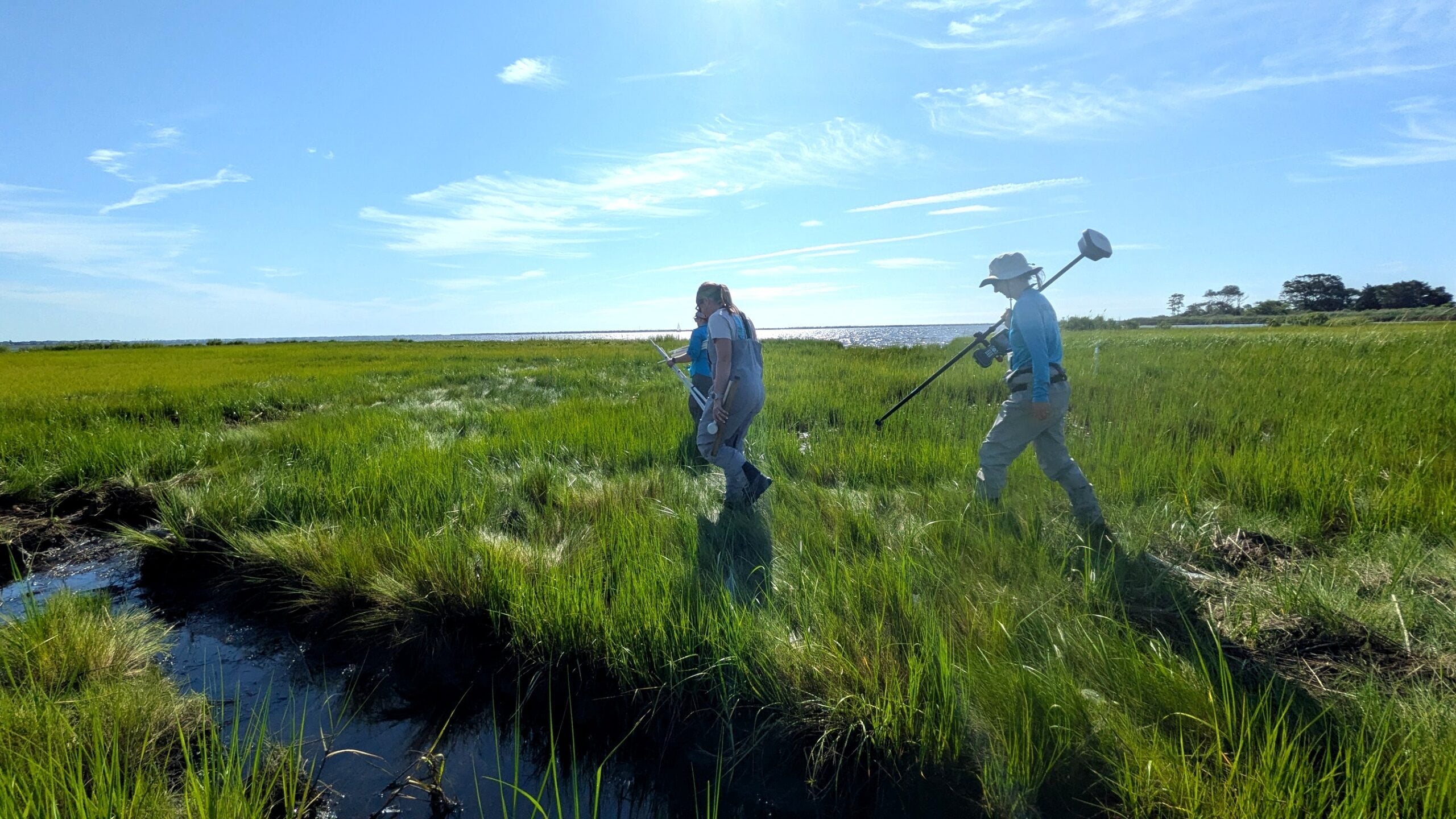
In this section of the report, learn how our three continuous monitoring stations track water quality in the bay in near real-time and how we monitor for coastal acidification. Get updates on our fisheries research projects: juvenile eel monitoring, juvenile fish and nekton sampling, and a Stockton University oyster restoration project. Our Mid-Atlantic Coastal Wetlands Assessment (MACWA) team was busy in 2020 with regular wetlands monitoring and some new projects, including data collection at three living shoreline projects.

Citizen Science and Stewardship

Learn how Paddle for the Edge citizen science volunteers paddled 23 miles of bay shoreline and collected data about shoreline conditions at 1,200 points in 2020. Despite the pandemic, the Barnegat Bay Master Naturalists continued to volunteer as stewards of the watershed, removing invasive species at a county park and planting American beachgrass on the dunes at Island Beach State Park.

Education and Outreach

The pandemic was especially challenging for watershed educators. The Barnegat Bay Partnership met the challenge by offering two series of webinars in 2020. In the Ask a Barnegat Bay Scientist webinars, local scientists talked about their research in the estuary and answered questions. The Wild About Jersey-Friendly Yards webinars offered practical information to property owners about how to landscape for a healthy environment and a healthy bay.

BBP Annual Report 2020 2021 COVER 2 1 Scaled

You can view or download the full Annual Report 2020-2021. If you would like a print copy mailed to you, email kwalzer@ocean.edu with your name and address.
Explore More Insights from Barnegat Bay

Dive deeper into the ongoing efforts to protect and restore our environment with more updates and initiatives that you can take part in. Check out our latest blog posts for valuable tips and insights.

UNKNOWN

There is limited data available to quantify Wetland and Riparian Buffer Preservation, or updated data to quantify Wetland Acreage. The BBP has obtained funding and will begin assessment efforts for both targets, in the next few years.


 Hard Clam abundance has not been updated since 2012. Recovery of the stock will be guided by the Fishery Management Plan for Hard Clams, which is under development with the NJDEP, BBP, and other organizations. Reclam the Bay and other partners have continued to plant clams for restoration purposes. Continued plantings in strategic locations which maximize survival and reproduction is one strategy to pursue in the coming years. This work can use a model developed by Rutgers with BBP funding which identified areas where planted clams could have the greatest dispersal of their larvae and thus potentially maximally contribute to the recovery of the stock.

 Water Withdrawals were over the target in the 2021 report; USGS has not yet completed its latest update, so a definitive determination of status is not available. However, additional NJDEP data show that it is likely that we continue to not meet the target. Per capita water use has gone down, demonstrating the effectiveness of water-saving appliances and practices, but that decrease has been offset by population gains. 


IN PROGRESS

New maps quantifying Submerged Aquatic Vegetation extent were developed, but poor image clarity resulted in a high degree of uncertainty in the total acreage. NJDEP and Rutgers are working to resolve the uncertainty of these maps, and improve the total acreage estimate. Funding has also been obtained for further research and restoration activities. Several groups are developing potential restoration actions.

The USGS has completed the first phase of its study to identify minimum ecological flows in select Barnegat Bay tributaries. USGS scientists compared streamflow statistics between historical and current time periods to better understand trends in watershed flow conditions. This work provides a foundation for developing ecological flow targets in the Barnegat Bay watershed.  Similar to SAV extent, funding (approximately $450K) has been obtained by the BBP to complete the remaining phases necessary for threshold determination.


TARGETS ACHIEVED

No targets can be considered “Achieved” at this time.


NOT ACHIEVING

Several Public Swimming Beaches exceeded their safe swimming standards more frequently than during their baseline time period (2016-2018).

While most beaches are routinely safe for swimming, several problematic areas such as Beachwood, Hancock, Windward, and several lake beaches need track-down studies and restoration to pinpoint and address sources of bacteria.

Acres of Approved Shellfish Waters decreased from the last report. While this decrease was small, it represents a loss of previously approved waters. Similar to public beaches, track-down studies and restoration work are needed to pinpoint and address sources of bacteria.


Annual Report 2020-2021

The BBP’s Annual Report 2020-2021 gives a great overview of Barnegat Bay Partnership’s efforts to protect and restore the bay and its watershed in 2020. With careful planning, social distancing, and modified procedures, we were able to adapt to the challenges of the COVID-19 pandemic and continue our important work.

Science and Research

In this section of the report, learn how our three continuous monitoring stations track water quality in the bay in near real-time and how we monitor for coastal acidification. Get updates on our fisheries research projects: juvenile eel monitoring, juvenile fish and nekton sampling, and a Stockton University oyster restoration project. Our Mid-Atlantic Coastal Wetlands Assessment (MACWA) team was busy in 2020 with regular wetlands monitoring and some new projects, including data collection at three living shoreline projects.

Citizen Science and Stewardship

Learn how Paddle for the Edge citizen science volunteers paddled 23 miles of bay shoreline and collected data about shoreline conditions at 1,200 points in 2020. Despite the pandemic, the Barnegat Bay Master Naturalists continued to volunteer as stewards of the watershed, removing invasive species at a county park and planting American beachgrass on the dunes at Island Beach State Park.

Education and Outreach

The pandemic was especially challenging for watershed educators. The Barnegat Bay Partnership met the challenge by offering two series of webinars in 2020. In the Ask a Barnegat Bay Scientist webinars, local scientists talked about their research in the estuary and answered questions. The Wild About Jersey-Friendly Yards webinars offered practical information to property owners about how to landscape for a healthy environment and a healthy bay.

BBP Annual Report 2020 2021 COVER 2 1 Scaled

You can view or download the full Annual Report 2020-2021. If you would like a print copy mailed to you, email kwalzer@ocean.edu with your name and address.
Contact Annual Report 2020-2021Contact Annual Report 2020-2021
p4e paddle for the edge