April 21, 2021

April Showers Bring Flood Waters

by S-FX.com

Road flooded with truck driving

Article by Dr. Steven Yergeau, Rutgers Cooperative Extension
Source: Rutgers “Earth Day Every Day” April News Blast

Rain, Rain Go Away . . .

Stormwater is any form of water that begins as precipitation. This includes rain, sleet, snow, and the water from melting snow, even if the melting occurs long after the snowstorm had passed.  Stormwater can cause flooding and erosion in streams. Stormwater runoff quickly causes the water levels of streams and rivers to rise and flow rapidly during and after precipitation. This can cause flooding downstream, which may include threats to people and property. The increased flow of water (speed and volume) can also cause stream bank erosion, with the potential of undercutting banks, exposing roots, and potentially toppling streamside trees. That scouring increases sediments in the streams, harming aquatic systems.

Stormwater runoff also degrades soils and water quality, especially when vegetation is sparse in an area. The soil eroded by stormwater runoff may end up in a local waterbody where it could degrade habitat for fish and other wildlife. This sedimentation can also cause lakes and ponds to fill in, making them less usable for swimming or boating.

. . . Come Again Another Day

There are many things you can do to help reduce your chances of getting flooded out by stormwater.

  1. Accept Change – Our natural environment changes over time and our behaviors need to adapt to these changes.
  2. Know Your FEMA Flood Zone – After you accept that the environment is changing, you should think about your property’s risk for flooding. You can visit https://msc.fema.gov/portal/home to map your property and find your flooding risk.
  3. Understand Your Flood Risk – More information on your property’s flood risk can be found at NJ FloodMapper. Enter your address or zip code in the search box at the top of the page, and then choose Flood Hazards, and then FEMA Flood Zones, and +Add from the left menu.
  4. Consider Flood Insurance – If your property is at risk for flooding, you may want to think about getting flood insurance (either a private policy or through the National Flood Insurance Program.
  5. Prepare Yourself – Being prepared for any flooding that may happen is a good way to reduce any damages or losses to your home and property. Sign up for local emergency alerts for your town, know your flood evacuation route, make an emergency evacuation plan, and consider preparing an emergency go bag kit.
  6. Prepare Your Home – Store valuables at higher elevations, clean gutters to ensure rain water is carried away from your home’s foundation, take photos of valuables, obtain and maintain a sump pump, and landscape your property appropriately.
  7. Follow Building Regulations – If your property is in a flood zone, make sure you are following the rules on what can and cannot be built on the property to protect your home and your neighbor’s property.
  8. Let the Rain Sink In – Reduce the impervious surfaces (i.e., concrete, asphalt, compacted lawns) on your property and increase permeable surfaces that allow for rain water to get absorbed into the soil. More info can be found at Jersey-Friendly Yards or the Rutgers Water Resources Program.
  9. Be a Good Neighbor – Some neighbors in your community may not have the resources to be prepared for flooding, so help those who do not have the ability by being responsible on your own property, by building an emergency kit for those who are unable, or by sharing resources on flood mapping or insurance.
  10. Get Involved – Become a part of a community organization that works to reduce flooding or volunteer for projects to create living shorelines, plant along dunes and floodplains, and build and install rain barrels and rain gardens at home.


By taking a few simple actions, you can prevent rain from ruining your parade!

Resources and Further Reading on Flooding and Stormwater

Bakacs, Michele. 2021. From Rain Gardens to Rain Barrels: Protecting Watersheds at Home (video).
Dornisch, Vanessa. 2020. Ten Ways to Adapt to Coastal Flooding (video). Password: EarthDay2020
Rutgers Cooperative Extension Water Resources Program
New Jersey Agricultural Experiment Station Publications on Stormwater
New Jersey Department of Environmental Protection: Stormwater Management and Green Infrastructure in New Jersey
Photo of flooded road courtesy of Famartin.


Explore More Insights from Barnegat Bay

Dive deeper into the ongoing efforts to protect and restore our environment with more updates and initiatives that you can take part in. Check out our latest blog posts for valuable tips and insights.

UNKNOWN

There is limited data available to quantify Wetland and Riparian Buffer Preservation, or updated data to quantify Wetland Acreage. The BBP has obtained funding and will begin assessment efforts for both targets, in the next few years.


 Hard Clam abundance has not been updated since 2012. Recovery of the stock will be guided by the Fishery Management Plan for Hard Clams, which is under development with the NJDEP, BBP, and other organizations. Reclam the Bay and other partners have continued to plant clams for restoration purposes. Continued plantings in strategic locations which maximize survival and reproduction is one strategy to pursue in the coming years. This work can use a model developed by Rutgers with BBP funding which identified areas where planted clams could have the greatest dispersal of their larvae and thus potentially maximally contribute to the recovery of the stock.

 Water Withdrawals were over the target in the 2021 report; USGS has not yet completed its latest update, so a definitive determination of status is not available. However, additional NJDEP data show that it is likely that we continue to not meet the target. Per capita water use has gone down, demonstrating the effectiveness of water-saving appliances and practices, but that decrease has been offset by population gains. 


IN PROGRESS

New maps quantifying Submerged Aquatic Vegetation extent were developed, but poor image clarity resulted in a high degree of uncertainty in the total acreage. NJDEP and Rutgers are working to resolve the uncertainty of these maps, and improve the total acreage estimate. Funding has also been obtained for further research and restoration activities. Several groups are developing potential restoration actions.

The USGS has completed the first phase of its study to identify minimum ecological flows in select Barnegat Bay tributaries. USGS scientists compared streamflow statistics between historical and current time periods to better understand trends in watershed flow conditions. This work provides a foundation for developing ecological flow targets in the Barnegat Bay watershed.  Similar to SAV extent, funding (approximately $450K) has been obtained by the BBP to complete the remaining phases necessary for threshold determination.


TARGETS ACHIEVED

No targets can be considered “Achieved” at this time.


NOT ACHIEVING

Several Public Swimming Beaches exceeded their safe swimming standards more frequently than during their baseline time period (2016-2018).

While most beaches are routinely safe for swimming, several problematic areas such as Beachwood, Hancock, Windward, and several lake beaches need track-down studies and restoration to pinpoint and address sources of bacteria.

Acres of Approved Shellfish Waters decreased from the last report. While this decrease was small, it represents a loss of previously approved waters. Similar to public beaches, track-down studies and restoration work are needed to pinpoint and address sources of bacteria.


April Showers Bring Flood Waters

Article by Dr. Steven Yergeau, Rutgers Cooperative Extension
Source: Rutgers “Earth Day Every Day” April News Blast

Rain, Rain Go Away . . .

Stormwater is any form of water that begins as precipitation. This includes rain, sleet, snow, and the water from melting snow, even if the melting occurs long after the snowstorm had passed.  Stormwater can cause flooding and erosion in streams. Stormwater runoff quickly causes the water levels of streams and rivers to rise and flow rapidly during and after precipitation. This can cause flooding downstream, which may include threats to people and property. The increased flow of water (speed and volume) can also cause stream bank erosion, with the potential of undercutting banks, exposing roots, and potentially toppling streamside trees. That scouring increases sediments in the streams, harming aquatic systems.

Stormwater runoff also degrades soils and water quality, especially when vegetation is sparse in an area. The soil eroded by stormwater runoff may end up in a local waterbody where it could degrade habitat for fish and other wildlife. This sedimentation can also cause lakes and ponds to fill in, making them less usable for swimming or boating.

. . . Come Again Another Day

There are many things you can do to help reduce your chances of getting flooded out by stormwater.

  1. Accept Change – Our natural environment changes over time and our behaviors need to adapt to these changes.
  2. Know Your FEMA Flood Zone – After you accept that the environment is changing, you should think about your property’s risk for flooding. You can visit https://msc.fema.gov/portal/home to map your property and find your flooding risk.
  3. Understand Your Flood Risk – More information on your property’s flood risk can be found at NJ FloodMapper. Enter your address or zip code in the search box at the top of the page, and then choose Flood Hazards, and then FEMA Flood Zones, and +Add from the left menu.
  4. Consider Flood Insurance – If your property is at risk for flooding, you may want to think about getting flood insurance (either a private policy or through the National Flood Insurance Program.
  5. Prepare Yourself – Being prepared for any flooding that may happen is a good way to reduce any damages or losses to your home and property. Sign up for local emergency alerts for your town, know your flood evacuation route, make an emergency evacuation plan, and consider preparing an emergency go bag kit.
  6. Prepare Your Home – Store valuables at higher elevations, clean gutters to ensure rain water is carried away from your home’s foundation, take photos of valuables, obtain and maintain a sump pump, and landscape your property appropriately.
  7. Follow Building Regulations – If your property is in a flood zone, make sure you are following the rules on what can and cannot be built on the property to protect your home and your neighbor’s property.
  8. Let the Rain Sink In – Reduce the impervious surfaces (i.e., concrete, asphalt, compacted lawns) on your property and increase permeable surfaces that allow for rain water to get absorbed into the soil. More info can be found at Jersey-Friendly Yards or the Rutgers Water Resources Program.
  9. Be a Good Neighbor – Some neighbors in your community may not have the resources to be prepared for flooding, so help those who do not have the ability by being responsible on your own property, by building an emergency kit for those who are unable, or by sharing resources on flood mapping or insurance.
  10. Get Involved – Become a part of a community organization that works to reduce flooding or volunteer for projects to create living shorelines, plant along dunes and floodplains, and build and install rain barrels and rain gardens at home.

By taking a few simple actions, you can prevent rain from ruining your parade!

Resources and Further Reading on Flooding and Stormwater

Bakacs, Michele. 2021. From Rain Gardens to Rain Barrels: Protecting Watersheds at Home (video).
Dornisch, Vanessa. 2020. Ten Ways to Adapt to Coastal Flooding (video). Password: EarthDay2020
Rutgers Cooperative Extension Water Resources Program
New Jersey Agricultural Experiment Station Publications on Stormwater
New Jersey Department of Environmental Protection: Stormwater Management and Green Infrastructure in New Jersey
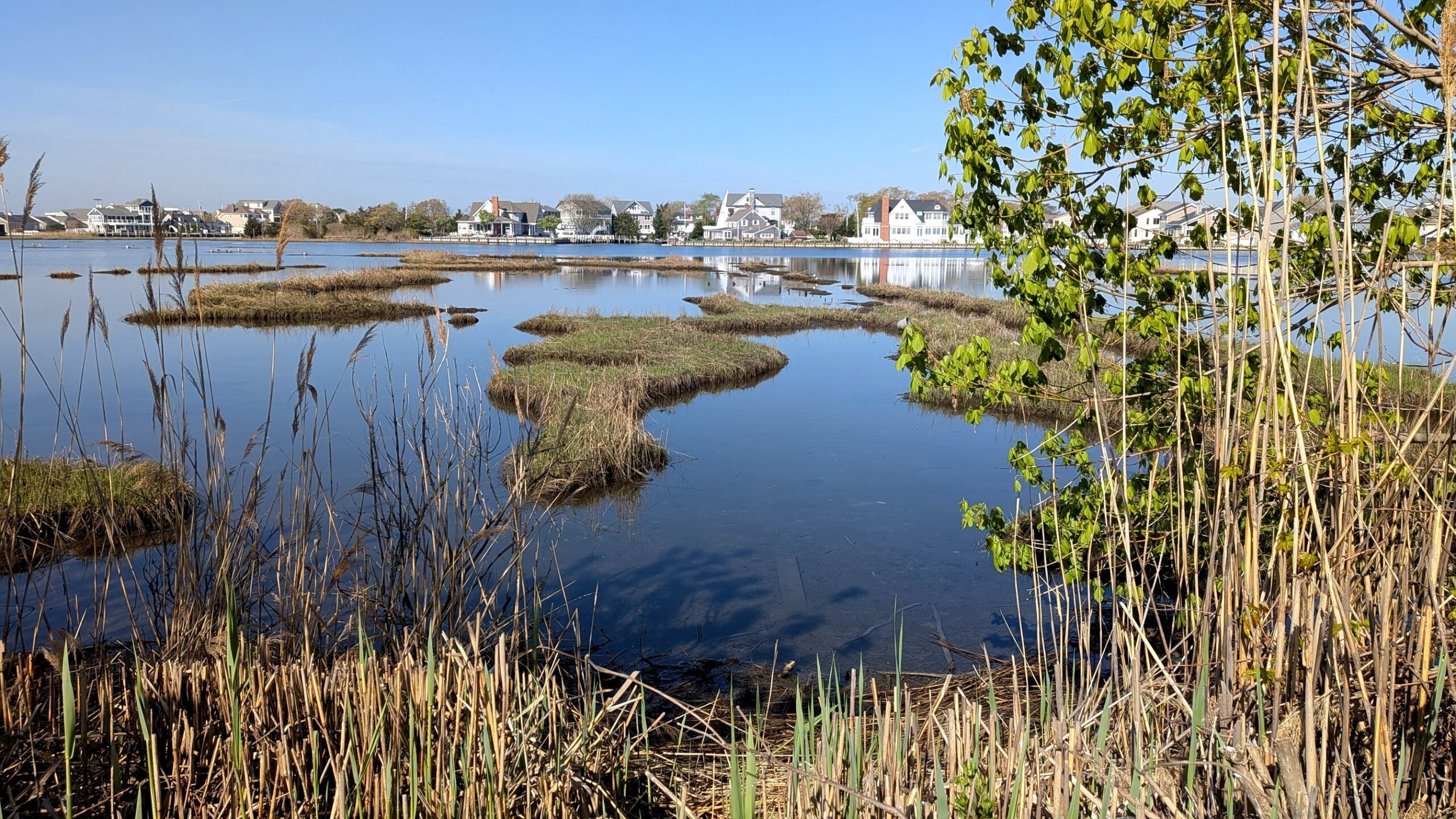
Photo of flooded road courtesy of Famartin.

Contact April Showers Bring Flood WatersContact April Showers Bring Flood Waters
Road flooded with truck driving
Photo credit: Famartin Wikimedia Commons