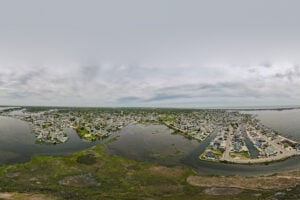
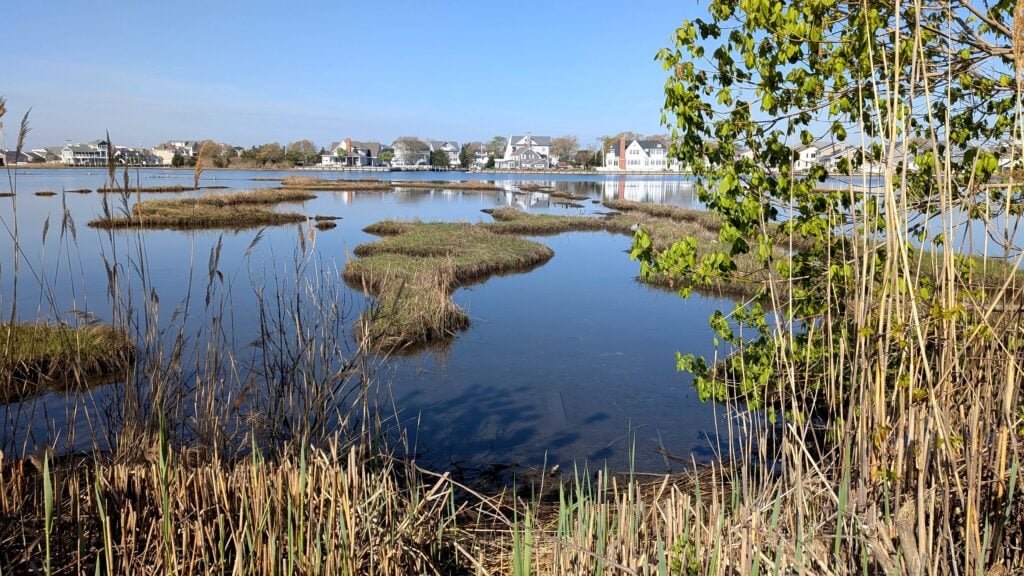
If you have spent any amount of time on the water or along the shore of the Barnegat Bay Estuary, it would be hard not to notice the wildlife. Within the estuary, some of the most wildlife-rich areas are salt marshes. These areas support a host of animals such as fish, shellfish, crabs, birds, and mammals through at least a portion of their life cycles. The Barnegat Bay Estuary hosts 20,000+ acres of tidal wetland (predominantly salt marshes), most of which are in the southern and central regions of the estuary along Manahawkin Bay and Little Egg Harbor.
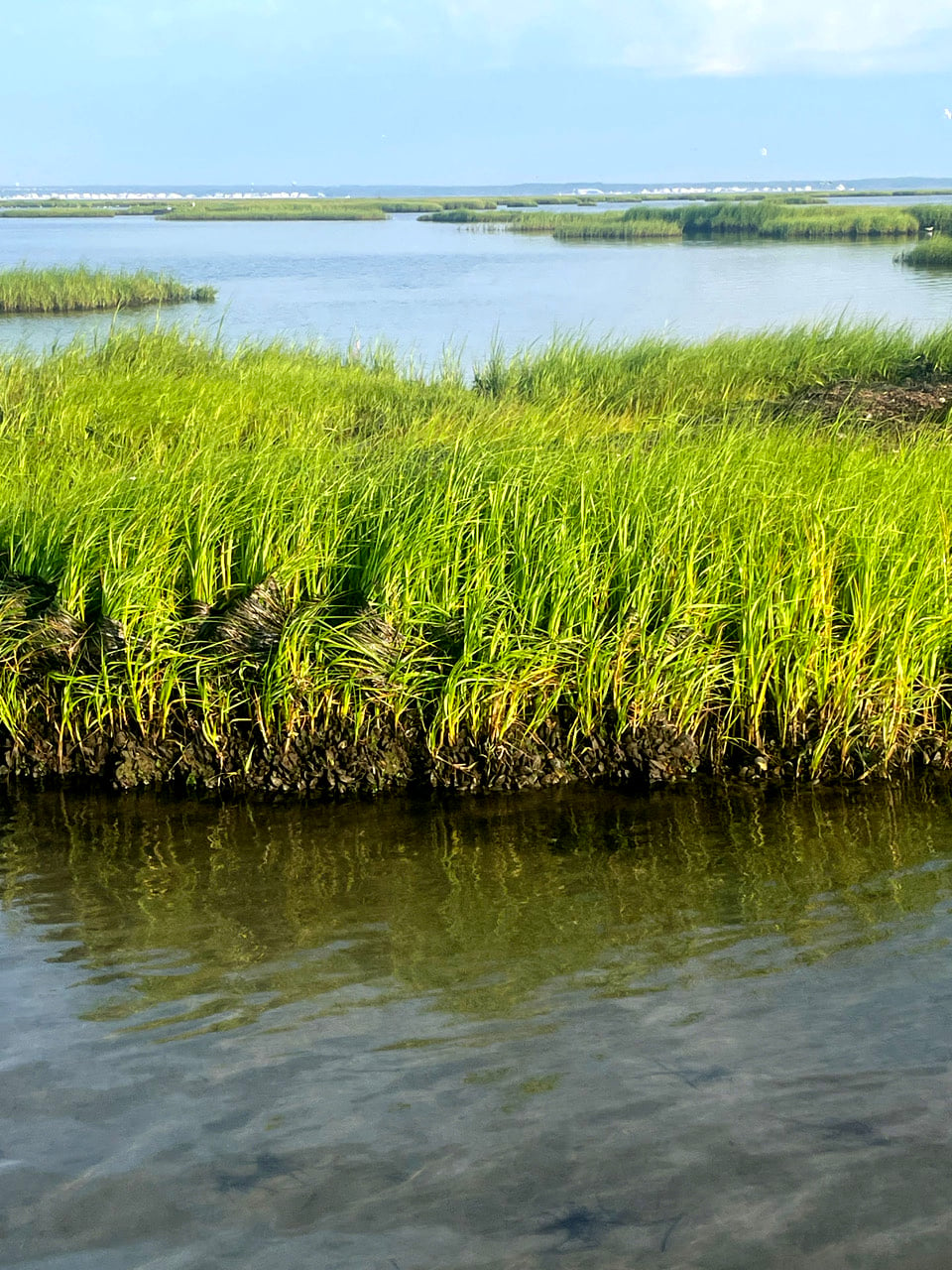
The abundant wildlife that can be found in these salt marshes is why many of us care so much about and choose to spend our free time kayaking, birdwatching, fishing, etc., on the Barnegat Bay Estuary.
What is Nellie Bennett Salt Marsh Project?
The Barnegat Bay Partnership, partnering with the Borough of Point Pleasant and assisted by Matrix New World Engineering, has developed plans to restore 16 acres of salt marsh on Beaverdam Creek at a site south of the Nellie Bennett Elementary School. The site today is mostly a tidal mud flat despite historically being a healthy tidal marsh. This restoration will stabilize up to 1,000 feet of shoreline to restore 16 acres of marsh that will increase the regions’ ecological value and increase coastal flooding resiliency for adjacent homes and critical infrastructure.
The design and permitting for the project are nearly complete and were funded by the National Fish and Wildlife Foundation and by Restore America’s Estuaries. The plan is for nature-based construction to be rolled out in two phases beginning in late 2027 or late 2028:
Phase 1 – Placing clean dredged material to rebuild marsh elevation across 6 acres in the northeast portion of the site, then vegetating the area with native plants while also managing invasive species establishment. This will be funded with a Natural Climate Solutions grant from the NJ Department of Environmental Protection.
Phase 2 – Placing additional dredged material to rebuild marsh elevation for an additional 10 acres of marsh area and shoreline stabilization along the outer edge of the marsh through the creation of a stone sills (riprap) and timber barriers that will provide protection from waves and help prevent loss of dredged material. The team is pursuing funding opportunities for this phase of the project.
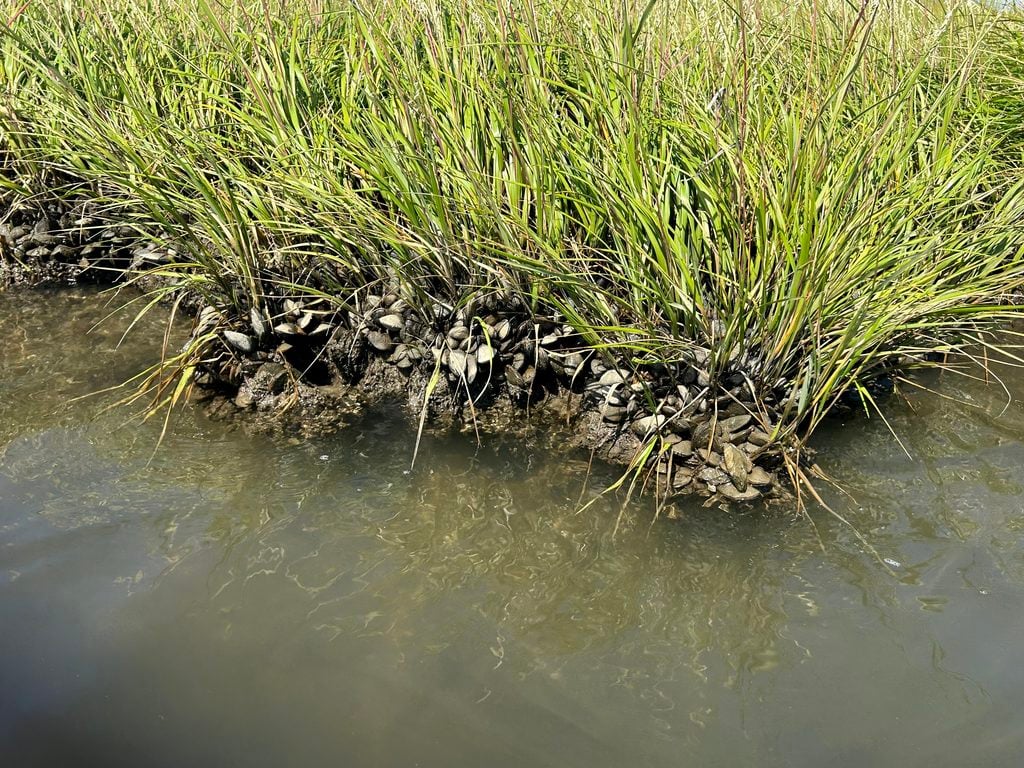
Restoring this marsh will provide new, healthy habitat for organisms including the keystone species Eastern Oysters (Crassostrea virginica) and Ribbed Mussels (Geukensia demissa). These critical bivalves will establish along the channels and edges of the salt marsh, creating additional bank stabilization and habitat, providing even more shelter for larval fish and invertebrates, and continuing to filter the water in the estuary.
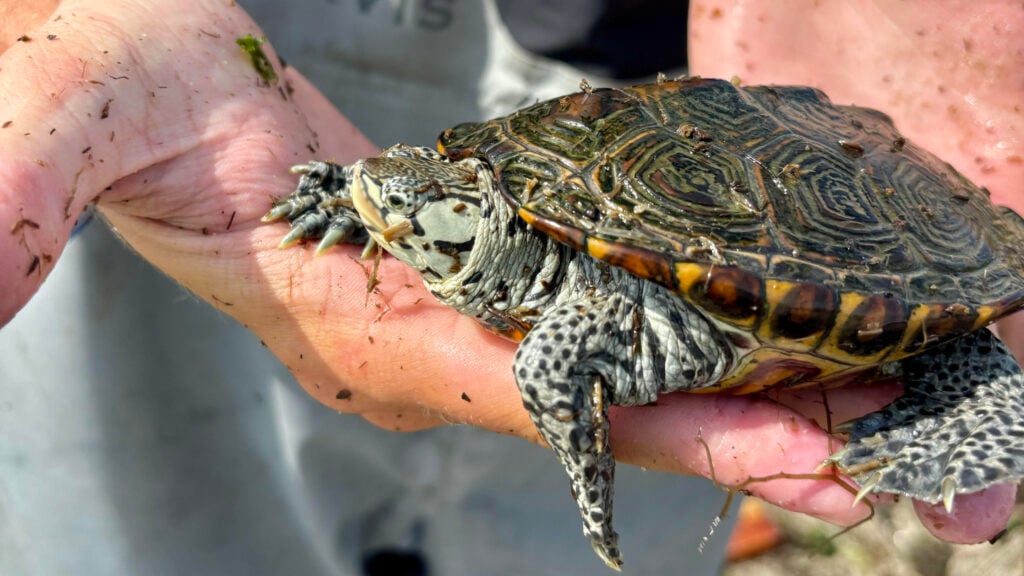
Hatchling Northern Diamondback Terrapins (Malaclemys terrapin) have been documented using marsh as a refuge as they grow, and the team hopes they will eventually find refuge once again at Nellie Bennett.
During high tide, the channels around the marsh will have Bluefish (Pomatomus saltatrix) and Striped Bass (Morone saxatilis) that will benefit from the abundant forage that can be found in marshes including Atlantic Silversides (Menidia menidia) and various crabs.
And the re-establishment of a biodiverse habitat doesn’t stop in the waters. Many species of local and migrating will have an increased opportunity to utilize the marsh for feeding and nesting including Ospreys (Pandion haliaetus), Snowy Egrets (Egretta thula), Little Blue Herons (Egretta caerulea), Glossy Ibises (Plegadis falcinellus) and many more.
The benefits of this restoration project extend far beyond localized environmental gains. Nationally, estuaries generate over half of the U.S. Gross Domestic Product and sustain more than 69 million jobs while covering only a small fraction of land (RAE). Investing in the health of Barnegat Bay secures both critical natural habitats and the economic vitality connected to our coastlines.
The Nellie Bennett Salt Marsh restoration represents a proactive approach to mitigating coastal erosion and protecting the surrounding environment in northern Barnegat Bay.
By utilizing natural dredged materials and living shoreline techniques like stone sills and native plantings, this project demonstrates how nature-based engineering can protect public infrastructure and local homes while enriching native biodiversity. As Phase 1 prepares for rollout, the project offers a practical, scalable blueprint for coastal communities throughout New Jersey seeking sustainable, long-term environmental resilience.