On Saturday, May 9, the Barnegat Bay Partnership and Jacques Cousteau National Estuarine Research Reserve Art x Science series continued. This workshop series is designed to spark creativity through science by pairing environmental education with artistic expression. Be sure to check out our upcoming workshops: Birding x Brushstrokes (June 6) and Pinelands Primer x Basket Weaving (July 11).
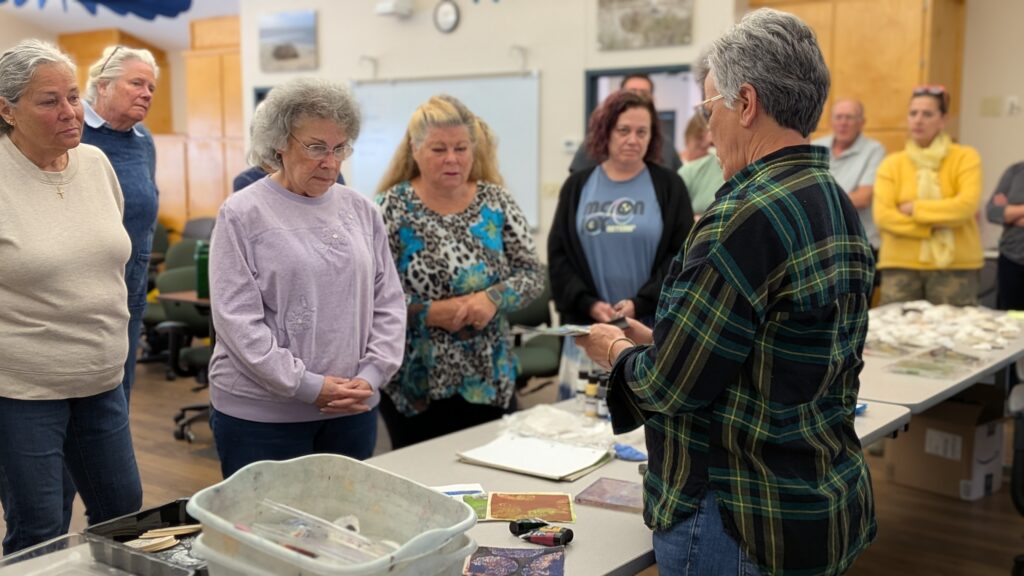
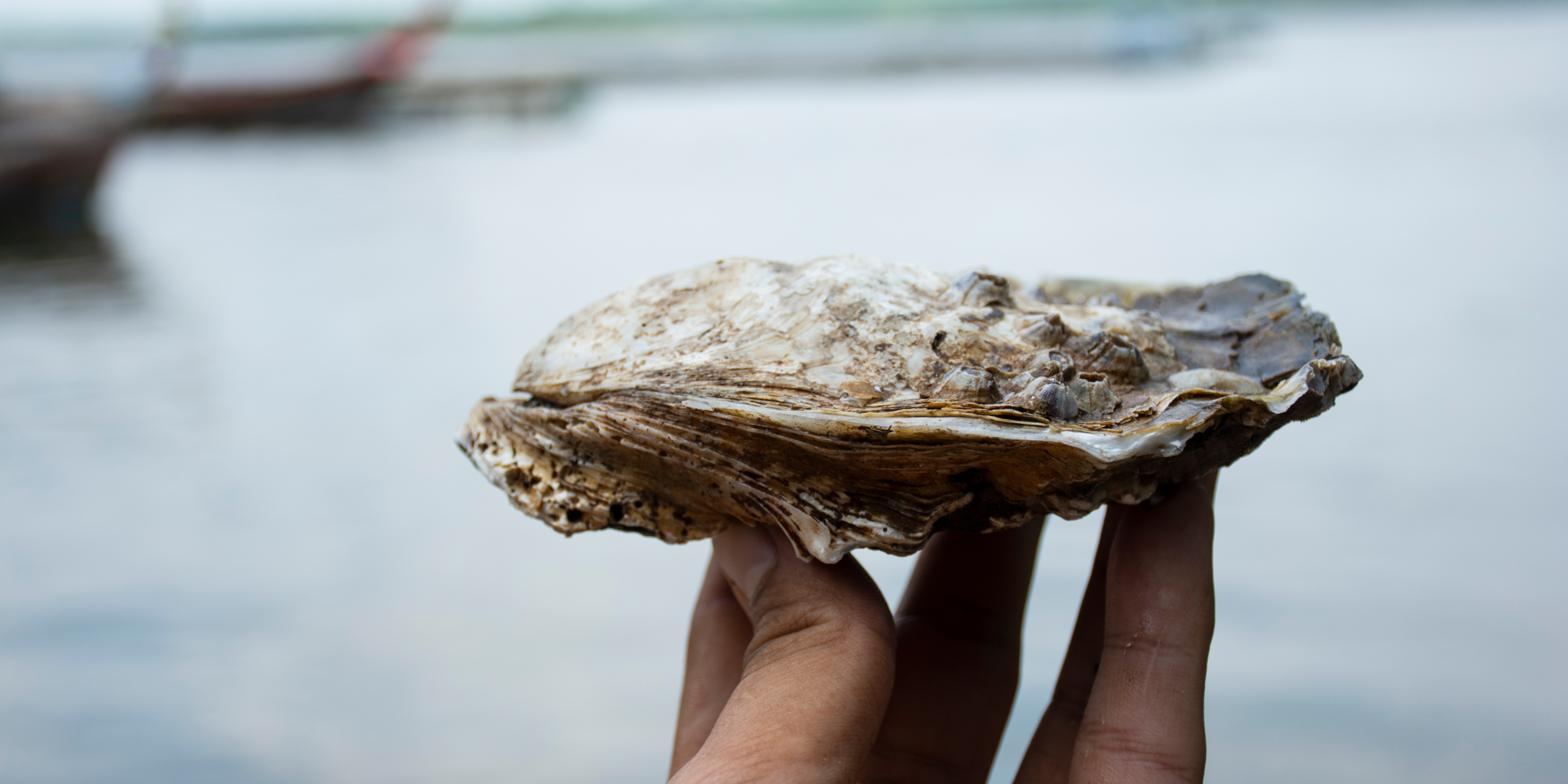
May’s workshop, Oyster Ecology Meets Printmaking brought together Lisa Calvo, retired Rutgers University Researcher and Owner of Sweet Amalia’s Restaurant and Oyster Farm with artist, educator, and oyster farmer Diane Driessen to introduce participants to the ecological and economic value of oysters while getting hands-on monoprinting using oyster shells from the Rutgers University Haskin Shellfish Lab.
Calvo, who has 30+ years of experience as a marine biologist focusing on shellfish biology and ecology, shared her journey from the university to the salt marsh as she transitioned her career into owning Sweet Amalia’s Oyster Farm and Sweet Amalia’s Market and Kitchen. The market, co-founded by Calvo, was recognized by Esquire Magazine and the New York Times as one of the best new restaurants and food destinations. The market serves as a link between the farm and the community, providing a space where consumers can enjoy an authentic “tide to table” connection.
A central theme of the workshop series was the role of oysters as keystone species and ecosystem engineers. Oysters are critical to estuarine environments, providing water filtration, important nursery habitat for fish, crab, and other invertebrates, and shoreline stabilization, among other roles. Oysters are also economically important, generating an impact exceeding $26 million in New Jersey alone.
New Jersey has recently experienced a resurgence in its oyster industry. While the region was once one of the leading producers of oysters, populations declined due to overharvesting and disease. Today, modern aquaculture has led to a rise in the oyster industry. Calvo explained that Dr. Harold Haskin (now the namesake of the Rutgers Haskin Shellfish Lab) was one of the pioneers in developing disease-resistant oysters specialized to grow into high quality oysters on the half shell. This, coupled with modern aquaculture, has led to immense success in modern oyster farming.
While oysters grow into adulthood in the bay, the journey of an oyster from the environment to a dinner plate begins in a hatchery. A hatchery is an indoor facility that controls every aspect of the oyster’s early life, spawning “broodstock” and raising juvenile oysters from their larval stage to “seed”. Oysters move from seed to farmers several weeks of growth, and farmers raise the oyster for the remainder of their maturing life (1-3 years) in the environment.
The Oyster Hatchery
Hatcheries are indoor facilities that control every aspect of an oyster’s early life. Think of them as a high-tech laboratory for baby oysters.
– Spawning: Scientists take “broodstock” (parent oysters) and trick them into spawning by slowly raising the water temperature. This mimics the arrival of spring.
– Larvae Stage: For about two weeks, the microscopic larvae swim in tanks and are fed a diet of specialized algae grown right in the facility.
– Setting (Spat): Once the larvae develop a “foot,” they are ready to settle. Hatcheries provide them with “cultch” (old oyster shells) or tiny grains of sand to attach to. Once attached, they are called spat.
– Seed: After a few weeks of growth, these young oysters reach the size of a fingernail and are known as seed. At this point, they are hardy enough to leave the lab.
The Oyster Farm
Once the hatchery ships the “seed” to a farmer, the work moves outdoors. Unlike land farming, oyster farmers don’t provide food; they simply provide the best environment for the oysters to filter-feed on natural plankton.
– Acclimatization: Farmers place the seeds in protective mesh bags with very small holes to keep predators like crabs out while allowing water to flow through.
– Production Methods:
– Bottom Culture: Oysters are spread directly onto the bay floor. They are harvested later using rakes or dredges.
– Off-Bottom Culture: Oysters are kept in cages, bags on racks, or floating containers. This keeps them away from mud and predators and often results in a cleaner, “prettier” shell for restaurants.
– Maintenance: Farmers regularly “tumble” or shake the bags. This breaks off the thin growing edges of the shell, forcing the oyster to grow a deeper, meatier “cup.”
Final Production & Harvest
Most oysters take 1 to 3 years to reach market size (roughly 3 inches). Throughout this time, they are essentially cleaning the ocean. A single adult oyster can filter up to 50 gallons of water per day, removing excess nutrients and keeping the water clear.
When they reach the right size, farmers sort them by hand, scrub the shells, and ship them live to markets and restaurants—often referred to as the “half-shell market.
In NJ, the growing oyster industry is supported by organizations like the Barnegat Oyster Collective, which helped small farms like Sweet Amalia Oyster Farm reach a wider market. The collective, which “grow oysters, lower barriers of entry for new farmers, educate, and create a community” managed the logistics and distribution for many local growers, ensuring that fresh New Jersey oysters were available in hundreds of restaurants throughout the region.
Following the scientific talk, Diane Driessen introduced the group to her work as an artist and allowed everyone to get hands-on in creating their own monoprinting work. Diane’s work is inspired by close observation and deep connection to the natural world. Her current subject matter, the landscape, presents a stark contrast between the awe-inspiring beauty inherent in nature and the underlying destruction that can result from human interaction with these elements. Diane generally works on paper using pastel, monoprinting techniques, and collage.
You can learn more about one of Diane’s recent expeditions, the “Ghost Forest” series, here. Those works were recently exhibited in a group show at Ocean City Arts Center entitled “Flux: Finding Beauty in a Changing Environment”. Diane was also awarded an honorable mention in last year’s “Plen Air Plus” exhibit at the Long Beach Island Foundation.
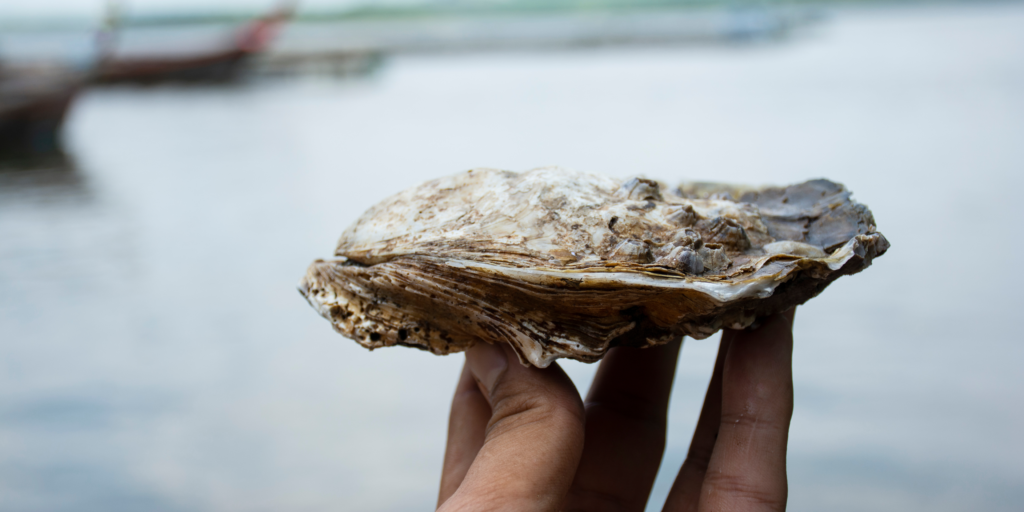
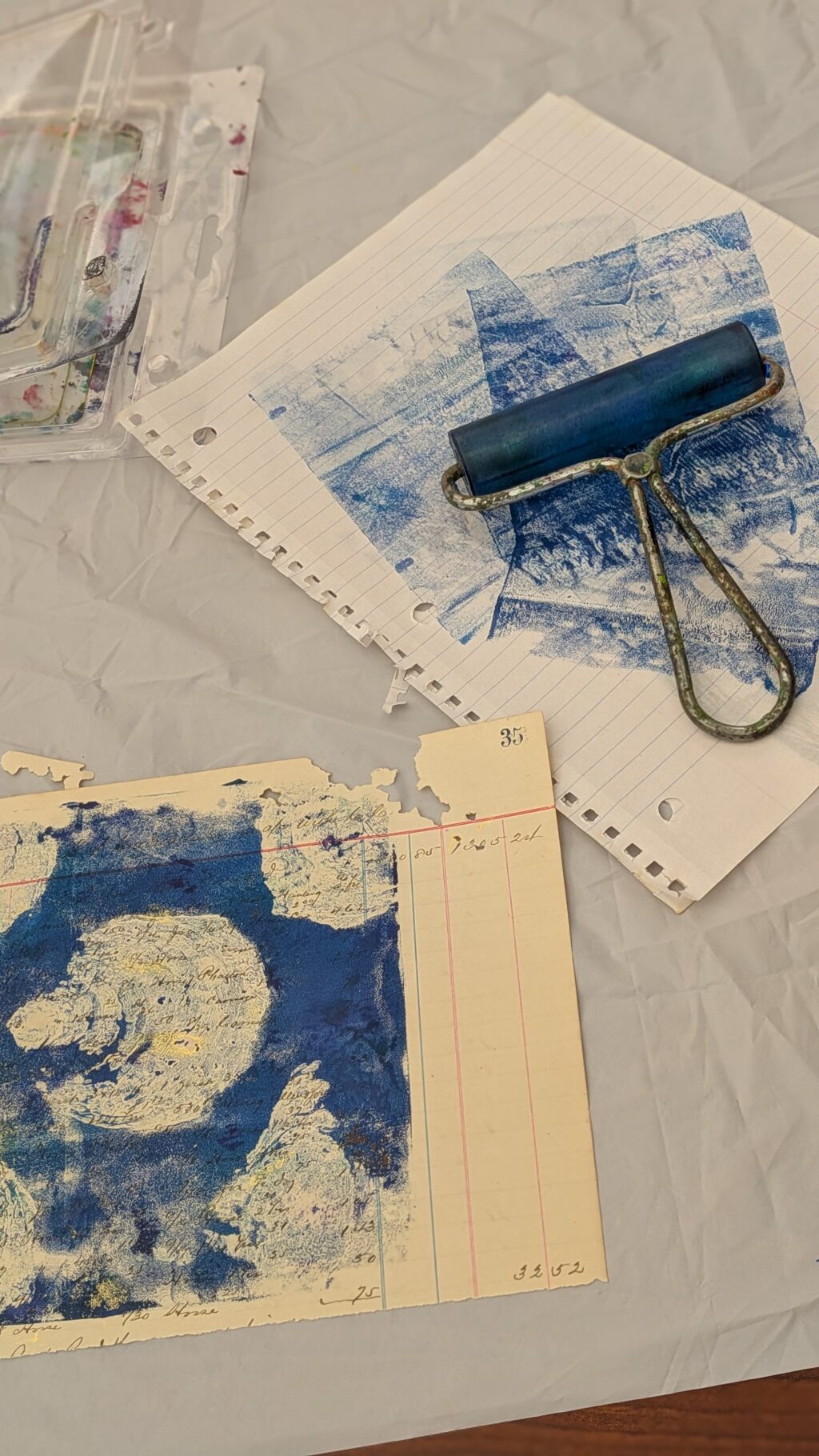
Driessen walked participants through creating their own monoprint oyster art, using oyster shells grown at the Haskin Shellfish Lab. This technique captures the intricate, organic textures of an oyster shell, which appear as fine, topographic lines on the paper once the printing is complete.
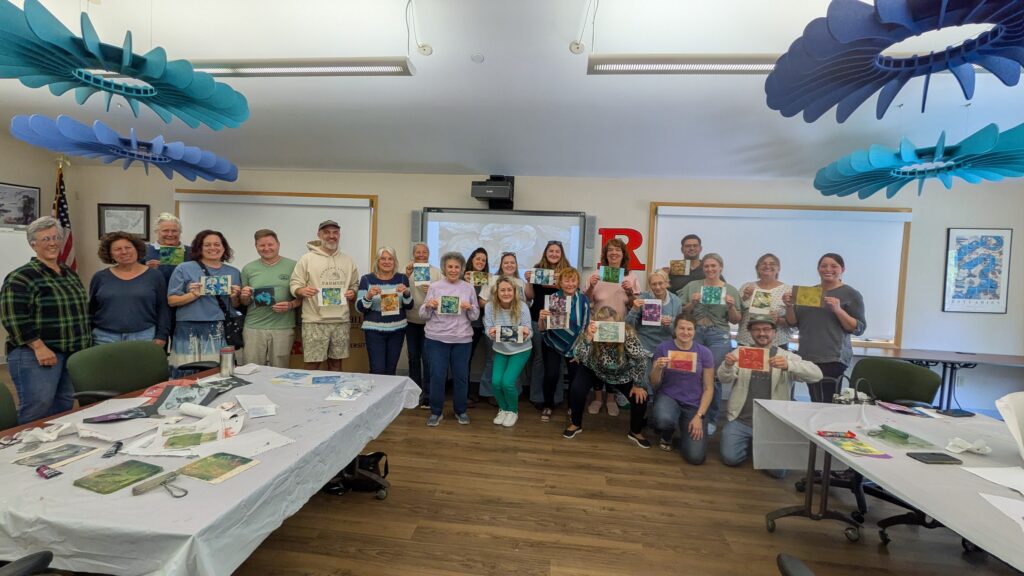
The Art x Science series provide a space to learn, create, and reflect on the importance of different ecosystems, organisms, and ongoing research in the Barnegat Bay region. The 2026 series has two workshops left – Birding x Brushstrokes (June 6) and Pine Barrens Primer x Basket Weaving (July 11) which are both filling up fast. Be sure to reserve your spot for these workshops and join us in learning more about the intersection of art and science!