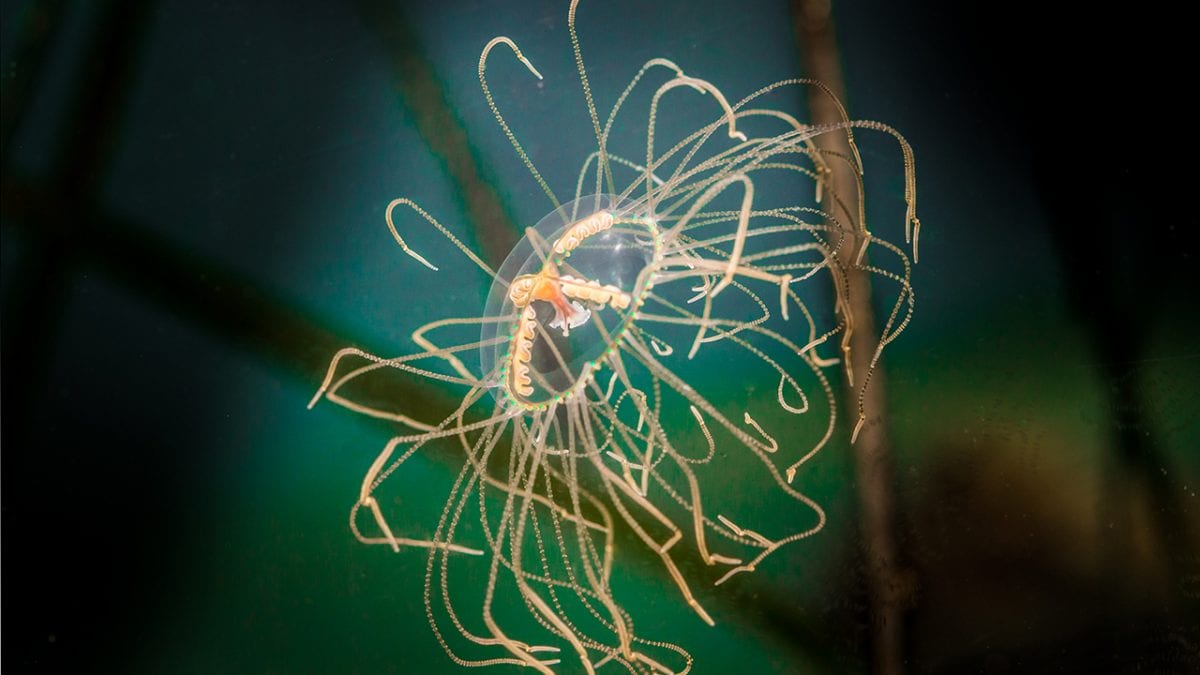
The photo above was sourced from Woods Hole Oceanographic Institute.
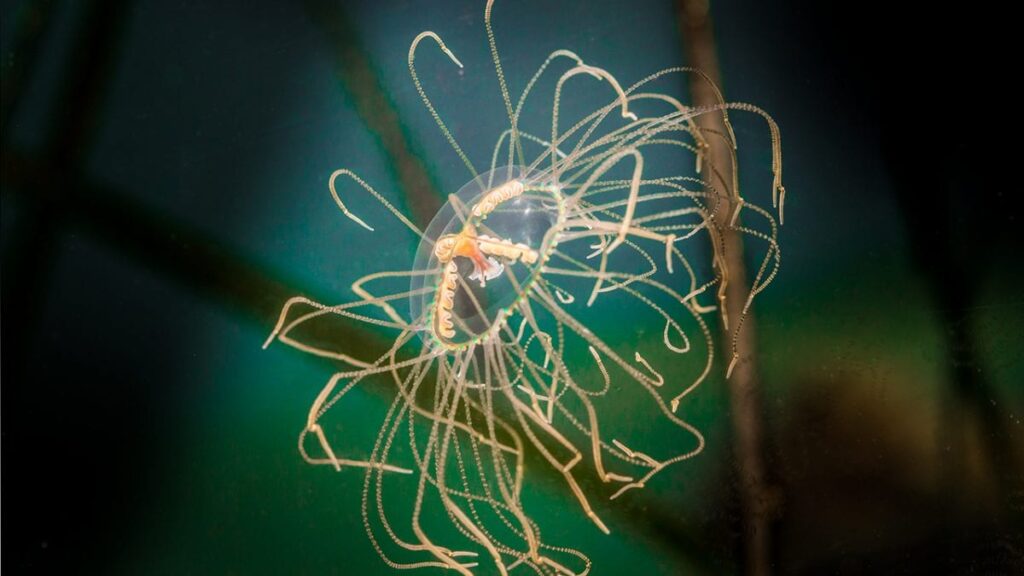
When people think of jellyfish, they often picture the larger species that drift through ocean waters and occasionally wash up on beaches. The clinging jellyfish, Gonionemus vertens, is quite different. This small species spends much of its life in sheltered estuaries and coastal embayments, where it attaches to underwater vegetation rather than drifting freely through the water.
Typically measuring less than an inch across, the clinging jellyfish has a transparent bell marked with distinctive red, orange, or brown pigments arranged in a cross like pattern. Small adhesive pads located on its tentacles allow it to cling to eelgrass, seaweed, and other submerged plants, giving the species its common name. Unlike many familiar jellyfish species, clinging jellyfish are often found among underwater vegetation where they feed on tiny zooplankton and other microscopic organisms.
The species is generally considered native to the Northwest Pacific Ocean, but it has been documented in coastal waters around the world. Scientists believe its spread beyond its native range was likely facilitated by human activities such as shipping. Clinging jellyfish were first reported along the northeastern coast of the United States in the late nineteenth century, particularly in Massachusetts and Connecticut. After becoming relatively uncommon during much of the twentieth century, populations began reappearing in several locations along the East Coast during the 1990s and early 2000s.
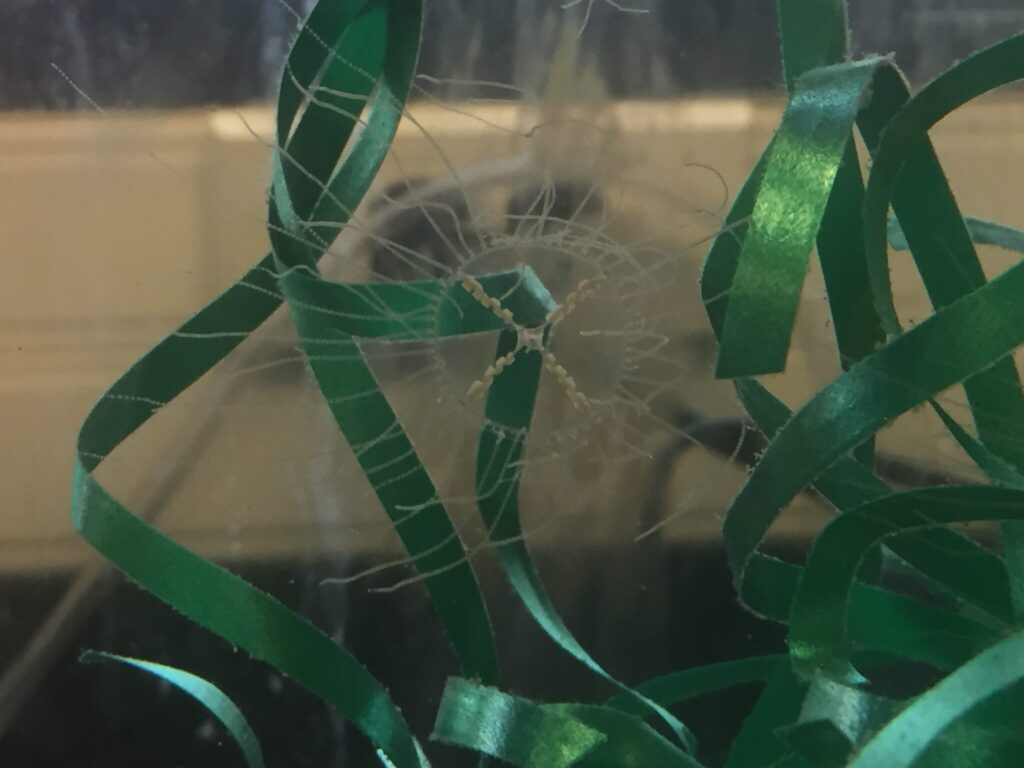
Recent research has revealed that the history of clinging jellyfish on the East Coast may be more complex than previously understood. Scientists at Woods Hole Oceanographic Institution found that some clinging jellyfish from the northeastern United States share a genetic variant with populations from the Sea of Japan near Vladivostok, Russia, where severe sting reactions have long been documented. The study suggests that East Coast populations may include both native and introduced lineages, although the timing and pathways of any introductions remain unclear. Researchers also noted that clinging jellyfish were present in Cape Cod as early as 1894, but reports of painful stings did not emerge until after the species reappeared in the region around 1990 following decades of decline associated with eelgrass loss.
In New Jersey, the first confirmed record of clinging jellyfish was documented in 2016. Researchers identified the species in northern coastal waters, adding New Jersey to the growing list of states where clinging jellyfish have been observed. Since then, state agencies and researchers have continued monitoring efforts to better understand the species’ distribution and ecology in local estuaries.
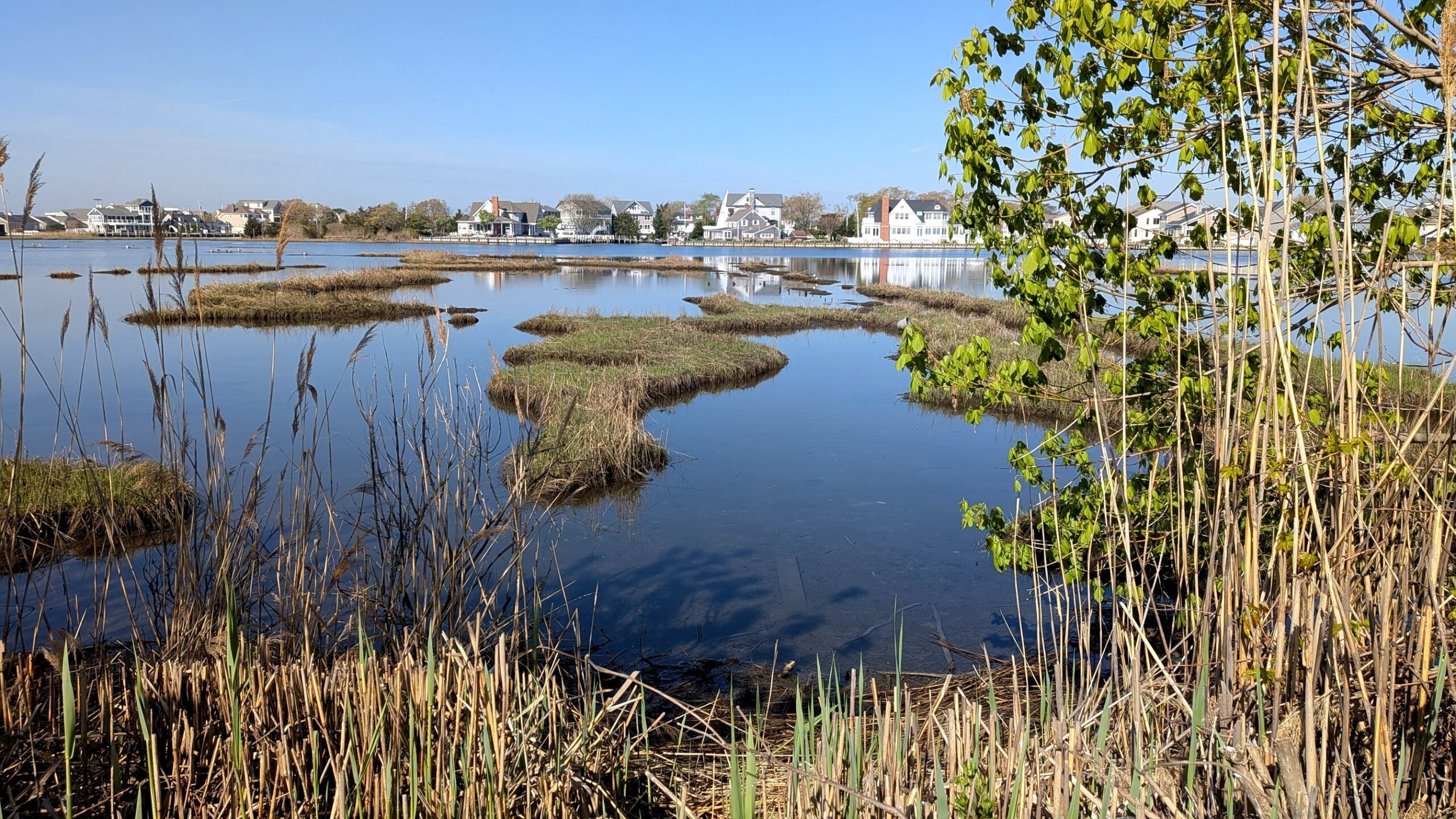
Although clinging jellyfish have been documented in New Jersey coastal waters, scientists are still working to understand their distribution throughout the state’s estuaries. Suitable habitat exists in many locations, particularly in shallow, protected waters that support submerged aquatic vegetation. Continued monitoring helps researchers determine where populations may occur and how their presence changes over time.
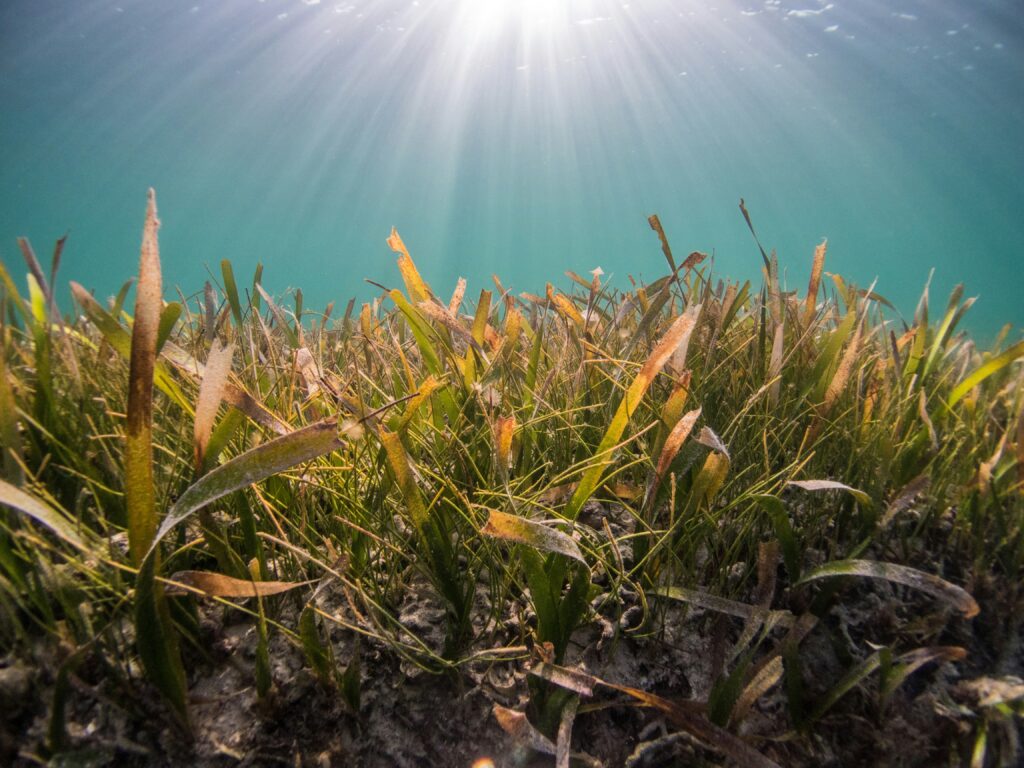
One reason clinging jellyfish are of particular interest to scientists is their close association with vegetated coastal habitats. Research has shown that the species is frequently found in eelgrass meadows and other areas containing dense underwater vegetation. These habitats provide shelter, feeding opportunities, and surfaces for different life stages of the jellyfish. Eelgrass meadows themselves are among the most valuable ecosystems in coastal waters, providing habitat for fish, shellfish, and many other marine organisms.
Like many members of the hydrozoan group, clinging jellyfish have a complex life cycle. Adult jellyfish reproduce by releasing eggs and sperm into the water. The resulting larvae settle onto hard surfaces and develop into tiny polyps that can remain attached to vegetation, shells, or other submerged materials. These polyps can persist for extended periods before producing new jellyfish when environmental conditions become favorable. This hidden stage of the life cycle helps explain why populations can be difficult to detect and why jellyfish may appear in an area where they were not previously observed.
Clinging jellyfish are most often found in shallow, sheltered waters containing eelgrass, seaweed, or other submerged vegetation. People exploring these habitats while wading, kayaking, paddleboarding, or harvesting shellfish can reduce their chances of contact by wearing water shoes, waders, or lightweight clothing that covers exposed skin. Researchers also recommend using caution when handling vegetation or debris collected from shallow estuarine waters, as clinging jellyfish can be difficult to see because of their small size and transparent appearance.
The presence of clinging jellyfish highlights the ecological complexity of shallow coastal habitats and the importance of continued scientific monitoring. As researchers learn more about the distribution, ecology, and life history of clinging jellyfish, they are also gaining a deeper understanding of the estuarine ecosystems these animals call home.
For Barnegat Bay and other coastal systems throughout New Jersey, ongoing monitoring and research remain important tools for understanding how species move, establish populations, and interact with the habitats that support them. Each new observation contributes to a clearer picture of the dynamic and interconnected nature of our coastal waters.
*Note: All references for this information are included within the hyperlinks in the article.