August 19, 2025

Discover the Barnegat Bay Watershed Experience – A Tool for Teachers and Group Leaders

by Nina Sassano

headwaters macroinvertebrates

The Barnegat Bay Watershed includes forests, streams, salt marshes, estuaries, and barrier islands, offering rich opportunities for in person, hands on learning for students of all ages. Whether your class or organization is ready to head outdoors or would prefer to bring the outdoors into the classroom, it can be challenging for teachers and group leaders to choose the right experience, speaker, or trip to fit their needs.

IMG 5338 1024x683

The Barnegat Bay Partnership, along with the Pinelands Preservation Alliance, Ocean County Parks & Recreation, Ocean County Soil Conservation District, Pinelands Institute, and the Pinelands Commission have collaborated to create the Barnegat Bay Watershed Experience – a one-stop resource for teachers and group leaders seeking expert-led programming for their students.

This website allows interested group leaders to search for experiences by filtering by participant age, program type (field vs. classroom-based) and focus area. Not sure where to begin? You’ll also find a comprehensive list of programs led by partnering agencies, lesson plans, stories, and testimonials from educators throughout the watershed.

The Barnegat Bay Watershed Experience also features a curriculum guide that provides activity ideas and a wealth of online resources for educators and community leaders correlated with the goals and objectives of the Barnegat Bay Partnership’s 2022 Comprehensive Conservation and Management Plan (CCMP). For each section of the CCMP, this guide suggests relevant activities, then provides links to sites and resources that can help you carry out those activities. For each section of the CCMP, the guide suggests relevant activities and provides links to resources that can help carry them out. These are not detailed lesson plans, but rather ideas and initiatives that can be developed into lessons, conservation projects, community science efforts, instructional units, or academic courses. The activities and resources in the curriculum guide connect directly with K–12 Next Generation Science Standards (NGSS) and the New Jersey Climate Change Standards established by the NJ Department of Education.

PXL 20250715 134909842 PORTRAIT 1024x576

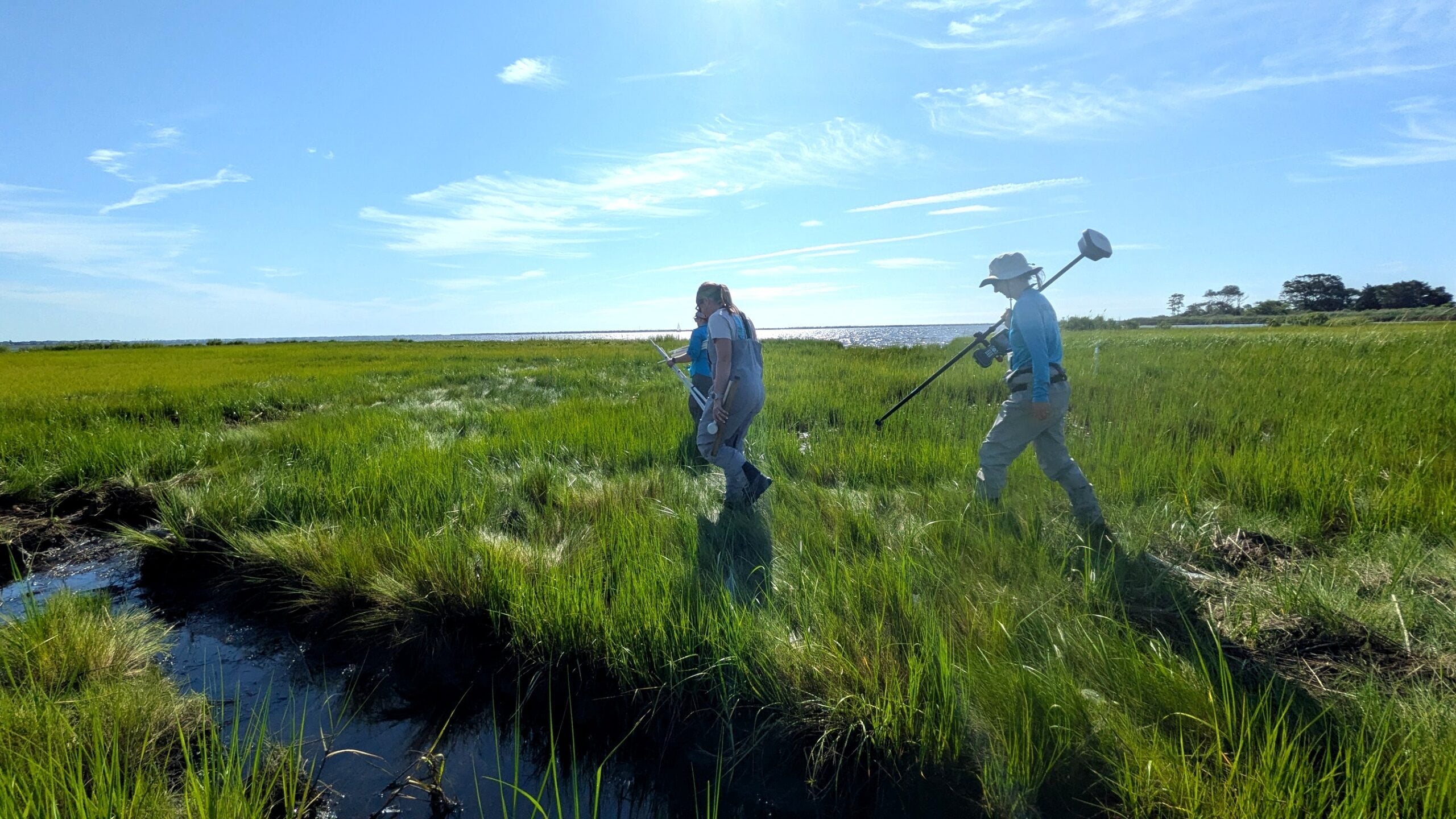
Research shows that hands on, place based learning improves retention, sparks curiosity, and builds problem solving skills. When lessons move beyond the classroom walls, concepts come alive through direct experience. A science textbook might describe salt marshes, but standing ankle-deep in the mud, listening to the calls of wading birds, and observing tiny crabs scuttle across the surface makes that ecosystem unforgettable. Outdoor learning nurtures a deeper appreciation for the environment, helping young people understand the importance of conservation and stewardship. By immersing students in the forests, streams, and shorelines of the Barnegat Bay Watershed, educators are not only teaching science—they are cultivating the next generation of environmental leaders.

“This gives me a better outlook, a better perspective on the importance of these marshlands to our environment. I’ll respect it more.”

– Melanie H., High School Student

The Barnegat Bay Watershed Experience makes it easier than ever for teachers and community leaders to connect their students with meaningful, real world learning opportunities. By providing a centralized hub of programs, resources, and curriculum support, this collaboration ensures that every classroom has access to the wonders of the watershed. Whether exploring salt marshes, investigating soil, or welcoming an expert into the classroom, the experience helps students build knowledge, curiosity, and a lifelong connection to the natural world.

Ready to inspire the next generation of environmental stewards? Visit the Barnegat Bay Watershed Experience website, explore the programs, and discover how you can bring the beauty and lessons of the watershed into your classroom or community.
Explore More Insights from Barnegat Bay

Dive deeper into the ongoing efforts to protect and restore our environment with more updates and initiatives that you can take part in. Check out our latest blog posts for valuable tips and insights.

UNKNOWN

There is limited data available to quantify Wetland and Riparian Buffer Preservation, or updated data to quantify Wetland Acreage. The BBP has obtained funding and will begin assessment efforts for both targets, in the next few years.


 Hard Clam abundance has not been updated since 2012. Recovery of the stock will be guided by the Fishery Management Plan for Hard Clams, which is under development with the NJDEP, BBP, and other organizations. Reclam the Bay and other partners have continued to plant clams for restoration purposes. Continued plantings in strategic locations which maximize survival and reproduction is one strategy to pursue in the coming years. This work can use a model developed by Rutgers with BBP funding which identified areas where planted clams could have the greatest dispersal of their larvae and thus potentially maximally contribute to the recovery of the stock.

 Water Withdrawals were over the target in the 2021 report; USGS has not yet completed its latest update, so a definitive determination of status is not available. However, additional NJDEP data show that it is likely that we continue to not meet the target. Per capita water use has gone down, demonstrating the effectiveness of water-saving appliances and practices, but that decrease has been offset by population gains. 


IN PROGRESS

New maps quantifying Submerged Aquatic Vegetation extent were developed, but poor image clarity resulted in a high degree of uncertainty in the total acreage. NJDEP and Rutgers are working to resolve the uncertainty of these maps, and improve the total acreage estimate. Funding has also been obtained for further research and restoration activities. Several groups are developing potential restoration actions.

The USGS has completed the first phase of its study to identify minimum ecological flows in select Barnegat Bay tributaries. USGS scientists compared streamflow statistics between historical and current time periods to better understand trends in watershed flow conditions. This work provides a foundation for developing ecological flow targets in the Barnegat Bay watershed.  Similar to SAV extent, funding (approximately $450K) has been obtained by the BBP to complete the remaining phases necessary for threshold determination.


TARGETS ACHIEVED

No targets can be considered “Achieved” at this time.


NOT ACHIEVING

Several Public Swimming Beaches exceeded their safe swimming standards more frequently than during their baseline time period (2016-2018).

While most beaches are routinely safe for swimming, several problematic areas such as Beachwood, Hancock, Windward, and several lake beaches need track-down studies and restoration to pinpoint and address sources of bacteria.

Acres of Approved Shellfish Waters decreased from the last report. While this decrease was small, it represents a loss of previously approved waters. Similar to public beaches, track-down studies and restoration work are needed to pinpoint and address sources of bacteria.


Discover the Barnegat Bay Watershed Experience – A Tool for Teachers and Group Leaders

The Barnegat Bay Watershed includes forests, streams, salt marshes, estuaries, and barrier islands, offering rich opportunities for in person, hands on learning for students of all ages. Whether your class or organization is ready to head outdoors or would prefer to bring the outdoors into the classroom, it can be challenging for teachers and group leaders to choose the right experience, speaker, or trip to fit their needs.

IMG 5338 1024x683

The Barnegat Bay Partnership, along with the Pinelands Preservation Alliance, Ocean County Parks & Recreation, Ocean County Soil Conservation District, Pinelands Institute, and the Pinelands Commission have collaborated to create the Barnegat Bay Watershed Experience – a one-stop resource for teachers and group leaders seeking expert-led programming for their students.

This website allows interested group leaders to search for experiences by filtering by participant age, program type (field vs. classroom-based) and focus area. Not sure where to begin? You’ll also find a comprehensive list of programs led by partnering agencies, lesson plans, stories, and testimonials from educators throughout the watershed.

The Barnegat Bay Watershed Experience also features a curriculum guide that provides activity ideas and a wealth of online resources for educators and community leaders correlated with the goals and objectives of the Barnegat Bay Partnership’s 2022 Comprehensive Conservation and Management Plan (CCMP). For each section of the CCMP, this guide suggests relevant activities, then provides links to sites and resources that can help you carry out those activities. For each section of the CCMP, the guide suggests relevant activities and provides links to resources that can help carry them out. These are not detailed lesson plans, but rather ideas and initiatives that can be developed into lessons, conservation projects, community science efforts, instructional units, or academic courses. The activities and resources in the curriculum guide connect directly with K–12 Next Generation Science Standards (NGSS) and the New Jersey Climate Change Standards established by the NJ Department of Education.

PXL 20250715 134909842 PORTRAIT 1024x576

Research shows that hands on, place based learning improves retention, sparks curiosity, and builds problem solving skills. When lessons move beyond the classroom walls, concepts come alive through direct experience. A science textbook might describe salt marshes, but standing ankle-deep in the mud, listening to the calls of wading birds, and observing tiny crabs scuttle across the surface makes that ecosystem unforgettable. Outdoor learning nurtures a deeper appreciation for the environment, helping young people understand the importance of conservation and stewardship. By immersing students in the forests, streams, and shorelines of the Barnegat Bay Watershed, educators are not only teaching science—they are cultivating the next generation of environmental leaders.

“This gives me a better outlook, a better perspective on the importance of these marshlands to our environment. I’ll respect it more.”

– Melanie H., High School Student

The Barnegat Bay Watershed Experience makes it easier than ever for teachers and community leaders to connect their students with meaningful, real world learning opportunities. By providing a centralized hub of programs, resources, and curriculum support, this collaboration ensures that every classroom has access to the wonders of the watershed. Whether exploring salt marshes, investigating soil, or welcoming an expert into the classroom, the experience helps students build knowledge, curiosity, and a lifelong connection to the natural world.

Ready to inspire the next generation of environmental stewards? Visit the Barnegat Bay Watershed Experience website, explore the programs, and discover how you can bring the beauty and lessons of the watershed into your classroom or community.
Contact Discover the Barnegat Bay Watershed Experience – A Tool for Teachers and Group LeadersContact Discover the Barnegat Bay Watershed Experience – A Tool for Teachers and Group Leaders
headwaters macroinvertebrates