Opens in a new tab

October 26, 2026

BBP Staff Travel to Texas for ANEP Conference

by Samantha Adamczyk

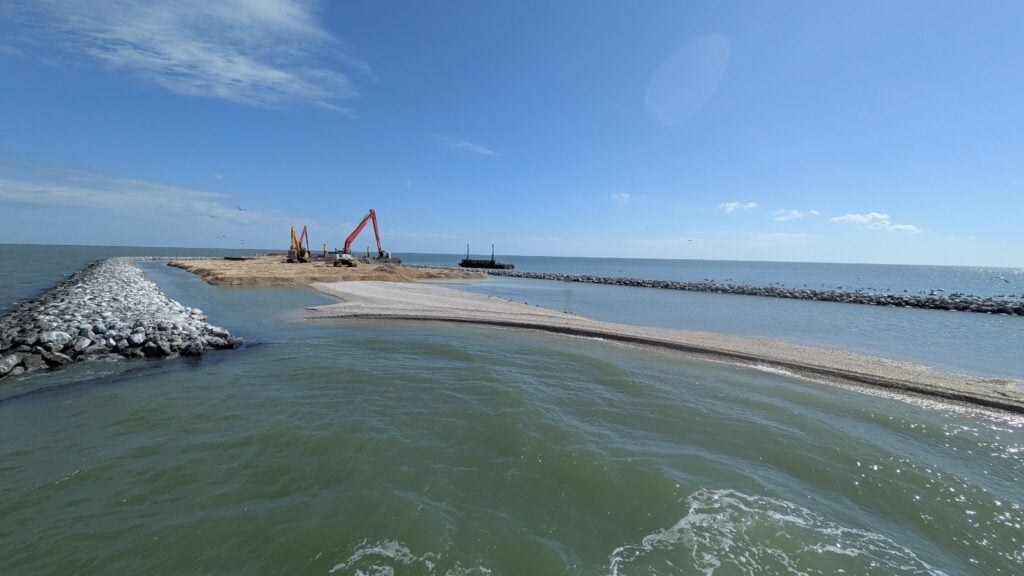
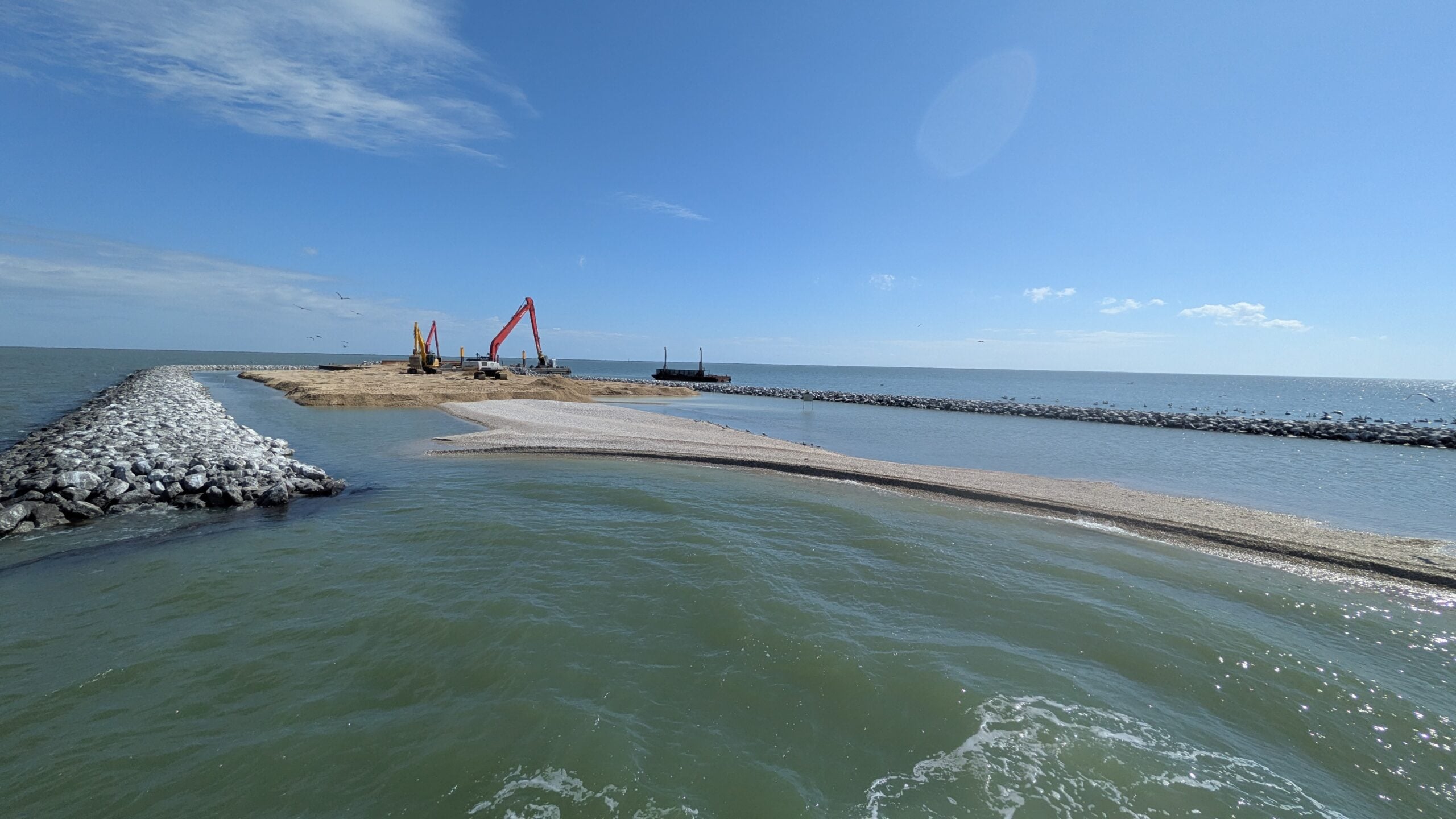
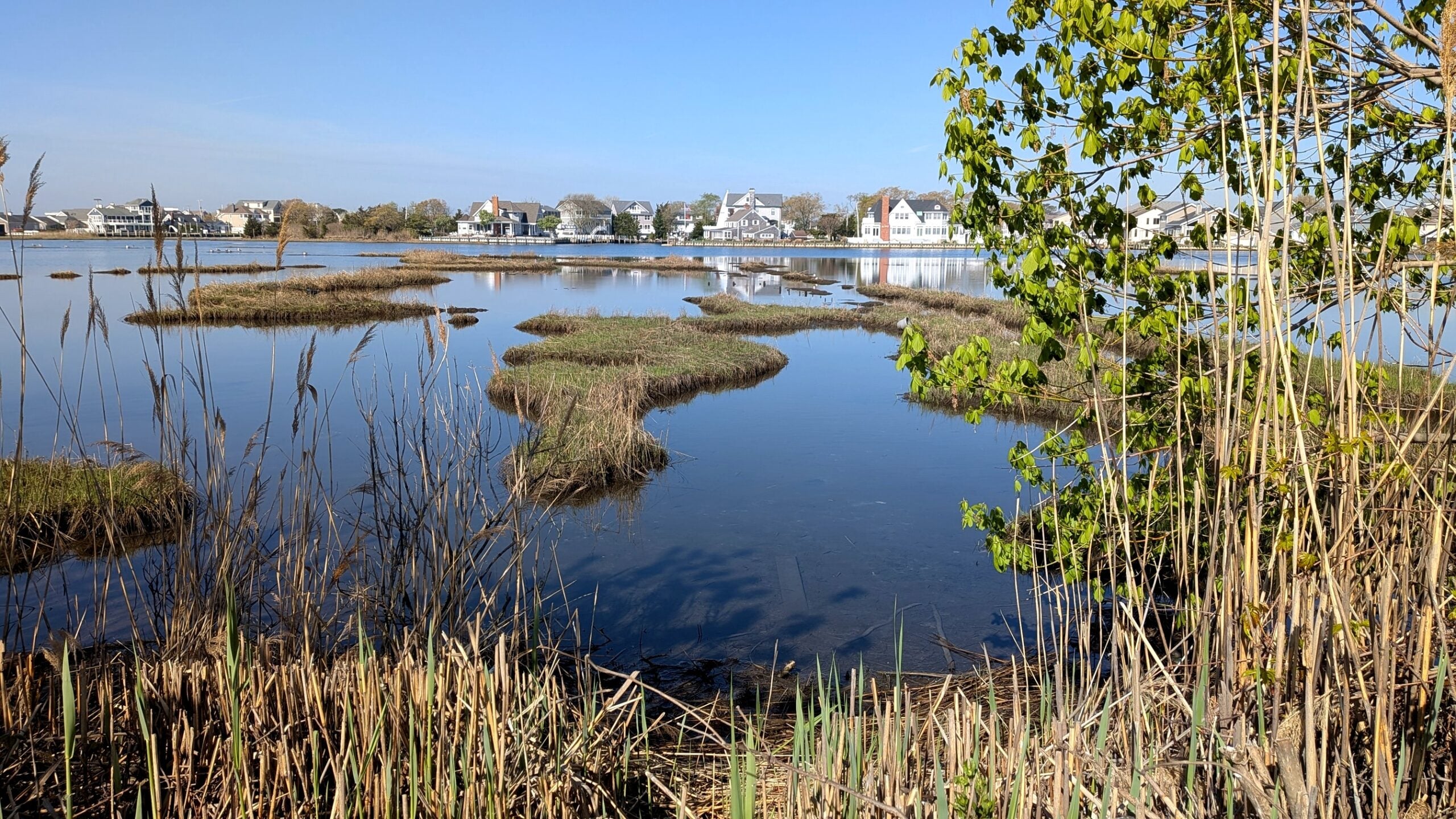
shoreline restoration aransas bay
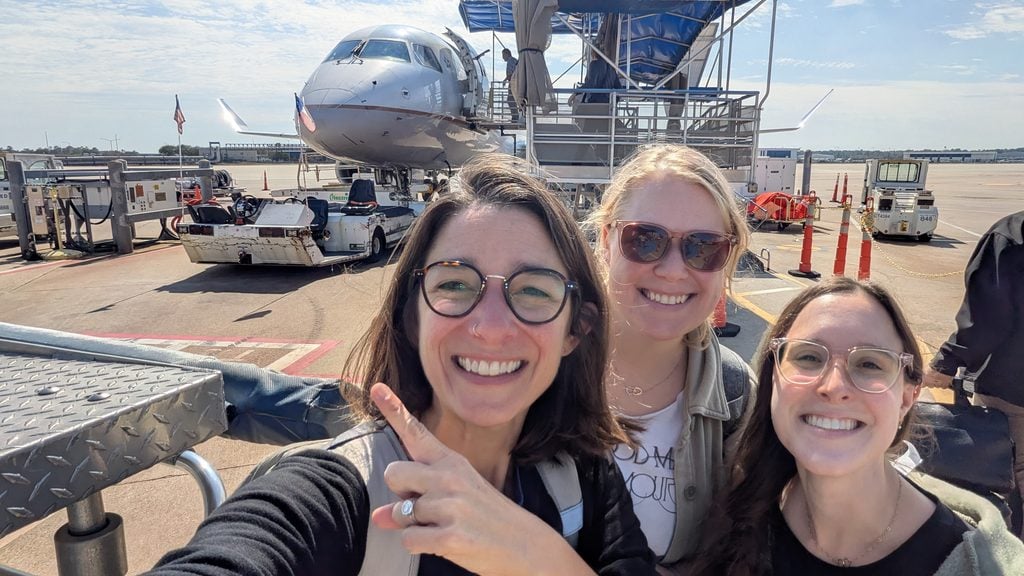
PXL 20261019 190445917 1 1024x576

Last week, Associate Director of Outreach Nina Sassano, Stewardship Specialist Caroline McFarland, and Wetlands and Watershed Coordinator Samantha Adamczyk attended the Association of National Estuary Program’s 2026 Tech Transfer – a conference for the scientists, communicators, and project managers of the 28 National Estuary Programs (NEPs) across the country working to protect and enhance our nation’s estuaries of national significance. This year’s conference was hosted by the Coastal Bend Bays and Estuaries Program (CBBEP) in Corpus Christi, Texas. After a long day of travel, Nina, Caroline, and Sammie dove right into reconnecting with fellow NEP professionals and sharing our excitement for the week ahead.

The first full day of the conference included fantastic presentations from NEP staff, EPA partners, and a keynote address from a well-rounded science professional with his hands in many pots in the field of estuary science. Jace Tunnell, Director of Community Engagement at the Harte Research Institute at Texas A&M University, shared his experiences working at both an NEP and a NERR, a university research institute, and his unique journey educating the public on microplastics through his community science project “Nurdle Patrol“, YouTube channel and social platforms. His informational and very comical keynote address had us intrigued not only by the stories of the wild and wacky things he has found beachcombing (including a lot of dolls, messages in bottles, and personal items lost around the world), but by his ability to foster interest in science through a unique approach to education
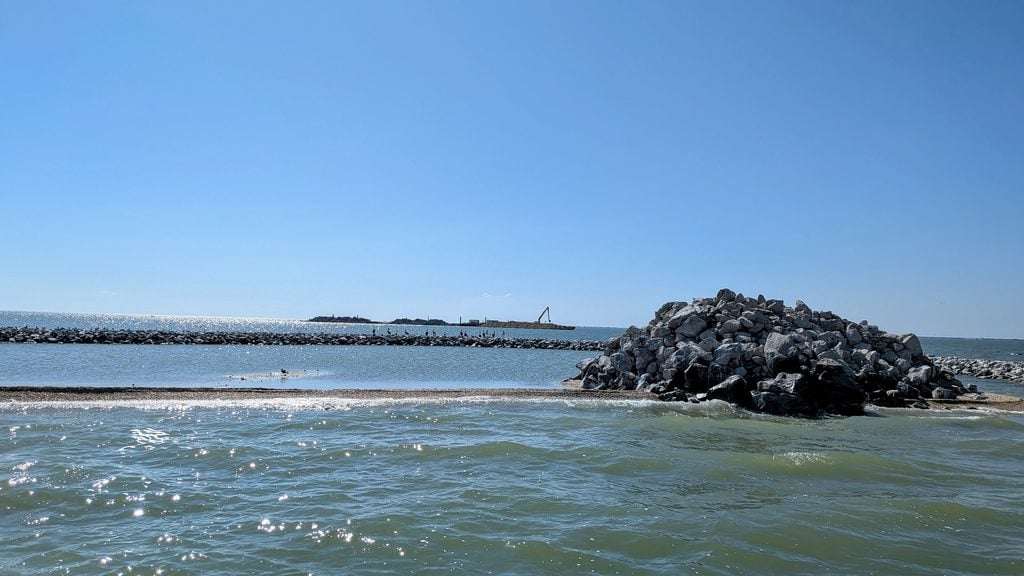
Pelicans resting on Deadman's Island as the team works to rebuild what was lost to erosion.
Pelicans resting on Deadman’s Island as the team works to rebuild what was lost to erosion.

In the afternoon, Nina, Sammie, and Caroline hit the high seas for a boat tour of the Aransas Bay where they observed ongoing restoration projects. Perhaps the most impactful was Deadman’s Island, a spit of land in the middle of the bay that has been slowly eroding through the years. This island is an important habitat for migrating shorebirds, so the Coastal Bend Bays National Estuary Program is working collaboratively to restore this disappearing habitat. A true testament to “if you build, it they will come” the island was teeming with birds, from white pelicans to cormorants. It was truly a spectacle! The team also stopped by a commercial oyster farm, and were visited by some dolphins who had a little surf session riding the wake of the boat.
panorama Nueces
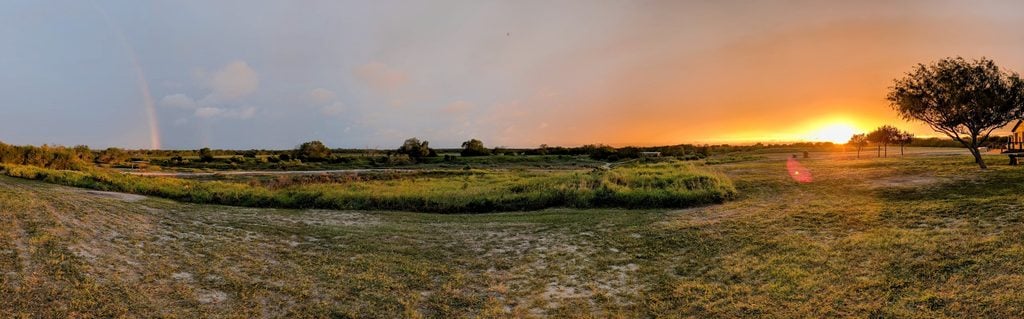
A panoramic view of a sunset to the west and a rainbow to the east at the Nueces Delta Preserve.

Day Two presentations were all about shaking things up in the way NEPs operate. Whether it’s working with programs outside the watershed, updating incentives based on new public interest, or trying out new money-generating opportunities, the girls learned that the world is their oyster (pun intended) when it comes to advancing program operations and the partnerships NEPs form. The ladies walked away with new ideas to bring home to the BBP to further the program’s impact on our estuary and community. The second half of the day was spent at the Nueces Delta Preserve where the NEP team members learned about the public programs offered by CBBEP and the beautiful landscape they have at their disposal for research and education. Everyone was then treated to an incredible outdoor dinner with the sunset on one side of the pavilion and a rainbow on the other. What a way to end the day!
pxl 20261022 155035567

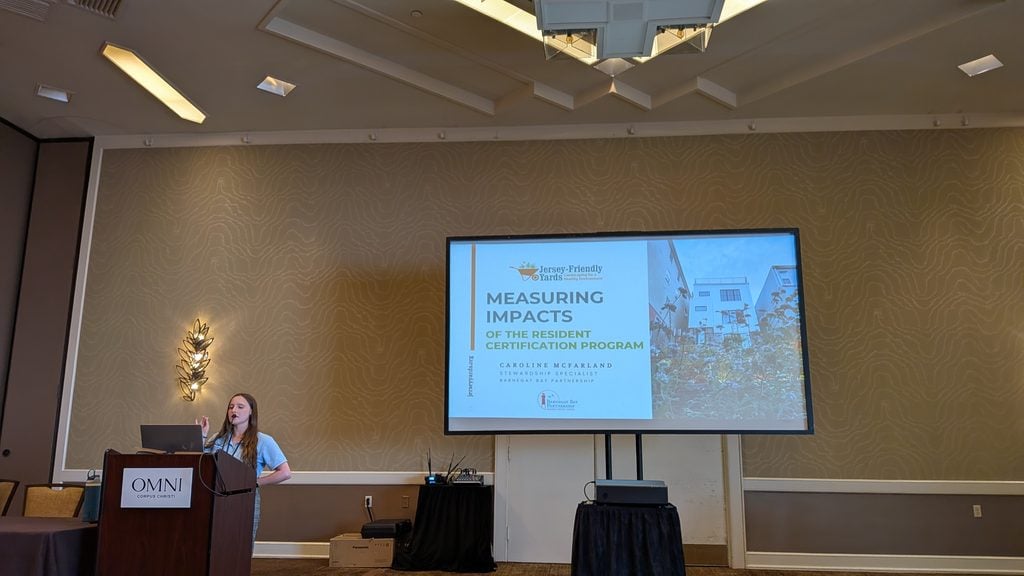
To conclude their time in Texas, Day Three presented Nina, Caroline and Sammie with technical implementation strategies for restoration projects as well as logistics for getting the NEP’s 40th Anniversary campaign off the ground (that’s right – the National Estuary Program is turning 40 in 2027!). And the cherry on top of our trip? Caroline got up and wowed the crowd with a presentation demonstrating the successes of the Jersey Friendly Yards program. Fun fact? The Jersey Friendly Yards program has already transformed 17 acres of NJ’s turf to native plant habitat.

Throughout the week, the newly formed NEP Communicators Network also collaborated on ideas to advance the NEP’s collective messaging, to share the NEP’s impact, and to determine creative new ways to work together. The Communicators Network was officially established in 2025, and has growing membership of outreach, education, and communications professionals from across the country. The group received praise for their collaborative efforts, and an overall positive reception to the Network, of which Nina is a founder and executive member.

Once everything wrapped up, the ladies said their goodbyes to both old and new peers and made their way home. Although the travel was long, they came home with a refreshed view of all that an NEP can offer and an excitement to share with the rest of the BBP team. Here’s to another year of learning and furthering our mission with the help of our fellow NEPs!
Explore More Insights from Barnegat Bay

Dive deeper into the ongoing efforts to protect and restore our environment with more updates and initiatives that you can take part in. Check out our latest blog posts for valuable tips and insights.

UNKNOWN

There is limited data available to quantify Wetland and Riparian Buffer Preservation, or updated data to quantify Wetland Acreage. The BBP has obtained funding and will begin assessment efforts for both targets, in the next few years.


 Hard Clam abundance has not been updated since 2012. Recovery of the stock will be guided by the Fishery Management Plan for Hard Clams, which is under development with the NJDEP, BBP, and other organizations. Reclam the Bay and other partners have continued to plant clams for restoration purposes. Continued plantings in strategic locations which maximize survival and reproduction is one strategy to pursue in the coming years. This work can use a model developed by Rutgers with BBP funding which identified areas where planted clams could have the greatest dispersal of their larvae and thus potentially maximally contribute to the recovery of the stock.

 Water Withdrawals were over the target in the 2021 report; USGS has not yet completed its latest update, so a definitive determination of status is not available. However, additional NJDEP data show that it is likely that we continue to not meet the target. Per capita water use has gone down, demonstrating the effectiveness of water-saving appliances and practices, but that decrease has been offset by population gains. 


IN PROGRESS

New maps quantifying Submerged Aquatic Vegetation extent were developed, but poor image clarity resulted in a high degree of uncertainty in the total acreage. NJDEP and Rutgers are working to resolve the uncertainty of these maps, and improve the total acreage estimate. Funding has also been obtained for further research and restoration activities. Several groups are developing potential restoration actions.

The USGS has completed the first phase of its study to identify minimum ecological flows in select Barnegat Bay tributaries. USGS scientists compared streamflow statistics between historical and current time periods to better understand trends in watershed flow conditions. This work provides a foundation for developing ecological flow targets in the Barnegat Bay watershed.  Similar to SAV extent, funding (approximately $450K) has been obtained by the BBP to complete the remaining phases necessary for threshold determination.


TARGETS ACHIEVED

No targets can be considered “Achieved” at this time.


NOT ACHIEVING

Several Public Swimming Beaches exceeded their safe swimming standards more frequently than during their baseline time period (2016-2018).

While most beaches are routinely safe for swimming, several problematic areas such as Beachwood, Hancock, Windward, and several lake beaches need track-down studies and restoration to pinpoint and address sources of bacteria.

Acres of Approved Shellfish Waters decreased from the last report. While this decrease was small, it represents a loss of previously approved waters. Similar to public beaches, track-down studies and restoration work are needed to pinpoint and address sources of bacteria.


BBP Staff Travel to Texas for ANEP Conference

PXL 20261019 190445917 1 1024x576

Last week, Associate Director of Outreach Nina Sassano, Stewardship Specialist Caroline McFarland, and Wetlands and Watershed Coordinator Samantha Adamczyk attended the Association of National Estuary Program’s 2026 Tech Transfer – a conference for the scientists, communicators, and project managers of the 28 National Estuary Programs (NEPs) across the country working to protect and enhance our nation’s estuaries of national significance. This year’s conference was hosted by the Coastal Bend Bays and Estuaries Program (CBBEP) in Corpus Christi, Texas. After a long day of travel, Nina, Caroline, and Sammie dove right into reconnecting with fellow NEP professionals and sharing our excitement for the week ahead.

The first full day of the conference included fantastic presentations from NEP staff, EPA partners, and a keynote address from a well-rounded science professional with his hands in many pots in the field of estuary science. Jace Tunnell, Director of Community Engagement at the Harte Research Institute at Texas A&M University, shared his experiences working at both an NEP and a NERR, a university research institute, and his unique journey educating the public on microplastics through his community science project “Nurdle Patrol“, YouTube channel and social platforms. His informational and very comical keynote address had us intrigued not only by the stories of the wild and wacky things he has found beachcombing (including a lot of dolls, messages in bottles, and personal items lost around the world), but by his ability to foster interest in science through a unique approach to education

Pelicans resting on Deadman's Island as the team works to rebuild what was lost to erosion.
Pelicans resting on Deadman’s Island as the team works to rebuild what was lost to erosion.

In the afternoon, Nina, Sammie, and Caroline hit the high seas for a boat tour of the Aransas Bay where they observed ongoing restoration projects. Perhaps the most impactful was Deadman’s Island, a spit of land in the middle of the bay that has been slowly eroding through the years. This island is an important habitat for migrating shorebirds, so the Coastal Bend Bays National Estuary Program is working collaboratively to restore this disappearing habitat. A true testament to “if you build, it they will come” the island was teeming with birds, from white pelicans to cormorants. It was truly a spectacle! The team also stopped by a commercial oyster farm, and were visited by some dolphins who had a little surf session riding the wake of the boat.

panorama Nueces
A panoramic view of a sunset to the west and a rainbow to the east at the Nueces Delta Preserve.

Day Two presentations were all about shaking things up in the way NEPs operate. Whether it’s working with programs outside the watershed, updating incentives based on new public interest, or trying out new money-generating opportunities, the girls learned that the world is their oyster (pun intended) when it comes to advancing program operations and the partnerships NEPs form. The ladies walked away with new ideas to bring home to the BBP to further the program’s impact on our estuary and community. The second half of the day was spent at the Nueces Delta Preserve where the NEP team members learned about the public programs offered by CBBEP and the beautiful landscape they have at their disposal for research and education. Everyone was then treated to an incredible outdoor dinner with the sunset on one side of the pavilion and a rainbow on the other. What a way to end the day!

pxl 20261022 155035567

To conclude their time in Texas, Day Three presented Nina, Caroline and Sammie with technical implementation strategies for restoration projects as well as logistics for getting the NEP’s 40th Anniversary campaign off the ground (that’s right – the National Estuary Program is turning 40 in 2027!). And the cherry on top of our trip? Caroline got up and wowed the crowd with a presentation demonstrating the successes of the Jersey Friendly Yards program. Fun fact? The Jersey Friendly Yards program has already transformed 17 acres of NJ’s turf to native plant habitat.

Throughout the week, the newly formed NEP Communicators Network also collaborated on ideas to advance the NEP’s collective messaging, to share the NEP’s impact, and to determine creative new ways to work together. The Communicators Network was officially established in 2025, and has growing membership of outreach, education, and communications professionals from across the country. The group received praise for their collaborative efforts, and an overall positive reception to the Network, of which Nina is a founder and executive member.

Once everything wrapped up, the ladies said their goodbyes to both old and new peers and made their way home. Although the travel was long, they came home with a refreshed view of all that an NEP can offer and an excitement to share with the rest of the BBP team. Here’s to another year of learning and furthering our mission with the help of our fellow NEPs!
Contact BBP Staff Travel to Texas for ANEP ConferenceContact BBP Staff Travel to Texas for ANEP Conference
shoreline restoration aransas bay