
BBP Continuous Water Quality Monitoring Network
Coastal water quality can affect human health, the health and sustainability of fish and wildlife populations, and many commercial and recreational activities within the Barnegat Bay, including fishing, shellfishing, swimming and ecotourism. As human populations continue to increase in coastal areas, coastal waters are increasingly impacted by various stressors, potentially contributing to decreased water quality, including algal blooms, low dissolved oxygen, and a cascade of adverse environmental and economic problems.
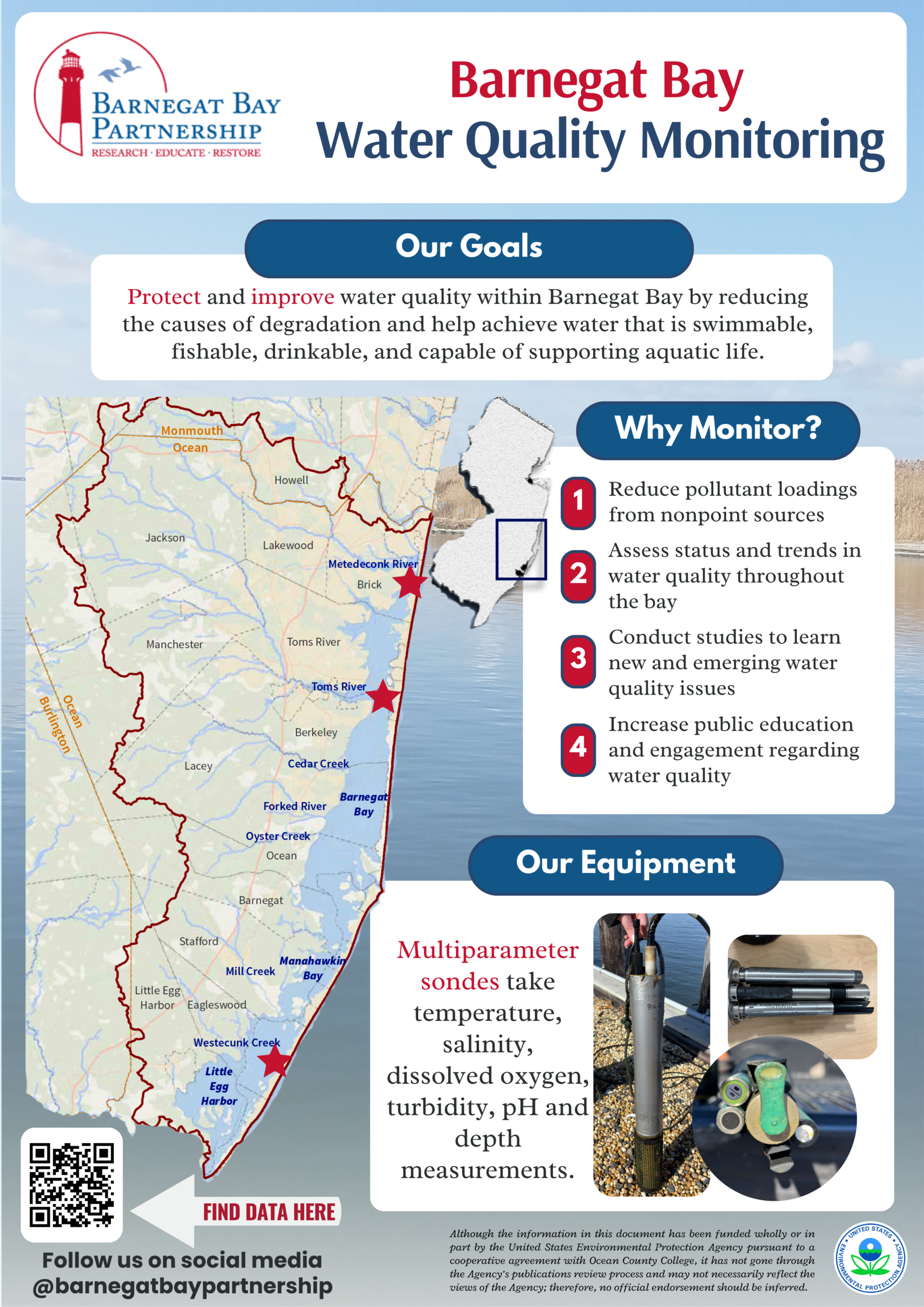
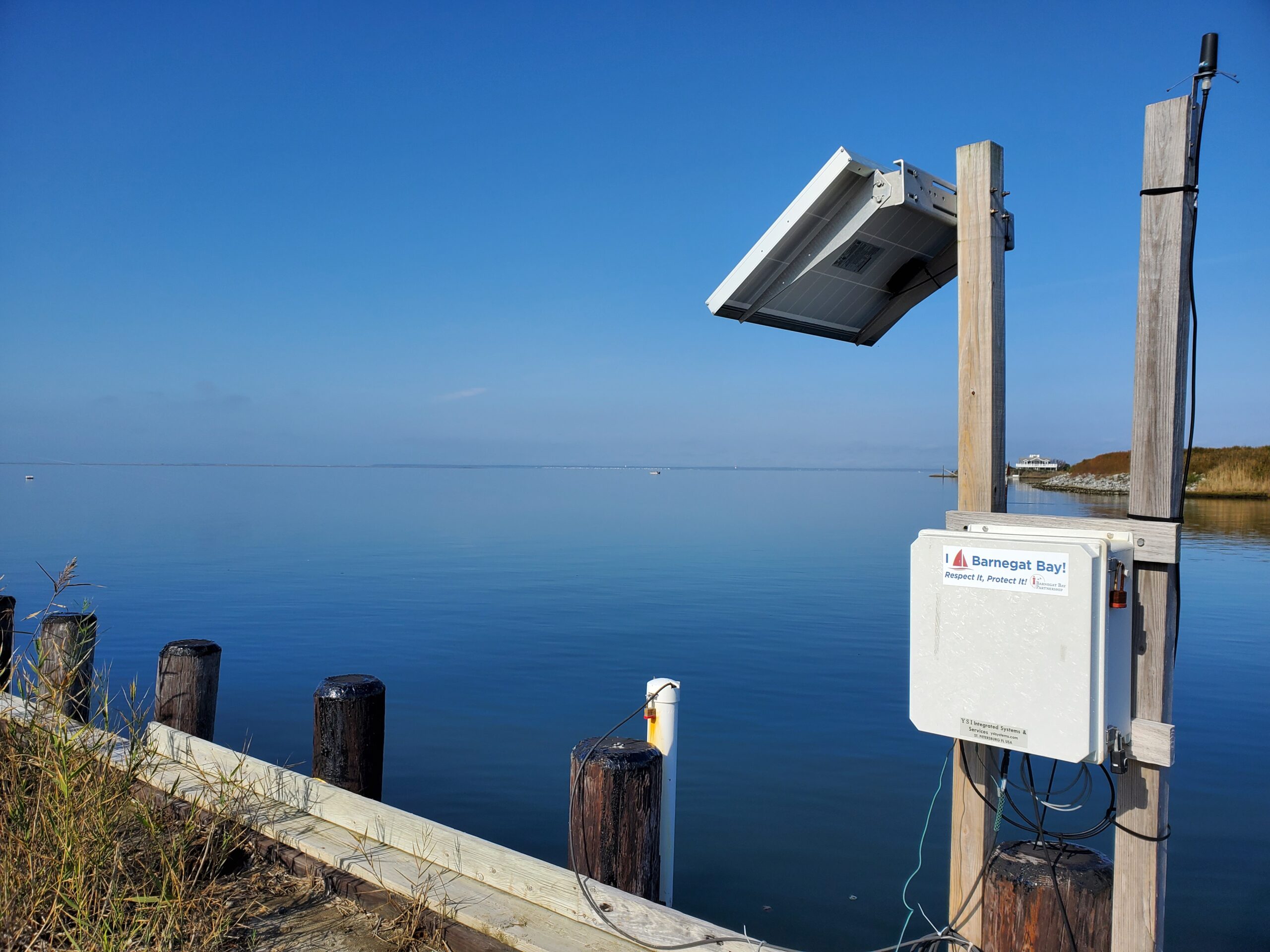
The Barnegat Bay Partnership has established a network of continuous water quality monitoring stations throughout the bay to better understand the temperature, salinity, oxygen, pH, turbidity, and water depth changes that may result from climatological stressors.
This information is trasmitted in near-real time to the NJDEP’s continuous water quality monitoring website which is available for public download.


The Water Quality Monitoring Data Portal
BBP’s continuous water quality monitoring program aims to give stakeholders including residents, educators, water quality managers, and scientists timely access to reliable measurements of coastal water quality. The three long-term stations in Beach Haven, Seaside Park, and Mantoloking transmit real-time data to NJDEP and the Rutgers University Continuous Data Monitoring Program website, where it is available for download. The data are also used in the NJDEP’s Water Quality Assessments and Integrated Reports. Assessments are conducted statewide every two years under Sections 303(d) and 305(b) of the federal Clean Water Act to determine whether water quality conditions have changed over time.